
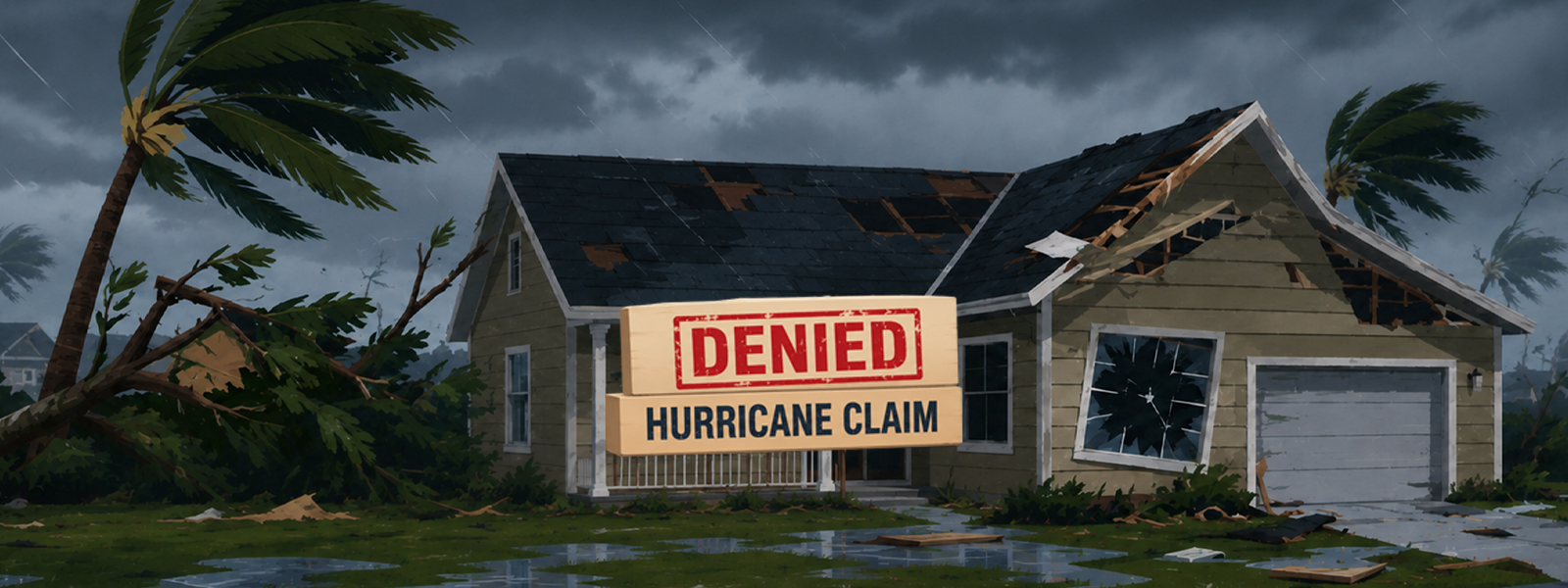
Natural disasters like hurricanes can devastate communities and leave homeowners and businesses struggling to recover. When a hurricane strikes, most people expect their insurance policy to help them rebuild. But what happens when a hurricane insurance claim is denied?
When you pay your insurance premiums, you expect your insurer to be there when disaster strikes. However, insurance companies often deny hurricane-related claims or close them without payment, even after significant storm damage. In 2024, nearly 47% of Texas homeowners insurance claims were closed without payment. In Louisiana, an LSU survey found that about half of storm victims were unsatisfied with how their insurers handled their hurricane claims. These figures highlight why many Gulf Coast property owners question claim decisions after major storms.
A denied claim can leave homeowners feeling frustrated and uncertain about what comes next. Fortunately, you may have options. Here is what you need to know if your hurricane insurance claim was denied, the legal steps you can take, and how a hurricane damage lawyer may be able to help.
Common Reasons a Hurricane Insurance Claim Gets Denied
Insurance companies deny claims for both legitimate and questionable reasons. If your insurance company denies your hurricane damage claim, you need to understand why it happened.
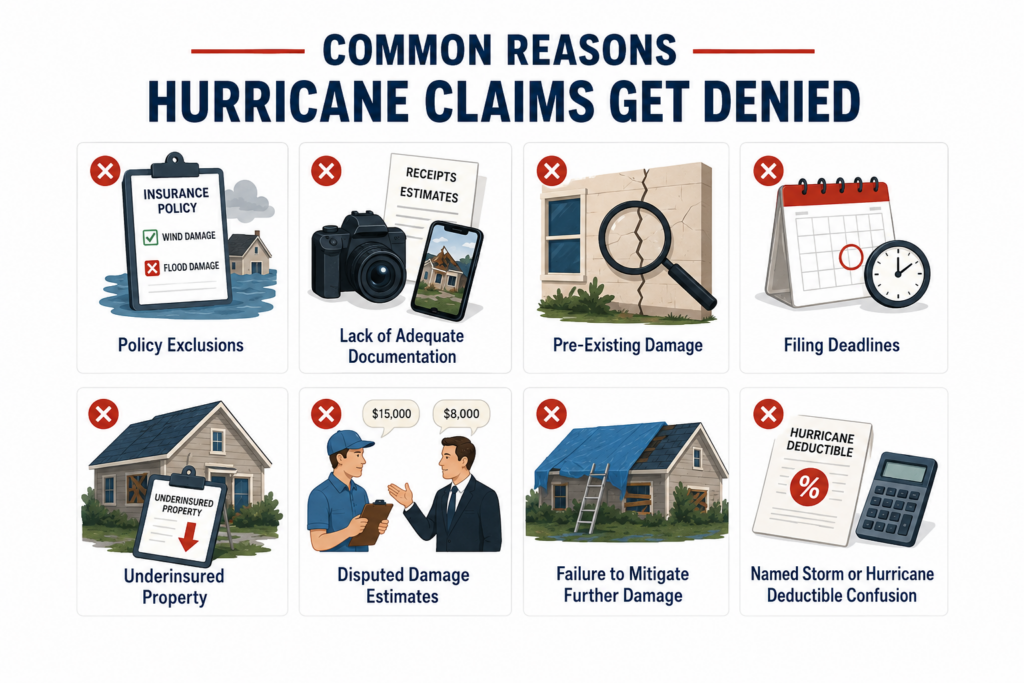
Here are some common reasons for hurricane insurance claim denial:
- Policy Exclusions: Many insurance policies include exclusions for certain types of damage. For example, while a standard homeowners insurance policy typically covers wind damage, it often excludes flood damage unless you have a separate flood insurance policy. After a hurricane, an insurance company may argue that flooding, not wind, caused the damage to your home, leading to a denial of your claim. Some policies also contain an anti-concurrent causation (ACC) clause, which may limit coverage when both covered and excluded causes contribute to the same loss.
- Lack of Adequate Documentation: Insurance companies require you to submit detailed evidence of the damage to support your claim. If you didn’t provide enough documentation, such as photographs, repair estimates, or receipts, the insurer might deny the claim, citing insufficient proof of the damage.
- Pre-Existing Damage: Another reason claims are frequently denied is that the insurance company claims the damage to your property existed before the hurricane or was caused by wear and tear or age-related deterioration. If the insurer believes the hurricane did not directly cause the damage, they may deny the claim.
- Filing Deadlines: Insurance policies often have strict deadlines by which you must file a claim. Missing an applicable deadline may affect coverage or give the insurer grounds to deny the claim. Although prompt filing is important, certain statutory deadlines may be extended following a declared catastrophic event, depending on the applicable law and type of claim.
- Underinsured Property: If the insurer determines that your property was underinsured, meaning that your coverage limits were too low to protect against hurricane damage fully, they may deny or reduce the amount of your claim.
- Disputed Damage Estimates: In some cases, the insurance company may argue that the amount of damage is less severe than what you reported or that repairs will cost significantly less than your estimate. They may offer a low settlement or deny the claim based on their damage assessment. Moreover, after major hurricanes, claims are sometimes reassigned between multiple adjusters during high-volume catastrophe periods. When that happens, a new adjuster may reach a different conclusion, re-scope the damage, or reverse an earlier finding, creating additional disputes over the extent of the loss.
- Failure to Mitigate Further Damage: Insurance companies generally expect policyholders to take reasonable steps to prevent additional damage after a hurricane. For example, you may need to tarp a damaged roof, board broken windows, or remove standing water when it is safe to do so. If additional damage results from delays in taking these emergency measures, the insurer may deny or reduce that portion of the claim, even when the original storm damage was covered.
- Named Storm or Hurricane Deductible Confusion: Many Louisiana and Texas policies include a separate hurricane or named-storm deductible that applies instead of the standard policy deductible. These deductibles are often calculated as a percentage of the insured value of the property rather than a fixed dollar amount. As a result, legitimate hurricane damage may not exceed the applicable deductible, leading some claims to be denied or closed without payment despite the existence of covered damage.
Your Contractor Says Wind Damage. Your Insurer Says Wear and Tear. Now What?
One of the most common disputes after a hurricane involves roof damage. A contractor may identify storm-related wind damage, while the insurance company concludes that the same condition resulted from age, deterioration, or wear and tear. Evidence such as lifted shingles, creasing, granule loss, or torn tabs can be open to interpretation, and adjusters and contractors often evaluate these conditions differently.
If your insurer denies the claim because of a dispute over whether the damage resulted from wind or wear and tear, you need to take several important steps right away, including:
- Request a copy of the insurer’s inspection report and photographs.
- Obtain a written report from your contractor that specifically addresses the reason for the denial.
- Gather pre-storm roof documentation, including photographs, inspection reports, maintenance records, or historical imagery, to help establish the roof’s condition before the hurricane.
It is also important to understand the nature of the dispute. If the insurer accepts that hurricane damage occurred but disagrees about the extent or value of the loss, the issue may involve appraisal. However, if the insurer denies coverage altogether based on a wear-and-tear exclusion, the dispute is generally a coverage issue that may require an appeal, reinspection, or legal review. Understanding this distinction can help you determine the most effective next step after a denied hurricane roof claim.
Legal Steps to Take After Hurricane Insurance Claim Denial
You’re not out of options if your hurricane damage insurance claim is denied. You can take several steps to appeal the denial, dispute the insurer’s findings, and work toward a fair settlement.
Here’s what you need to do:
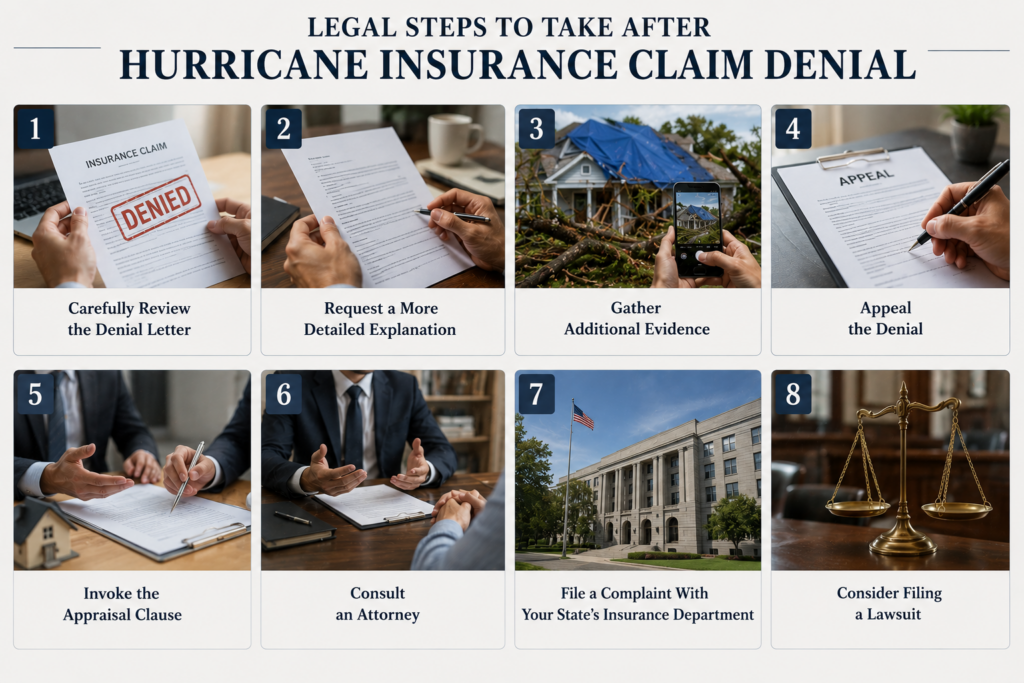
Carefully Review the Denial Letter and Your Insurance Policy
When your claim is denied, the insurance company is required to provide you with a written explanation. This denial letter should outline why your claim was not approved. Carefully read through this letter to understand the insurer’s rationale.
Next, review your insurance policy in detail with a property damage lawyer. Look for the sections pertaining to hurricane, wind, and water damage, and compare the terms of your policy to the reasons given in the denial letter.
Does the policy language align with the insurer’s reasoning for denial? If your lawyer identifies discrepancies or an unjustified denial, you may have grounds to challenge the decision.
Request a More Detailed Explanation
Sometimes, the denial letter may only briefly explain why your claim was rejected. In such cases, you can request a more detailed explanation from the insurer. This detailed response should reference specific sections of your policy and explain exactly how the insurer reached its decision.
A detailed explanation can help clarify whether the insurer’s denial was valid and provide the information needed to challenge the denial if you believe it was improper.
Gather Additional Evidence to Support Your Claim
Gathering additional documentation to support your case is important if the insurer denied your claim due to insufficient evidence.
This may include:
- Photographs and Videos: Take clear, comprehensive, timestamped photos and videos of the damage to your property, both inside and outside. These visual records help establish when the damage occurred, show the extent of the loss, and can be particularly valuable when the insurer attributes the condition to wear and tear rather than hurricane damage.
- Repair Estimates: Obtain detailed repair estimates from reputable contractors. Multiple estimates can help strengthen your claim and demonstrate the actual cost of repairs.
- Receipts for Repairs: If you have already made any temporary repairs to prevent further damage, keep all receipts and records of those expenses. This documentation will help demonstrate the immediate financial burden caused by the hurricane.
- Witness Statements: If neighbors, contractors, or other individuals witnessed the damage, their statements can be valuable evidence in challenging the insurer’s denial.
- Professional Assessments: You may also consider obtaining an independent assessment from qualified roofing contractors, engineers, or other professionals. Their expert opinion can help address disputes regarding the cause, scope, or extent of the damage.
Appeal the Denial with Your Insurance Company
Most insurance companies have an internal appeals process that allows policyholders to challenge denied claims. Before pursuing legal action, file an appeal directly with the insurer.
When appealing, submit all additional evidence and explain why you believe the denial was improper. Cite specific sections of your insurance policy that support your claim and provide detailed documentation that addresses the insurer’s concerns. A strong, well-documented appeal can sometimes lead to a reversal of the denial.
Invoke the Appraisal Clause If the Dispute Is Over Value, Not Coverage.
In some cases, the insurer agrees that the damage is covered but disagrees about the extent of the loss. When the dispute involves the value of the damage rather than whether coverage exists, your policy’s appraisal clause may provide a way to resolve the disagreement.
The appraisal process typically requires each party to select its own appraiser. The two appraisers then attempt to reach an agreement on the amount of the loss. If they cannot agree, a neutral umpire reviews the dispute and helps determine the final valuation.
It is important to understand that an appraisal generally cannot overturn a complete coverage denial. If the insurer claims that the damage is excluded because of wear and tear, deterioration, or another policy exclusion, the issue is usually a coverage dispute rather than a valuation dispute.
Appraisal decisions are generally binding on the amount of the loss, making them difficult to challenge later. Before invoking appraisal, consider consulting a property damage attorney to determine whether it is appropriate in your situation. If an appraisal is not available or appropriate, additional legal options may be necessary.
Consult an Experienced Property Damage Attorney
If your appeal fails or you believe the insurance company acted in bad faith, consult a property damage attorney. A lawyer who is well-versed in property damage claims will have the knowledge and experience necessary to help you navigate the legal process and fight for the compensation you deserve.
File a Complaint With Your State’s Insurance Department
If you believe that the insurance company violated state laws or regulations, you can file a formal complaint with your state’s insurance regulator. Louisiana policyholders can submit complaints through the Louisiana Department of Insurance (LDI), while Texas policyholders can file complaints with the Texas Department of Insurance (TDI). These agencies oversee insurance companies and ensure that they follow relevant insurance laws and regulations.
Filing a complaint can prompt a regulatory review of the insurer’s conduct, can help identify whether the company complied with the applicable claim-handling requirements, and may result in corrective action.
Consider Filing a Lawsuit
If all other options fail and the insurance company continues to deny your claim unfairly, you may need to file a lawsuit. In some cases, an insurer’s refusal to pay a valid claim may constitute bad faith claim handling, and you may be able to recover not only the compensation for your original claim but also additional damages if the court finds that the insurance company acted improperly.
Before pursuing litigation, it is important to review the Louisiana and Texas deadlines, as filing deadlines, pre-suit requirements, and any applicable catastrophe-related extensions may affect your legal options. A property damage lawyer can guide you through the litigation process, represent your interests in court, and fight to ensure you receive the compensation you’re entitled to.
Louisiana and Texas Deadlines That Can Affect Your Denied Hurricane Claim
State-specific insurance laws can affect both your claim and your ability to challenge a denial.
In Louisiana, insurers must initiate catastrophic claim adjustments within 30 days and pay residential hurricane claims within 60 days of receiving satisfactory proof of loss. During declared catastrophic events, Louisiana law may also provide a 180-day period to submit a Proof of Loss when applicable and up to an additional 30 days for certain insurer claim-handling deadlines in qualifying circumstances. Recent statutory updates mandate clear depreciation calculation disclosures, a mandatory 60-day bad-faith cure period, and a strict two-year deadline to file bad-faith actions. Because these laws continue to evolve, always verify the current statutory language before taking action.
In Texas, the Prompt Payment of Claims Act generally requires insurers to acknowledge, investigate, and request any necessary information within 15 days of receiving a claim. After receiving all required information, insurers typically must accept or deny the claim within 15 business days, although a 45-day extension may apply in some circumstances. Once a claim is accepted, payment generally must be issued within five business days. Certain weather-related property insurance disputes may require written pre-suit notice at least 61 days before filing a lawsuit. If your coastal property is insured under a policy through the Texas Windstorm Insurance Association (TWIA), entirely separate statutory timelines and strict appraisal rules apply. During declared catastrophic events, applicable law may provide up to 60 days for certain statutory notice or procedural requirements in qualifying circumstances. Because these extensions depend on the circumstances and facts of the claim, property owners should confirm which deadlines apply before taking legal action.
Missing applicable deadlines or notice requirements can affect your legal options and may create procedural challenges that delay the resolution of your claim. Because certain statutory deadlines may be extended following a declared catastrophic event, it is important to determine which deadlines apply to your specific claim.
For example, in Texas, an insurer’s failure to meet prompt payment deadlines can obligate them to pay statutory penalty interest and your reasonable attorney’s fees. However, failing to provide the mandatory pre-suit notice can limit your ability to recover these attorney’s fees and stall your lawsuit. Acting promptly can help protect your rights, ensure you preserve important remedies, and preserve important evidence supporting your claim.
Why You Need a Property Damage Lawyer for a Denied Hurricane Claim
If your hurricane insurance claim was denied, a property damage attorney can help you understand your options and protect your rights throughout the claims process.
Here’s why you should hire a property damage attorney:
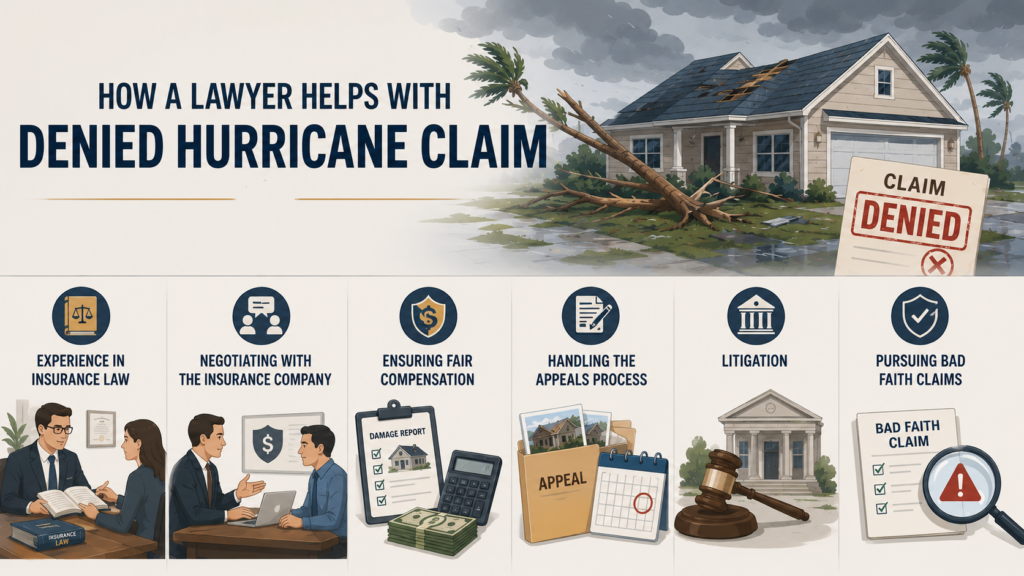
Experience in Insurance Law
A property damage attorney understands the intricacies of insurance law and can help you understand your rights and the insurance company’s obligations under your policy.
Negotiating with the Insurance Company
Insurance companies have teams of adjusters and lawyers working to protect their bottom line, and they often use tactics to minimize or deny claims. A skilled property damage attorney knows how to counter these tactics and will negotiate to secure a fair settlement on your behalf.
Ensuring Fair Compensation
In many cases, the initial settlement offer from an insurance company is far less than what you deserve. A property damage lawyer can review the offer, compare it to the documented scope of damage, repair estimates, and policy provisions, and advocate for the benefits available under your policy.
Handling the Appeals Process
If your insurer denies your claim, a lawyer can guide you through the appeals process, help gather additional evidence, and submit a strong appeal to the insurance company. They’ll meet all deadlines and make your appeal as comprehensive and compelling as possible.
Litigation
If the insurance company refuses to negotiate in good faith or continues to deny your claim, a property damage lawyer will take your case to court. They’ll represent you in litigation, file the necessary legal paperwork, and present a strong case to the court to recover the compensation you’re owed.
Pursuing Bad Faith Claims
If your insurance company acted in bad faith, such as failing to properly investigate your claim, denying it without justification, or intentionally delaying the claims process, an attorney can evaluate whether additional legal remedies may be available.
State-specific requirements, cure periods, and claim-handling rules can also affect how these disputes are resolved. A property damage attorney can help determine which laws apply to your situation and whether the insurer complied with its obligations.
Tips for Protecting Your Denied Hurricane Damage Insurance Claim
Act quickly and carefully after a hurricane to protect your rights, preserve important evidence, and improve your chances of recovering compensation.
Here are some key tips to keep in mind throughout the claims process:
Consult a Seasoned Property Damage Lawyer Before Accepting a Settlement: If the insurance company offers a settlement that seems too low, consult a seasoned property damage lawyer before accepting. Once you agree to a settlement, you may not be able to pursue additional compensation later.
Document the Damage Immediately: From the moment the hurricane passes, start documenting the damage to your property. Take photos and videos and keep a record of all communication with your insurance company.
File Your Claim Promptly: Don’t delay filing your claim. Most insurance policies require that you submit it within a specific time frame, and waiting too long can result in denial.
Be Cautious When Speaking with Adjusters: Insurance adjusters work for the insurance company, not for you. Be careful about what you say during your interactions and avoid making any statements that can be used against you later.
Take Reasonable Steps to Prevent Further Damage: After the storm, take reasonable measures to protect your property from additional damage. This may include placing a tarp over exposed roof sections, boarding broken windows, or removing standing water when it is safe to do so. Keep receipts and records for any temporary repairs or emergency mitigation efforts. These steps can help demonstrate that you acted responsibly and may reduce the risk of disputes over preventable secondary damage.
Conclusion
After the devastation of a hurricane, you understand the importance of having a valid insurance claim to cover the damages. However, what happens when the insurance company denies your claim?
Don’t panic. A property damage attorney is your best ally in this tough situation.
If the insurance company denies your claim, don’t lose hope. You can challenge the denial and pursue the compensation available under your policy. However, insurance companies make navigating the complicated property damage claims process challenging, especially when you’re already dealing with the aftermath of a natural disaster.
A property damage lawyer can provide the support, guidance, and advocacy you need to protect your rights and pursue fair compensation to help you rebuild after a hurricane.
Whether the insurance company denies your claim due to a policy exclusion, lack of documentation, or another reason, a skilled attorney can explain your legal options and help you challenge the insurer’s decision. If you believe the insurer handled your claim improperly or acted in bad faith, your attorney can also evaluate whether additional legal remedies may be available.
Don’t let a denied claim leave you without the resources you need to recover from hurricane damage. Having legal guidance can help you better understand your rights and the options available to you, and greatly enhance your chances of a successful claim.
Time is critical in these situations, so acting quickly can help preserve evidence and protect your rights. Request a Free Claim Evaluation today to discuss your case and learn more about your legal options.