
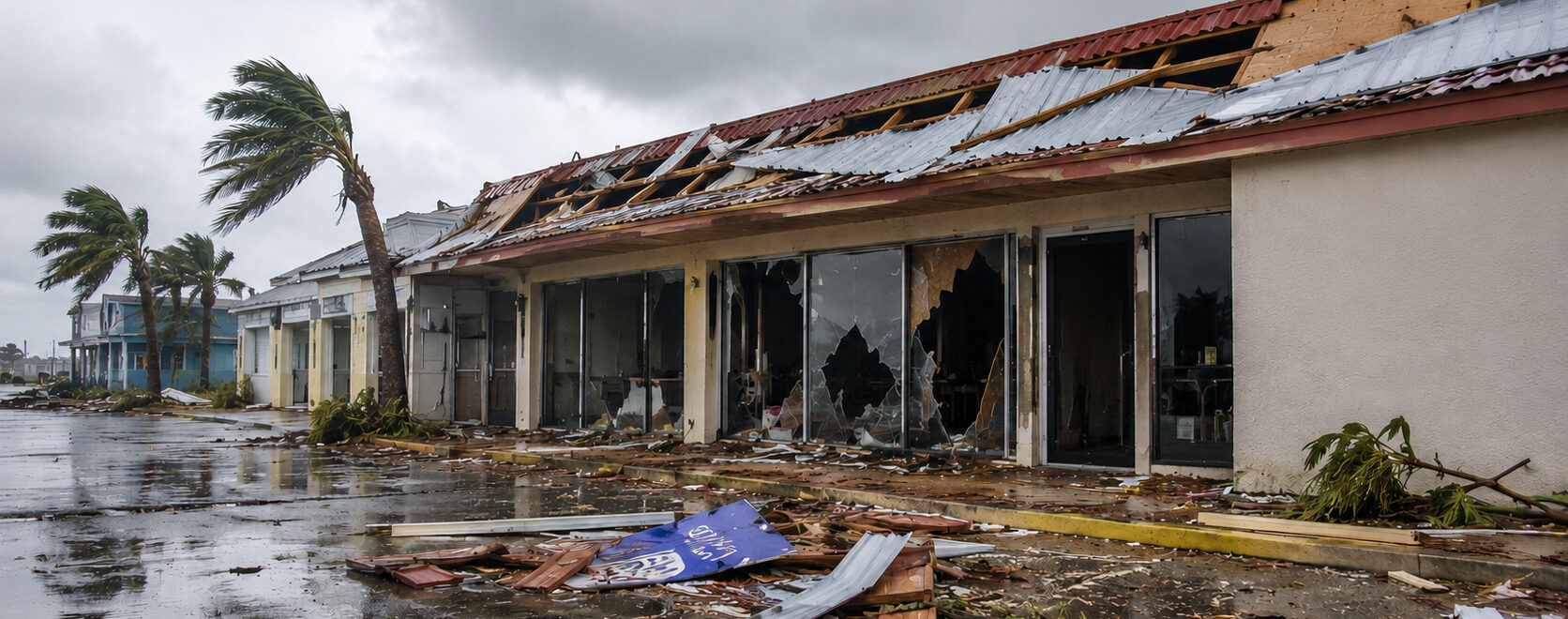
When hurricanes strike, they can cause significant damage to businesses, resulting in severe financial losses. Preparing for the worst and understanding how to handle the aftermath is essential for businesses in hurricane-prone areas across Texas, Louisiana, and the Gulf Coast.
The financial impact of severe storms continues to grow. According to the National Oceanic and Atmospheric Administration (NOAA), the United States experienced 27 billion-dollar weather and climate disasters in 2024, highlighting the serious risks businesses face when hurricanes and other major storms strike.
One of the first steps that businesses must take after a storm is filing a commercial hurricane damage insurance claim with their insurance provider. However, filing a claim is often more complicated than it appears, and many business owners face unwarranted challenges with their insurance companies.
Business owners must understand the common reasons for claim denials, how to strengthen their claims with proper documentation, and when it may be beneficial to seek guidance from a property damage attorney.
This guide explains how commercial property insurance handles hurricane losses and coverage issues businesses often encounter after a storm. It also covers important steps in the claims process, key considerations under Texas and Louisiana law, and how legal counsel can help when disputes arise.
What Does Commercial Property Insurance Cover After a Hurricane?
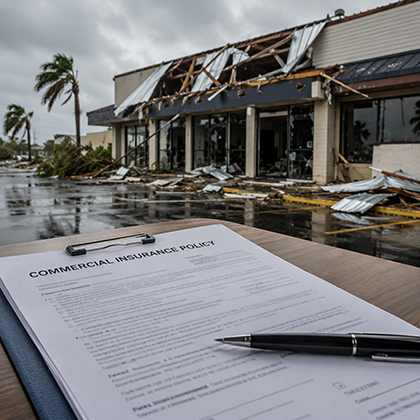
Hurricane damage can encompass a wide range of issues, from structural damage to lost income due to business interruption. Most business owners carry some form of commercial property insurance that covers damage caused by natural disasters. However, even the most comprehensive insurance policies have limitations, exclusions, and conditions that can impact the outcome of a claim.
The types of coverage that are typically involved in hurricane damage claims include:
Property Damage Coverage
This is the most straightforward form of coverage and typically includes damage to the business’s physical structure, such as the building’s walls, roof, and foundation. Property damage coverage also often provides for damage to machinery, equipment, inventory, and other building contents that were damaged by the hurricane. For many commercial policyholders, covered losses may also involve HVAC systems, electrical infrastructure, signage, fencing, canopies, and other components essential to business operations.
After a major storm, disputes often arise over the scope of repairs needed to restore a commercial building. Insurance companies may disagree with property owners about whether damage requires partial repairs or full replacement of roofing systems, exterior walls, windows, or other building-envelope components. These issues can significantly affect the value of a claim.
Business Interruption Coverage
In the wake of a hurricane, businesses often have to shut down for an extended period to make repairs. Business interruption insurance is designed to compensate companies for lost income during this downtime. It can also cover additional expenses incurred to keep the business afloat, such as renting temporary space or equipment.
Coverage generally applies during the restoration period, which is the time reasonably required to repair or replace damaged property and resume normal operations. Many policies also include a waiting period before benefits begin, making it important for businesses to understand when coverage starts and what losses may qualify.
Some businesses may also have contingent business interruption coverage, which can apply when hurricane damage affects a key supplier, customer, or other business partner and indirectly disrupts operations.
Windstorm and Flood Coverage
Many property insurance policies include specific windstorm coverage that compensates businesses for damage caused by hurricane-force winds. However, flood damage is typically not covered under standard commercial property insurance policies.
Business owners must purchase separate flood insurance to protect against damage caused by storm surges, rising water levels, and heavy rain. Flood coverage may be available through the National Flood Insurance Program (NFIP) or private flood insurance providers, depending on the property’s location and coverage needs.
Commercial hurricane insurance policies may also include named-storm deductibles, which are separate deductibles that apply when a loss results from a designated tropical storm or hurricane. These deductibles are often higher than standard policy deductibles and can significantly affect a business’s out-of-pocket costs after a storm.
Additional Coverage for Debris Removal and Cleanup
Hurricanes can leave behind debris and hazardous waste, making the cleanup process complicated and expensive. Some policies include coverage for debris removal and other related expenses, but this is often subject to policy limits.
Businesses may also have coverage for ordinance-or-law requirements that apply when damaged property must be repaired or rebuilt to comply with updated building codes. In some cases, these provisions can help cover code-upgrade expenses that arise during the reconstruction process.
Other Coverage Types Businesses Should Know About
Some forms of business insurance include additional coverages that can become important after a hurricane, such as:
- Equipment breakdown coverage may help cover certain losses involving damaged mechanical, electrical, or pressure systems that are critical to business operations.
- Spoilage coverage may apply when power outages or equipment failures cause perishable inventory, such as food, pharmaceuticals, or temperature-sensitive products, to spoil.
- Extra expense coverage may help pay for reasonable costs incurred to continue operations, such as relocating to a temporary location or using alternative equipment.
- Inland marine coverage may protect tools, equipment, materials, or other business property while it is in transit or temporarily stored away from the insured premises.
The specific coverage available depends on the terms of the hurricane insurance policy and any endorsements purchased by the business. Reviewing policy language carefully can help business owners better understand what protection may be available after a storm.
Common Challenges Businesses Face in Filing Hurricane Damage Claims
Filing an insurance claim after a hurricane might seem like a straightforward process, but it’s often filled with pitfalls. Insurance companies closely evaluate claims and policy provisions, and many business owners encounter obstacles when seeking coverage under their commercial property insurance policies.
Here are some of the most common challenges businesses face when filing hurricane damage claims:
Underpayment of Claims
One of the most frustrating issues businesses encounter is underpayment. Insurance companies might offer settlements that are far lower than the actual cost of repairing the damage. This often occurs because insurers rely on adjusters to assess the damage. These adjusters might undervalue certain repairs, claim that certain damages are not covered, or use depreciation calculations to reduce the payout.
Disputes frequently arise over Actual Cash Value (ACV) and Replacement Cost Value (RCV) calculations. An insurer may apply depreciation to reduce the value of a claim under an ACV calculation, while the policyholder believes the loss should be evaluated based on the cost to repair or replace the damaged property.
Commercial property claims often involve additional disputes over the scope and cost of repairs to buildings, equipment, inventory, and other business assets. Insurance companies may also disagree with business owners about whether damaged property should be repaired or replaced. These disagreements can significantly affect the amount available to restore business operations.
Denial of Claims Due to Policy Exclusions
Hurricane damage claims often involve disputes over coverage exclusions. For example, many standard property insurance policies exclude flood damage, which can be a significant issue in hurricane-prone areas. Even wind damage, which is usually covered, may be denied if the insurer argues that the damage was actually caused by water, not wind.
Commercial hurricane insurance policies may also contain anti-concurrent causation clauses. These provisions can affect coverage when multiple causes contribute to a loss. For example, if wind and flood damage occur together, an insurer may rely on policy language to argue that some or all of the loss is excluded from coverage. Understanding how these provisions apply can be critical when evaluating a claim denial.
Delays in Processing Claims
Business owners depend on quick payouts from insurance companies to repair the damage and resume operations. Unfortunately, many businesses experience significant delays in the claims process. These delays can result from the insurance company’s internal processes, such as requiring multiple inspections or requesting excessive documentation.
Large commercial claims often involve extensive investigations, engineering reviews, and requests for additional records, which can further slow the process. Maintaining clear written records can help businesses address disputes if delays occur.
Texas and Louisiana laws impose certain requirements on insurers regarding claim handling and response times. While the specific obligations vary, businesses should monitor claim activity closely and document any major delays throughout the process.
Disputes Over the Cause of the Damage
Hurricanes are complicated natural disasters that can cause wind and water damage. Insurance companies sometimes dispute the cause of the damage to limit their liability. For example, an insurer might argue that floodwaters caused the damage, not hurricane-force winds, and deny coverage based on a flood exclusion in the policy.
Interpretation of Policy Limits
Many policies have maximum coverage limits for specific types of damage. Insurance companies may argue that the cost of repairs exceeds these limits or that certain damages are subject to lower limits. Understanding your policy’s terms and how coverage limits apply is imperative to avoid a denied or underpaid claim.
Bad Faith Insurance Practices
In some situations, a dispute may involve more than a simple disagreement over coverage or claim value. Bad faith claim handling generally occurs when an insurance company fails to meet its obligations under the policy or does not handle a claim fairly and reasonably.
Examples of conduct that may raise concerns include:
- Unreasonable delays in investigating or responding to a claim
- Repeated requests for information that has already been provided
- Settlement offers that do not appear to reflect the documented scope of the loss
- Misrepresentations about policy terms, exclusions, or available coverage
- Failing to provide a reasonable explanation for a denial or partial denial
Both Texas and Louisiana provide legal remedies in certain situations involving improper claim handling practices. However, whether bad faith occurred depends on the specific facts of the claim, the policy language, and the insurer’s actions throughout the claims process.
How to File a Commercial Hurricane Damage Insurance Claim: Step-by-Step Guide
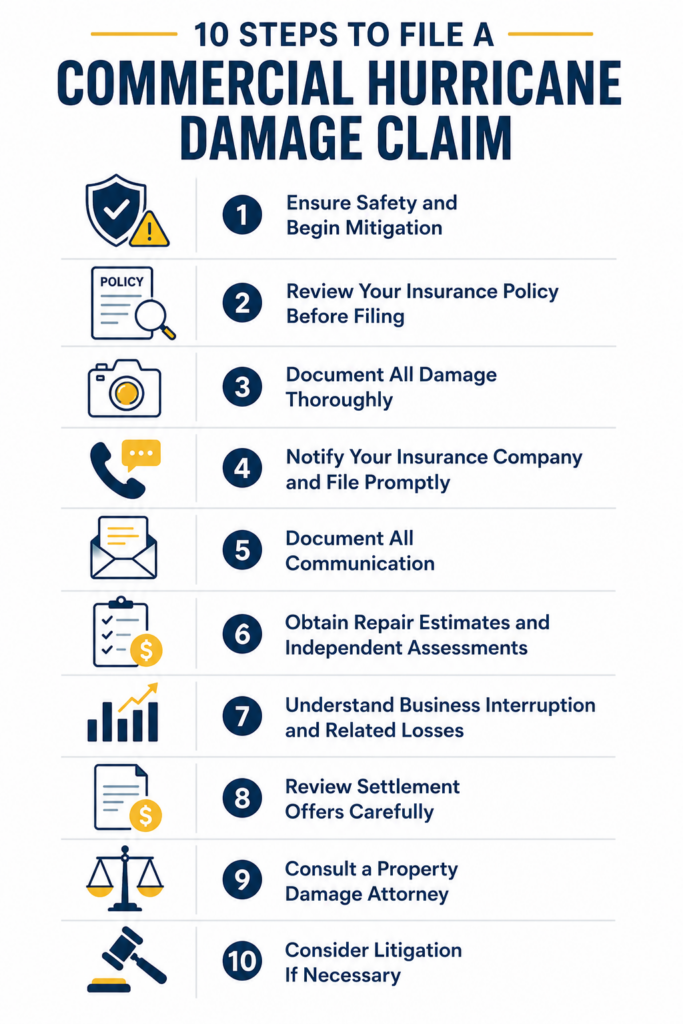
Filing a commercial hurricane damage insurance claim requires more than simply reporting a loss to your insurance company. The steps you take after a storm can affect how efficiently your claim moves forward and how well you can support your request for coverage.
The following process can help businesses document losses, protect their rights, and prepare for potential claim disputes.
Step 1: Ensure Safety and Begin Mitigation
Before focusing on the claims process, prioritize the safety of employees, customers, and anyone else on the property. Once conditions are safe, take reasonable steps to prevent additional damage.
This may include:
- Boarding up broken windows
- Tarping damaged roofs
- Removing standing water when possible
- Relocating inventory, equipment, or important records to a safe location
Document all mitigation efforts carefully. Take photographs and videos before and after temporary repairs, and keep receipts, invoices, and records of any emergency work performed. This documentation can help demonstrate that you acted reasonably to protect the property after the hurricane.
Step 2: Review Your Insurance Policy Before Filing
Before filing a claim, carefully review your insurance policy to understand its coverage. Pay close attention to exclusions, deductibles, coverage limits, and reporting requirements. Businesses should also determine which policies may apply to the loss, such as commercial property insurance, flood insurance, windstorm coverage, or business interruption insurance.
Understanding your policy early can help you identify potential coverage issues and prepare the documentation needed to support the claim. If policy language is unclear, a property damage attorney can help evaluate the available coverage and explain how specific provisions may affect the claim.
Step 3: Document All Damage Thoroughly
One of the most critical steps in filing a successful claim is providing sufficient documentation of the damage. Immediately after the storm, take photographs and videos of all damaged areas, equipment, inventory, and other assets.
Businesses should also maintain records of:
- Damaged machinery and equipment
- Inventory losses
- Cleanup and debris-removal expenses
- Temporary repair costs
- Contractor inspections and repair recommendations
- Financial records supporting business interruption losses
Keep detailed records of all repairs, including receipts, invoices, and other expenses related to the damage. Thorough documentation can help reduce disputes regarding the scope and value of the loss.
Step 4: Notify Your Insurance Company and File Promptly
Insurance policies typically require policyholders to report damage and file claims within a specific timeframe. Failing to meet these requirements can create unnecessary complications and may affect coverage. Although prompt reporting is important, certain statutory deadlines may be extended following a declared catastrophic event, depending on the applicable law and type of claim.
Notify your insurance company as soon as possible and follow its instructions regarding claim submission. When reporting a loss, provide accurate information, submit requested documentation promptly, and retain copies of everything you send.
Prompt reporting also helps establish a clear timeline of events and reduces the likelihood of disputes regarding when the damage occurred.
Step 5: Document All Communication
Keep a record of all communications throughout the claims process. Maintaining organized records can help avoid misunderstandings and provide valuable evidence if disputes arise later.
Documentation should include communications with:
- Insurance company representatives
- Adjusters
- Contractors
- Engineers
- Accountants
- Other experts involved in evaluating the loss
Save emails, letters, inspection reports, claim notes, and summaries of phone conversations. A well-maintained paper trail can be extremely helpful when addressing delays, denials, or disagreements regarding coverage.
Step 6: Obtain Repair Estimates and Independent Assessments
Obtaining repair estimates is an important part of evaluating hurricane damage. Get estimates from reputable contractors familiar with commercial properties and the type of repairs required.
In more complex claims, businesses may also benefit from independent evaluations by engineers, building consultants, accountants, or other qualified professionals. These assessments can provide additional support when there are disagreements regarding the extent of the damage, repair costs, or the cause of the loss.
Having multiple sources of information can help businesses better evaluate insurer estimates and identify potential valuation issues.
Step 7: Understand Business Interruption and Related Losses
If your business has been forced to shut down due to hurricane damage, you may have coverage for lost income through your business interruption insurance.
These claims often require detailed documentation, including:
- Financial statements
- Tax records
- Profit-and-loss reports
- Payroll records
- Ongoing operating expenses
- Documentation showing how the storm affected operations
Business interruption claims may also involve calculations related to the recovery or restoration period. Because these losses can be complex, businesses should carefully track financial impacts from the beginning of the interruption through the recovery process.
Step 8: Review Settlement Offers Carefully
Many insurance companies offer an initial settlement before all damages and losses have been fully evaluated. While it may be tempting to accept an early offer, businesses should carefully review the proposed settlement before making a decision.
When reviewing a settlement offer, business owners should compare it against contractor estimates, repair documentation, inventory records, and business interruption calculations. It is important to confirm that all documented damage, covered losses, and necessary repairs have been included in the insurer’s evaluation.
Reviewing settlement offers carefully can help ensure that all documented damages and covered losses have been considered before the claim is resolved.
Step 9: Consult a Property Damage Attorney
Businesses do not need to wait for a claim denial before consulting a property damage attorney. Early legal guidance can help identify coverage issues, preserve important documentation, and address potential disputes before they escalate.
A property damage attorney can help evaluate coverage issues, review insurer decisions, develop claim strategies, and assist with negotiations. Legal counsel may also help businesses address appeals, appraisal disputes, and other challenges that arise during the claims process.
Seeking legal guidance early can be particularly helpful when a claim involves major losses or complicated policy provisions.
Step 10: Consider Litigation If Necessary
Most claims are resolved without litigation. However, disputes sometimes continue despite negotiations, supplemental claim submissions, appraisal proceedings, or other claim-resolution efforts. Common areas of disagreement include:
- Whether damage was caused by wind or flood
- The extent of covered damage
- Policy interpretation
- Claim valuation
- Business interruption losses
When significant disputes remain unresolved, litigation may become an option for seeking a legal determination regarding coverage or claim value. An experienced property damage attorney can evaluate the circumstances and advise whether pursuing legal action is appropriate.
Taking a structured approach to the claims process can help businesses stay organized, preserve important evidence, and address issues as they arise after hurricane damage.
Hurricane Damage Claims for Texas and Louisiana Commercial Properties
Businesses in Texas and Louisiana face some of the highest hurricane risks in the country. In addition to physical damage, commercial property owners must navigate state-specific insurance requirements, claim procedures, and coverage considerations that can affect how a hurricane claim is handled.
Texas Laws for Commercial Properties
Texas businesses along the Gulf Coast often rely on specialized windstorm coverage, including policies available through the Texas Windstorm Insurance Association (TWIA) when private coverage is unavailable.
Key considerations for Texas business owners include:
- Insurers generally must acknowledge a claim, begin an investigation, and request any needed information within 15 days of receiving notice of the claim, and issue a claim decision within 15 business days.
- If a claim is approved, payment is generally due within five business days.
- Many commercial policies include appraisal provisions that can help resolve disputes over the value of a covered loss.
- TWIA policyholders generally have one year from the date of damage to file a claim. Commercial property policies may contain contractual deadlines requiring lawsuits to be filed within two years of the loss. Businesses should carefully review these deadlines, as missing them can affect their ability to pursue coverage disputes.
- Businesses pursuing litigation may need to provide a 61-day pre-suit notice before filing certain hurricane-related property insurance lawsuits.
During a declared catastrophic event, Texas law may provide up to 60 days for certain statutory notice or procedural requirements in qualifying circumstances. Businesses should confirm which deadlines apply before taking legal action.
Understanding these requirements can help businesses track claim progress and respond appropriately when delays or valuation disputes arise.
Louisiana Laws for Commercial Properties
Louisiana businesses often face complex hurricane claims involving wind, flood, and storm-surge damage. Recovery efforts may be further complicated by coverage disputes and extensive rebuilding requirements.
Important considerations for Louisiana business owners include:
- For commercial hurricane claims, Louisiana insurers generally must begin adjusting catastrophic losses within 30 days of notice and have 90 days from receipt of satisfactory proof of loss to issue payment on covered claims.
- Louisiana law may provide up to an additional 30 days during a declared catastrophic event for certain insurer claim-handling deadlines. Because these extensions depend on the applicable law and the facts of the claim, businesses should confirm which deadlines apply.
- Businesses can obtain coverage through the Louisiana Citizens Property Insurance Corporation when private-market coverage is unavailable.
- Hurricane deductibles may apply separately from standard policy deductibles.
- Louisiana’s Valued Policy Law may affect how certain total-loss claims are evaluated.
- Louisiana property policies commonly require lawsuits against insurers to be filed within two years of the date of loss. Policy-specific notice requirements and contractual deadlines may apply before legal action is filed.
Because commercial hurricane claims often involve substantial financial losses and multiple coverage issues, reviewing policy requirements early can help businesses avoid unnecessary claim complications.
How a Hurricane Damage Attorney Helps Your Business Recover
Filing a hurricane damage claim without legal assistance can leave your business vulnerable to unfair treatment by your insurance company. Property damage attorneys are well-versed in representing business owners in disputes with insurers, and they can offer several key advantages, such as:
Experience With Insurance Companies

Insurance companies have teams of adjusters, consultants, and attorneys whose job is to evaluate and manage claims. A property damage attorney understands the tactics insurers may use to deny, delay, or underpay claims and can help businesses respond effectively to coverage disputes, valuation disagreements, and claim denials.
Ability to Negotiate Claim Disputes
A property damage attorney can handle negotiations with the insurance company, using documentation, policy analysis, and expert evaluations to support the claim. Legal counsel can also help identify issues involving underpayment, depreciation, scope-of-damage disputes, and business interruption losses, allowing business owners to make informed decisions throughout the claims process.
Support During the Appraisal Process
Many commercial property insurance policies include an appraisal provision that can help resolve disputes over the value of a covered loss. Appraisal typically focuses on determining the amount of damage, while coverage disputes involve whether the policy covers the loss at all. A property damage attorney can help businesses evaluate whether an appraisal is appropriate, comply with policy requirements, coordinate with experts, and protect their interests throughout the process.
Representation in Bad Faith Claims
If an insurance company engages in improper claim-handling practices, such as unreasonable delays, misrepresenting policy provisions, or failing to conduct a reasonable investigation, a property damage attorney can evaluate whether additional legal remedies may be available. Attorneys can also help businesses document insurer conduct and pursue appropriate action when disputes escalate.
Legal Guidance Throughout the Process
From reviewing policy language to responding to claim denials and negotiating resolutions, a property damage attorney can provide guidance throughout the claims process. Early legal involvement may help businesses avoid common mistakes, preserve important evidence, and better understand their rights and obligations under the policy.
Time and Stress Management
Managing hurricane recovery, business operations, and an insurance claim at the same time can place significant demands on business owners. By working with a property damage attorney, businesses can focus on recovery efforts while receiving support with claim strategy, communications, and dispute resolution.
Conclusion
Dealing with the aftermath of a hurricane is overwhelming, especially for business owners who must navigate property damage, operational disruptions, and complex insurance claims. Understanding your policy, documenting losses thoroughly, and responding strategically to claim disputes can help protect your interests throughout the process.
If your business is facing challenges with a commercial hurricane damage insurance claim in Texas, Louisiana, or the Gulf Coast, a property damage attorney can help you evaluate your options and address coverage, valuation, or claim-handling disputes.
Before reaching out, it may be helpful to gather:
- Insurance policy documents
- Photos and videos of the damage
- Correspondence with the insurance company
- Claim numbers and claim-related documents
- Repair estimates, invoices, and other supporting records
Contact an experienced hurricane damage attorney today to discuss your claim and learn more about the options available to your business.