
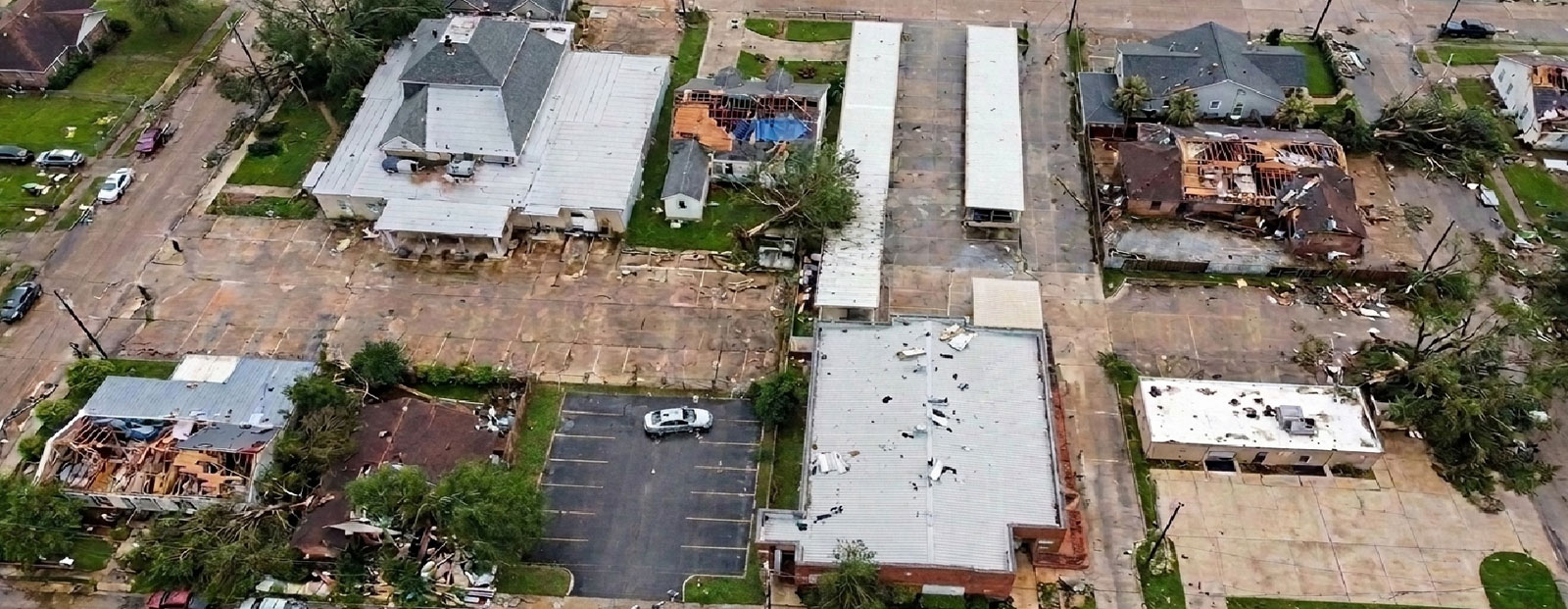
According to the National Oceanic and Atmospheric Administration (NOAA), Louisiana and Texas are among the states most frequently impacted by hurricanes, with billions of dollars in insured losses reported after major storms in recent years. The days and weeks after a storm can be overwhelming, especially when you’re making important decisions that could affect your insurance claim and financial recovery. This guide shares practical legal tips to help you protect your rights, avoid common claim mistakes, and make informed decisions throughout the post-hurricane recovery process.
Hurricanes can cause catastrophic damage to homes, businesses, and entire communities. These natural disasters can overwhelm property owners in hurricane-prone regions, such as Louisiana, Texas, and the Gulf Coast. The destruction of property can lead to significant financial loss, disruption of daily life, and stress.
In such situations, many property owners turn to their insurance policies for compensation to cover the damages. Unfortunately, insurance companies can make securing compensation a challenging and lengthy process, with legal hurdles and claim disputes that can reduce or delay payments. A skilled hurricane damage attorney can help protect your rights, explain your legal options, and pursue fair compensation while navigating complex insurance disputes during the recovery process.
The Importance of Insurance in Hurricane Damage Recovery
Insurance plays a pivotal role in recovering from hurricane damage. Property owners pay for insurance policies to protect their homes, businesses, and assets from natural disasters like hurricanes.
These policies typically cover various forms of damage, such as wind, rain, and water damage, as well as property destruction and the loss of personal belongings. Business interruption insurance may cover the loss of income for businesses that cannot operate due to hurricane damage.
However, despite having insurance coverage, many property owners struggle to receive fair compensation. Insurance companies often use complex policy language, exclusions, and legal loopholes to reduce payouts or deny claims altogether.
This is where experienced legal guidance becomes valuable, and a hurricane damage attorney can provide legal assistance, help property owners understand their legal rights, and better navigate the claim process while pursuing fair hurricane damage compensation.
10 Legal Tips Post-Hurricane to Protect and Maximize Your Compensation
The steps you take immediately after a hurricane can have a significant impact on your insurance claim. The following legal tips provide a practical post-hurricane checklist to help homeowners and business owners protect their rights, stay organized throughout the recovery process, and strengthen their claim for hurricane damage compensation.
Review Your Insurance Policy Before Filing
Before filing a hurricane damage claim, review your insurance policy in detail. The terms and conditions of your policy dictate what it covers, what it excludes, and how much compensation you may receive.
Key Elements to Review in Your Policy:
- Coverage Limits: Most insurance policies have coverage limits that specify the maximum amount the insurer will pay for specific damage. Ensure you understand these limits to manage your expectations regarding compensation.
- Deductibles: Insurance policies often include deductibles, which you must pay out of pocket before insurance coverage kicks in. In hurricane-prone areas, some policies have separate windstorm or hurricane deductibles, which can exceed the standard policy deductible.
- Exclusions: One of the most critical sections of your policy to review is the exclusions. Policies commonly exclude flooding, storm surges, or certain types of water damage, which separate flood insurance policies must cover.
- Business Interruption Coverage: If you own a business, a hurricane damage attorney can explain the provisions related to business interruption coverage, including how it calculates lost income and expenses.
Reviewing your policy will help you understand what it covers and gather the necessary documentation to support your claim. Your hurricane damage attorney can interpret complex policy language, explain important legal documents where needed, and identify potential issues.
Document All Damage Immediately and Thoroughly
Proper documentation of hurricane damage is critical for a successful insurance claim. The more detailed your records, the stronger the evidence supporting your claim. Insurance companies often challenge claims by questioning the damage’s extent or cause, so you need comprehensive evidence.
How to Document Hurricane Damage:
- Photographs and Videos: Take timestamped photographs and videos of all areas affected by the hurricane, both inside and outside your property. Focus on structural damage, roof damage, broken windows, and any water damage caused by rain or flooding.
- Itemized Inventory: Create an inventory of all damaged or destroyed personal belongings, including furniture, electronics, appliances, and other valuable items. Document each item’s estimated value and include receipts or proof of purchase if available.
- Receipts for Repairs: Keep records of any immediate repairs you had to make, such as boarding up windows, temporary roof repairs, or water extraction. Your insurance policy may reimburse these costs.
- Keep Every Receipt for Temporary Living and Repair Costs: Save receipts for hotel stays, meals, temporary housing, emergency repairs, and other necessary expenses. Depending on your policy, these costs may be reimbursable under Loss of Use or Additional Living Expenses (ALE) coverage.
- Professional Inspections: If possible, hire a licensed contractor or other qualified professional to assess the damage and provide a professional repair estimate. It can help counter any attempts by the insurance company’s adjuster to undervalue the damage.
When you hire a seasoned hurricane damage attorney, they can gather and organize this documentation, ensuring you have all the necessary evidence to support your claim.
Prevent Further Damage Without Destroying Evidence
After a hurricane, homeowners and business owners have a responsibility to take reasonable steps to prevent additional damage to their property. At the same time, it’s important to preserve evidence that supports your insurance claim and protects your legal rights.
- Photograph and video all damage before making temporary repairs. Timestamped images can help show the condition of your property immediately after the storm and reduce disputes over when or how the damage occurred.
- Take reasonable temporary measures to prevent further damage. Examples include boarding up broken windows, placing tarps over damaged roofs, or removing standing water if it is safe to do so.
- Keep receipts for emergency mitigation expenses. Save invoices and receipts for temporary repairs, cleanup, and other emergency measures, as your insurance policy may reimburse these costs.
- Avoid permanent repairs until the insurance company has had an opportunity to inspect the property, unless waiting would result in additional damage. If emergency repairs are necessary, keep damaged materials whenever practical to help support your claim.
Taking prompt, well-documented steps after a hurricane can help protect your claim and reduce unnecessary disputes during the insurance recovery process.
File Your Claim Quickly and Track Every Deadline
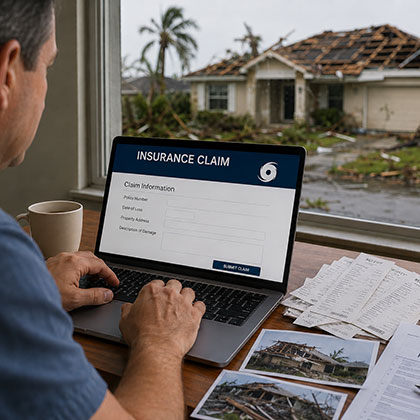
After documenting the damage, the next step is to file your insurance claim. For most policyholders, this is where the insurance claims process begins. File your claim as soon as possible, as insurance policies often have strict deadlines for reporting damage. Failing to meet these deadlines can result in the denial of your claim.
Keep in mind that standard homeowners insurance policies typically exclude flood damage. If your property sustained flood-related damage, you generally must file a separate claim through the National Flood Insurance Program (NFIP), which typically requires policyholders to notify their insurer promptly after the storm and comply with applicable claim deadlines. If your property sustained both wind and flood damage, you may need to file separate claims depending on your available coverage.
Key Steps in Filing Your Claim:
- Notify Your Insurance Company: Contact your insurance company to report the damage and file your claim. Provide them with your policy number, a description of the damage, and any relevant documentation.
- Submit Required Forms: Your insurance company will likely ask you to fill out claim forms and submit supporting documents, such as photographs, repair estimates, and receipts for temporary repairs. Follow their instructions carefully and keep copies of everything you submit.
- Insurance Adjuster Inspection: Once you file your claim, the insurance company will send an adjuster to inspect your property and assess the damage. Attend this inspection and provide the adjuster with all necessary documentation. If you’ve already obtained a repair estimate from a licensed contractor, keep it available to compare with the insurer’s assessment.
- Keep a Detailed Communication Log: Record the date, time, adjuster’s or representative’s name, and a summary of every phone call, email, letter, or in-person conversation with your insurance company. Keeping organized records can help resolve disputes if questions arise later.
Having a hurricane damage attorney at this stage can be invaluable. Your attorney can handle communications with the insurance company, help you meet important deadlines, and identify potential issues that could affect your claim.
Watch for Post-Hurricane Contractor Scams and Storm Chasers
Major storms often attract unlicensed or out-of-state contractors who move from neighborhood to neighborhood, offering quick repairs. While some contractors provide legitimate services, others may perform poor-quality work or use misleading practices that can jeopardize your insurance claim.
To help protect your property and your claim:
- Verify that the contractor is properly licensed and insured before signing an agreement. Be cautious of contractors who offer to waive your deductible or ask you to sign an assignment of benefits or broad repair authorization without fully explaining its terms.
- Obtain multiple written estimates whenever possible instead of accepting the first offer.
- Be cautious of requests for large upfront payments or pressure to sign immediately.
- Review and sign a detailed written contract that clearly describes the scope of work, materials, timeline, and payment terms.
Fraudulent repairs, incomplete work, or inflated invoices can lead insurance companies to question repair costs or dispute portions of your claim. Taking time to carefully vet contractors can help prevent unnecessary legal issues during the recovery process.
Know Your Landlord Rights After a Hurricane
If you own rental property, taking prompt, organized action after a hurricane can help protect both your property and your insurance claim.
- Inspect and document all damage before repairs begin. Photograph affected areas, prepare an inventory of damaged property, and keep copies of inspection reports.
- Maintain detailed records of repair costs, communications with tenants, and temporary mitigation efforts. Organized documentation can help support your claim if questions arise during the insurance review.
Keeping accurate records and acting promptly can help reduce claim disputes and support a smoother insurance recovery process.
Access FEMA and Free Legal Aid Resources
Insurance may not cover every hurricane-related loss. Depending on the circumstances, homeowners and business owners may qualify for FEMA Individual Assistance for eligible temporary housing, essential home repairs, or other disaster-related needs after a federally declared disaster. FEMA assistance generally does not replace insurance and is intended to help with eligible uninsured or underinsured disaster-related expenses.
If you encounter claim disputes or other legal issues, you may also qualify for free disaster-related legal assistance. The Louisiana State Bar and the State Bar of Texas provide disaster legal aid resources that can help eligible individuals with insurance appeals, denied claims, and replacing important legal documents after a disaster.
These programs can complement your insurance recovery efforts and provide additional guidance when navigating the legal process.
Handle Claim Denials or Underpayment the Right Way
Unfortunately, insurance companies either deny or underpay many hurricane damage claims. Property owners may feel powerless and unsure of how to proceed when this happens. However, you have legal rights and do not have to accept the insurance company’s decision without question.
Reasons for Claim Denials
- Policy Exclusions: The insurance company may deny your claim if they believe the damage falls under an exclusion in your policy, such as flood damage or damage caused by a pre-existing condition.
- Lack of Documentation: If the insurance company claims that you didn’t provide sufficient documentation to prove the extent of the damage, they may deny your claim.
- Disputed Cause of Damage: Insurance companies often argue that the damage was caused by something other than the hurricane, such as poor maintenance or pre-existing wear and tear.
Steps to Take After a Claim Denial or Underpayment
- Review the Denial Letter: If the insurance company denies your claim, it will send you a denial letter explaining its reasons. Review this letter carefully and consult a hurricane damage attorney to determine whether the denial was justified.
- Submit Additional Documentation: In some cases, you can resolve the issue by submitting additional documentation to support your claim. Your attorney can gather the necessary evidence and negotiate with the insurance company.
- File an Appeal: If the insurance company refuses to reconsider its decision, you may appeal. This process involves submitting a formal request for the insurer to review the claim again, which may include additional supporting evidence or participation in mediation, where appropriate.
- Consider Legal Action if Necessary: If all else fails, you may need to take legal action against your insurance company for acting in bad faith. A hurricane damage attorney can represent you and seek to recover the compensation available under your policy.
Understanding Bad Faith Insurance Claims
When insurance companies act unfairly or fail to uphold their obligations under your policy, they may act in bad faith. Bad faith insurance practices may violate state law and give policyholders additional legal remedies when insurers fail to meet their obligations.
Examples of Bad Faith Insurance Practices:
- Unjustified Claim Denials: Denying a valid claim without providing a reasonable explanation or citing incorrect reasons for denial.
- Unreasonable Delays: Delaying the processing of a claim or payout without providing a legitimate reason.
- Inadequate Investigation: Failing to conduct a thorough investigation into the cause of the damage or the extent of the loss.
- Underpayment of Claims: Offering a settlement far lower than the actual cost of repairs without a valid justification.
- Misrepresentation of Policy Terms: Misinterpreting or misrepresenting the terms of your policy to reduce or deny coverage.
If you believe your insurance company acted in bad faith, a hurricane damage attorney can help you understand your legal options and pursue a bad faith claim when appropriate. A successful claim may result in additional relief available under the law while holding the insurance company accountable for unfair practices.
Negotiate Your Settlement to Maximize Compensation
In many cases, the legal process for hurricane damage compensation involves negotiating a settlement with the insurance company. This typically occurs after you file the initial claim and the insurance company has reviewed the documentation.
Negotiations can take time, and insurance companies often try to minimize their payout by offering a lower settlement than necessary to cover the full extent of the damage.
Tips for Successful Negotiation:
- Stay Firm: Don’t let the insurance company pressure you into accepting a lowball offer. Provide additional documentation or estimates to support your claim.
- Get Legal Representation: A hurricane damage attorney can handle negotiations on your behalf, ensuring the insurance company doesn’t take advantage of you. Attorneys have experience dealing with insurance adjusters and can advocate for a fair settlement.
- Consider Alternative Dispute Resolution: If negotiations stall, alternative dispute resolution methods like mediation or arbitration may resolve the issue. These processes can help both parties reach an agreement without going to court.
State-Specific Laws Affecting Hurricane Damage Claims
Although Louisiana and Texas both require insurance companies to handle claims in good faith, each state has different laws, deadlines, and prompt-payment requirements that can affect how hurricane damage claims are resolved. Understanding these differences can help you protect your rights and respond appropriately if your claim is delayed, underpaid, or denied.
Louisiana
- Louisiana insurers generally must initiate adjustment of a property damage claim within 14 days after receiving notice of the loss and pay or make a written settlement offer within 30 days after receiving satisfactory proof of loss, unless there is a reasonable basis for additional investigation. During a declared catastrophic event, certain statutory deadlines may also be eligible for a 30-day extension where permitted by law or regulatory order.
- Beginning in 2026, many Louisiana homeowners insurance policies may include roof settlement schedules or actual cash value (ACV) provisions for older roofs instead of full replacement-cost coverage. Review your policy carefully to determine whether your roof is subject to these provisions. Depending on your policy language and the roof’s age or condition, you may receive a depreciated payment instead of full replacement-cost benefits.
- If an insurer fails to meet its legal obligations without a valid reason, Louisiana law may allow policyholders to pursue additional legal remedies, including attorney’s fees in appropriate cases.
Texas
- Under the Texas Prompt Payment of Claims Act, insurers generally must acknowledge receipt of a claim, begin an investigation, and notify the policyholder of their coverage decision within 15 business days after receiving all required information.
- If additional time is needed, the insurer must provide notice explaining the delay as permitted by law. During a declared catastrophic event, certain statutory deadlines may also be eligible for a 60-day extension where permitted by law or regulatory order.
- Once a claim is approved, insurers generally must issue payment within 5 business days.
- Texas law also prohibits certain unfair claim settlement practices, giving policyholders legal remedies when insurers fail to meet their obligations.
Because insurance laws and legislative requirements can change, it is important to review the current statutes that apply to your claim or speak with a hurricane damage attorney who can explain how Louisiana or Texas law may affect your recovery.
Why You Need a Hurricane Damage Attorney to Maximize Your Compensation
Managing the legal process for hurricane damage compensation is daunting for property owners, especially after a hurricane or when insurance companies act in bad faith or use tactics to minimize payouts.
A hurricane damage attorney plays a significant role in protecting your rights, guiding you through the claims process, and helping you pursue the compensation available under your policy.
Here are some key reasons to hire a hurricane damage attorney:
- Pursuing the Compensation Available Under Your Policy: A hurricane damage attorney can help evaluate your claim, challenge unsupported coverage decisions, and pursue the full benefits available under your policy.
- In-Depth Knowledge of Insurance Law: Attorneys are well-versed in the legal language of insurance policies and can help you understand your coverage, exclusions, and legal rights.
- Handling Legal Deadlines: Insurance claims have strict deadlines, and missing them can affect your claim. An attorney can help ensure important legal requirements and deadlines are met.
- Negotiating with Insurance Companies: Insurance companies have teams of adjusters and lawyers working to minimize payouts. Having legal representation helps level the playing field during negotiations.
- Litigation Support: If the insurance company denies or underpays your claim and negotiations fail, an attorney can represent you in legal proceedings when appropriate.
Conclusion
Hurricanes can cause devastating damage to homes and businesses, leaving property owners facing difficult insurance decisions during an already stressful time. Following these legal tips after a hurricane can help you protect your rights, preserve important evidence, and avoid common claim mistakes that could delay your recovery.
From reviewing your insurance coverage to documenting damage, meeting deadlines, and responding to claim disputes, every step can influence your ability to recover fair hurricane damage compensation.
A qualified hurricane damage attorney can evaluate your claim, explain your legal options, and advocate on your behalf throughout the claims process.
If your hurricane damage claim has been delayed, underpaid, or denied, contact Pandit Law today for a FREE CLAIM EVALUATION. Our team can review your situation, explain your legal options, and help you pursue the compensation available under your policy.