
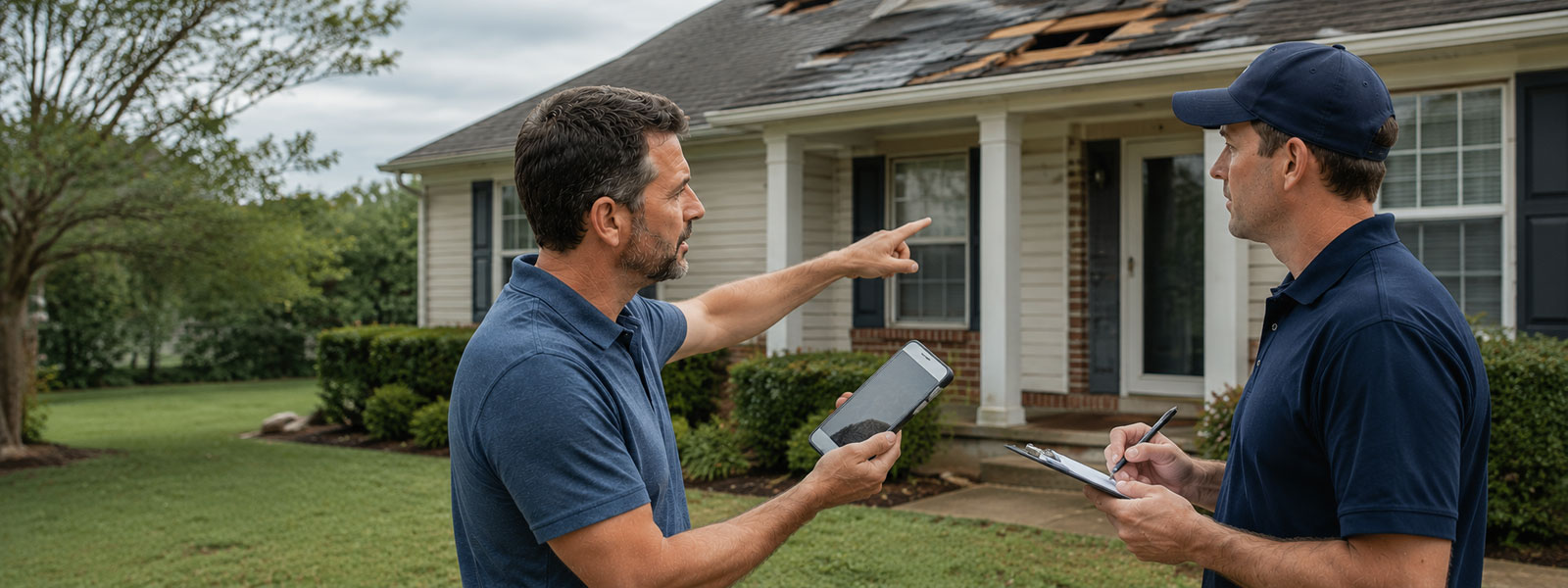
Dealing with an insurance adjuster after your property is damaged can often feel overwhelming. Depending on the type and scale of your loss, your insurance company may assign a staff (company) adjuster, an independent adjuster, or a catastrophe (CAT) adjuster to inspect your property and evaluate your claim. After major hurricanes, tornadoes, hailstorms, floods, fires, windstorms, and other property damage events, homeowners in Louisiana and Texas often encounter insurance adjusters handling a high volume of claims.
While many insurance adjusters work professionally and fairly, they investigate claims on behalf of the insurance company. Understanding the adjuster’s role and staying actively involved throughout the claims process can help protect your rights and ensure your property damage is fully documented.
This guide explains how to deal with an insurance adjuster, avoid common mistakes, and navigate the insurance claims process with greater confidence. Keep these five practical tips in mind when working with an insurance adjuster after property damage.
1. Stay Persistent: You’re Not the Adjuster’s Only Claim

Depending on the size and severity of the property damage event, an insurance adjuster may be responsible for dozens or even hundreds of claims at the same time. After hurricanes, tornadoes, hailstorms, floods, and other widespread disasters, claim volumes often increase significantly, making delays more common.
When you deal with insurance adjusters, make it as easy as possible for them to identify your claim. Whenever you call or email, provide your property address, policy number, and claim number if available. This helps avoid confusion and keeps the conversation focused on your claim.
Following up regularly is also important. Staying in contact can help ensure your claim continues moving through the process without unnecessary delays. While you don’t need to contact your adjuster every day, checking in periodically and requesting updates demonstrates that you are actively monitoring your claim.
If your adjuster repeatedly fails to respond, contact your insurance company. The insurer may be able to provide a status update, encourage the adjuster to respond, or assign another adjuster if necessary.
Why Response Times Slow Down After a Storm
After major disasters, insurance companies often deploy catastrophe (CAT) adjusters to areas with widespread property damage. These adjusters help manage the surge in claims following hurricanes, severe storms, tornadoes, or other large-scale events.
Because CAT adjusters may inspect numerous properties each day, it can take longer to schedule inspections, return phone calls, or provide claim updates. Delays do not always indicate a problem with your claim, but they do make proactive communication more important. Continue following up respectfully, keep track of requested information, and respond promptly if the insurer needs additional documentation.
Keep Track of Every Conversation
Keeping detailed records can help you stay organized throughout the claims process and quickly resolve misunderstandings. Maintain a communication log that includes:
- The date and time of each phone call or meeting
- The name and job title of the person you spoke with
- A summary of what was discussed
- Any deadlines, next steps, or documents requested
Also save copies of emails, letters, text messages, and voicemail messages related to your claim. Having a complete record of your communications can be helpful if questions arise later.
How to Follow Up the Right Way
When you communicate with an insurance adjuster, keep your follow-ups professional, concise, and consistent. If the adjuster provides an estimated timeline for the next step, make a note of it and follow up if that deadline passes without an update.
Whenever possible, confirm important conversations in writing by sending a brief email summarizing what was discussed and any agreed-upon next steps. Written records help minimize misunderstandings and create a clear timeline of your communications.
If you continue experiencing communication problems despite reasonable follow-up efforts, contact the insurance company’s claims department to request assistance or ask that your concerns be reviewed. Remaining courteous while staying persistent helps safeguard your interests throughout the insurance claims process.
2. Know Who the Insurance Adjuster Really Works For
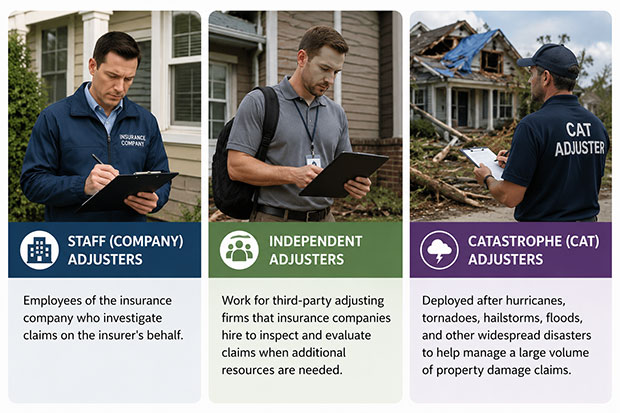
When you’re learning how to deal with an insurance adjuster after home damage, one of the most important things to understand is the adjuster’s role. Whether you work with a staff adjuster, an independent adjuster, or a catastrophe (CAT) adjuster, they investigate your claim on behalf of the insurance company, not the homeowner.
Their job is to inspect the property, review the available evidence, evaluate the reported damage under the terms of your policy, and submit their findings to the insurer. While many adjusters strive to conduct fair and thorough inspections, the insurance company ultimately decides whether the claim is covered and how much it will pay.
Understanding this relationship helps homeowners stay actively involved throughout the claims process and independently verify that all covered property damage has been documented.
Staff Adjusters vs. Independent Adjusters vs. CAT Adjusters
Insurance companies use different types of adjusters depending on the circumstances of the claim.
- Staff (company) adjusters are employees of the insurance company who investigate claims on the insurer’s behalf.
- Independent adjusters work for third-party adjusting firms that insurance companies hire to inspect and evaluate claims when additional resources are needed.
- Catastrophe (CAT) adjusters are often deployed after hurricanes, tornadoes, hailstorms, floods, and other widespread disasters to help manage a large volume of property damage claims.
Although their employment arrangements differ, each adjuster’s role is the same: to investigate the claim and provide findings and recommendations to the insurance company.
What Insurance Adjusters Look For During an Inspection
During the inspection, the adjuster gathers information to evaluate your claim under the terms of your homeowners insurance policy. This typically includes:
- The cause of the loss
- The extent of visible property damage
- Whether the damage appears consistent with the reported event
- Any pre-existing damage or unrelated conditions
- Supporting photographs, videos, and other documentation
- Contractor estimates, repair reports, or other supporting documentation you provide
- Any applicable policy exclusions or coverage limitations
The adjuster’s observations help the insurance company evaluate the claim, but the insurer makes the final coverage decision.
What Information Should You Give an Insurance Adjuster?
Provide accurate factual information about the loss and cooperate with reasonable requests for documentation. Helpful information may include:
- Your policy and claim number
- The date the damage occurred or was discovered
- A description of what happened
- Photos or videos of the damage
- Receipts for emergency repairs or temporary protective measures
- Contractor reports or repair estimates, if available
Stick to the facts when answering questions. If you do not know the answer to something, say so rather than guessing. If the adjuster uses unfamiliar insurance terms or policy language, ask for clarification before responding.
Why Their Incentives Matter
Insurance adjusters play an important role in the claims process, but they work on behalf of the insurance company throughout their investigation. Their findings help the insurer evaluate coverage and determine the next steps for the claim.
For that reason, homeowners should stay actively involved throughout the claims process, review the adjuster’s findings carefully, and raise any concerns with the insurance company if important damage appears to have been overlooked. Taking an active role in the process can help protect your rights and support your claim if questions arise later.
3. Document Everything and Supervise the Inspection
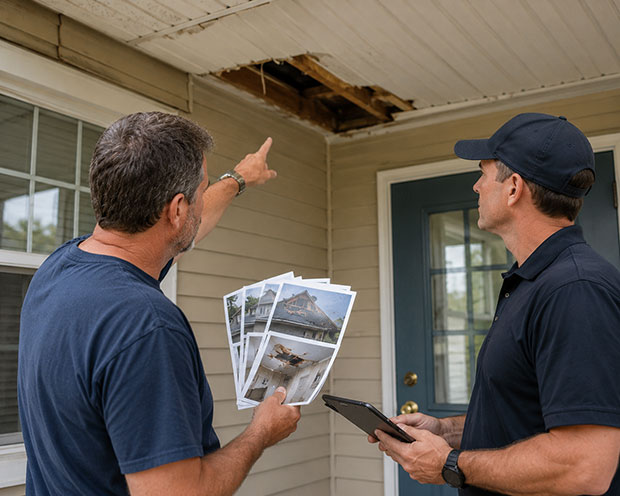
Thorough documentation can strengthen your property damage claim and help ensure the insurance company has a complete record of your losses. Don’t rely solely on the adjuster’s inspection. Create your own record of the damage before any cleanup or repairs begin, and continue documenting the property throughout the claims process.
During the inspection, show the adjuster every area you believe was affected. If any damage is overlooked, point it out and ask that it be inspected and photographed. The adjuster’s photographs and inspection notes often become an important part of the insurance company’s claim evaluation, so it’s important that they accurately reflect the condition of your property.
What to Document Before the Adjuster Arrives
Before the inspection, document as much evidence as possible to preserve the condition of your property. This may include:
- Clear photographs of all damaged areas from multiple angles
- Videos showing the extent of the damage
- Photos or videos with timestamps when available
- A written list describing each damaged area and affected personal property
- Records of temporary repairs completed to prevent additional damage
- Copies of any communications with the insurance company
The more complete your documentation, the easier it is to compare your records with the adjuster’s findings later.
Be Present During the Inspection
Whenever possible, attend the inspection in person. Walking through the property with the adjuster allows you to explain your concerns, answer questions, and ensure every damaged area is evaluated.
As the inspection progresses:
- Point out both obvious and less visible damage.
- Ask questions if you are unsure why certain areas are being inspected.
- Photograph the same damage the adjuster photographs for your own records.
- Mention any damage that may not be immediately visible but became apparent after the loss.
Taking an active role during the inspection can help ensure all observable property damage is documented.
Keep All Claim Documents Organized
Keeping your claim records organized makes it easier to respond to requests from the insurance company and track the progress of your claim. Consider maintaining a dedicated folder containing:
- Repair estimates
- Contractor reports
- Invoices and receipts
- Temporary repair expenses
- Inspection reports
- Emails, letters, and other correspondence with the insurer
- Notes from phone conversations
Having these documents readily available can help support your claim if questions arise later.
Compare the Adjuster’s Report With Your Own Records
After the inspection, carefully review the adjuster’s report or estimate, if it is available to you. Compare the listed damage with your own photographs, videos, professional assessments, and written records.
If you believe important damage was omitted or described inaccurately, notify the insurance company promptly and provide supporting documentation. Request written confirmation if updates or corrections are made to the claim file. Reviewing the adjuster’s findings carefully can help ensure the insurance company considers all relevant damage before making a coverage decision.
4. Watch What You Say to the Insurance Adjuster
Clear, accurate communication is an important part of the insurance claims process. Although many adjusters are professional and helpful, remember that they investigate claims on behalf of the insurance company. The information you provide may become part of your claim file and could influence how the insurer evaluates your loss.
Answer questions honestly and stick to the facts. If you do not know the answer to a question, it is better to say so than to speculate. Likewise, if the adjuster uses unfamiliar insurance terms or policy language, ask for clarification before responding. Understanding what is being asked can help prevent misunderstandings and ensure your responses accurately reflect the condition of your property.
Statements That Can Hurt Your Claim
The way you describe the damage can affect how your claim is evaluated. Avoid making statements that guess, speculate, or minimize the extent of your losses. For example, avoid:
- Guessing what caused the damage if you are unsure
- Saying the damage is “minor” or “not that bad” before the property has been fully inspected
- Estimating repair costs without supporting documentation
- Speculating about damage in areas that have not yet been inspected
- Providing inconsistent information during different conversations
Stick to what you personally observed and let photographs, inspection findings, contractor reports, and other documentation support your claim. Careful communication helps prevent misunderstandings that could damage your claim.
Should You Give a Recorded Statement?
In some situations, the insurance company may ask you to provide a recorded statement about the loss. These requests are more common in some claims than others and may help the insurer better understand what happened.
Before agreeing to a recorded statement, understand why it is being requested and what information will be discussed. Answer questions truthfully and avoid guessing if you are uncertain about any details. If the request involves a complex claim, significant property damage, or questions about coverage, you may wish to seek legal guidance before proceeding.
Before You Sign Any Documents
Read every document carefully before signing it. Insurance companies may ask you to complete documents such as a Proof of Loss form, repair authorization, settlement agreement, or other claim-related paperwork.
Before signing:
- Review the information for accuracy and completeness.
- Make sure you understand the purpose of the document.
- Ask questions if any policy terms or claim language are unclear.
- Keep a copy of every document you sign for your records.
If you are unsure how a document could affect your claim or your rights under the policy, consider seeking legal guidance before signing.
5. Recommendation vs. Approval: Know Your Options
After inspecting your property, an insurance adjuster may explain what damage appears to be covered or discuss what they plan to recommend to the insurance company. However, it’s important to understand that an adjuster’s recommendation is generally not the final decision.
In most cases, independent adjusters inspect the property, document the damage, and submit their findings to the insurance company. The insurer then reviews the inspection report, policy terms, and supporting documentation before making the final coverage and payment decision.
Because of this process, comments made during the inspection should not be interpreted as a guarantee that a particular repair or item will be covered.
What Happens After the Adjuster’s Recommendation
Once the inspection is complete, the adjuster submits photographs, notes, measurements, and other documentation to the insurance company. The insurer reviews this information alongside your policy, supporting documents, and any additional information requested during the claim investigation.
After completing its review, the insurance company may:
- Approve coverage for all or part of the reported damage
- Request additional documentation or another inspection
- Issue payment for covered damage
- Explain why certain damage is not covered under the policy
Review the insurer’s written decision carefully and keep copies of all correspondence for your records.
Don’t Rush to Accept the First Settlement Offer
The first payment, estimate, or settlement proposal may not always reflect the full extent of the damage, particularly if additional issues are discovered after repairs begin. Before accepting payment or signing any final settlement documents:
- Review the insurance company’s estimate carefully.
- Compare it with your own photographs and documentation.
- Consider obtaining a contractor’s estimate if appropriate.
- Confirm that all covered damage has been included.
Taking time to review the insurer’s evaluation can help ensure your claim accurately reflects the documented property damage.
What If You Disagree With the Insurance Company’s Estimate?
If you believe the insurance company’s estimate does not fully account for your covered damage, you may have several options depending on your policy and the circumstances of your claim. These may include:
- Requesting a reinspection
- Submitting additional photographs or documentation
- Providing contractor estimates or professional reports
- Filing a supplemental claim if additional covered damage is discovered
- Requesting an appraisal if your policy includes that option, and the disagreement concerns the value of the loss rather than whether the damage is covered
Review your policy carefully to understand which options are available and any requirements that may apply.
Filing a Complaint or Requesting an Appraisal
If you are unable to resolve a dispute with your insurance company, additional options may be available.
Many homeowners insurance policies include an appraisal provision that can help resolve disagreements about the amount of a covered loss. However, appraisal generally addresses valuation disputes, not disagreements over whether the policy provides coverage for the damage.
If you believe the insurance company has not handled your claim appropriately, you may also file a complaint with the appropriate state insurance department, such as the Louisiana Department of Insurance or the Texas Department of Insurance. These agencies review consumer complaints and oversee insurers’ compliance with applicable insurance laws.
If significant disputes remain regarding coverage, claim delays, or underpayment, speaking with a property damage attorney may help you better understand your legal options.
Bonus Tips for Dealing with Independent Insurance Adjusters
Even after the inspection is complete, staying organized and actively involved can help keep your claim on track. These additional best practices can make it easier to communicate with the insurance company, monitor your claim, and support your position if questions arise later.
Keeping thorough records throughout the insurance claims process can help you stay organized and verify the information submitted to the insurance company. Whenever possible:
- Document your property before the insurance adjuster arrives.
- Take clear photographs and videos of all visible property damage.
- Save images with timestamps when available.
- Organize photos, videos, and claim documents in one secure location.
- Keep copies of repair estimates, invoices, receipts, and contractor reports.
- Maintain a communication log with the dates, times, and key details of every conversation with the adjuster or insurance company.
- Save emails, letters, text messages, and voicemail messages related to your claim.
- Review your records alongside the adjuster’s findings to confirm all covered damage has been documented.
Well-organized records can help you respond more efficiently to requests for additional information and support your claim if questions arise during the insurance claims process.
Why Independent Insurance Adjusters Can Be Difficult to Deal With
Most insurance adjusters work to investigate claims professionally and document property damage accurately. However, homeowners may still encounter challenges during the claims process. Understanding these challenges can help you stay informed, communicate effectively, and respond appropriately if questions or disputes arise.
Conflicting Interests
Independent adjusters work for third-party adjusting firms, but they investigate claims on behalf of the insurance company rather than the homeowner. Their findings help the insurer evaluate coverage and determine the next steps for the claim. For this reason, homeowners should review the adjuster’s findings carefully and ask questions if they believe important damage or supporting information has been overlooked.
Heavy Workload
After widespread disasters, adjusters often manage a high volume of claims. Heavy workloads can contribute to slower inspections, delayed responses, and longer claim processing times, making consistent follow-up especially important. Staying organized and following up regularly can help keep your claim moving forward.
Varying Levels of Experience
Insurance adjusters have different levels of training and experience. Some may have extensive experience with complex property damage claims, while others may be less familiar with certain types of losses. Reviewing the inspection results and comparing them with your own documentation can help identify any overlooked damage.
Pressure to Close Claims Efficiently
Insurance companies often work to resolve claims as efficiently as possible, particularly after widespread disasters. In some cases, homeowners may receive estimates or claim decisions before the full extent of the damage is understood. Carefully reviewing all documentation before accepting a payment or claim resolution can help ensure your losses have been fully evaluated.
Limited Authority
Many independent adjusters can inspect the property and recommend how a claim should be handled, but they typically cannot make the final coverage or payment decision. The insurance company reviews the adjuster’s findings before approving, modifying, or denying the claim. Understanding this distinction can help set realistic expectations throughout the claims process.
Use of Technical Jargon
Insurance policies and claim documents often contain technical terms that can be difficult to understand. If an adjuster uses unfamiliar policy language or claim terminology, ask for a clear explanation before responding or signing any documents. Understanding the process can help you make informed decisions about your claim.
If your claim is delayed, underpaid, denied, or involves a dispute over coverage or the amount of damage, you may benefit from speaking with a property damage attorney. Pandit Law helps homeowners understand their rights, evaluate insurance claim disputes, and pursue available legal options when necessary.
State-Specific Insurance Adjuster Rules for Louisiana and Texas Homeowners
Although the insurance claims process follows many of the same general principles, Louisiana and Texas have different laws governing how insurers investigate property damage claims, communicate with policyholders, and issue claim decisions. Understanding these state-specific requirements can help you know what to expect after an insurance adjuster inspects your property.
Louisiana Homeowners
Louisiana law establishes deadlines for insurers to begin investigating property damage claims and to issue payment for covered losses once they receive satisfactory written proof of loss. In most property damage claims, insurers must initiate the loss adjustment process within 14 days after receiving notice of the loss. For catastrophic losses, such as widespread hurricane damage, insurers generally have 30 days to begin the loss adjustment process, with limited extensions permitted in certain declared emergencies.
Once the insurer receives satisfactory written proof of loss (typically the documentation the insurer needs to evaluate the claim), it generally must pay the undisputed amount or make a written settlement offer within 30 days, unless additional time is permitted under applicable law for certain catastrophic claims.
If your insurance company delays payment, underpays your claim, or disagrees with the adjuster’s findings, you can:
- Request a written explanation of the coverage decision.
- Submit additional photographs, contractor reports, or other supporting documentation.
- Request that the insurer review overlooked or newly discovered damage.
- Consider speaking with a property damage attorney if significant disputes remain regarding coverage or payment.
Keeping detailed records of your communications and documentation can help support your position if questions arise during the claims process.
Texas Homeowners
Texas law requires insurers to process property damage claims within specific timeframes. After receiving notice of your claim, the insurance company generally must acknowledge the claim, begin its investigation, and request any additional information it needs within 15 business days. After receiving all requested information, the insurer generally must notify you within 15 business days whether it accepts or rejects the claim. If the claim is approved, payment is generally due within 5 business days. During a declared catastrophic event, certain statutory deadlines may also be eligible for a 60-day extension where permitted by law.
For eligible coastal homeowners, the Texas Windstorm Insurance Association (TWIA) provides windstorm and hail coverage when coverage is not available through the voluntary insurance market. TWIA has its own claims procedures, but policyholders still have important rights to receive information about their claim and the basis for claim decisions.
If you disagree with the insurance company’s estimate or coverage determination, you may be able to:
- Request a reinspection.
- Submit additional documentation or contractor estimates.
- File a supplemental claim if additional covered damage is discovered.
- Use the appraisal process if the dispute involves the value of the loss rather than whether the damage is covered.
- File a complaint with the Texas Department of Insurance if you believe the claim has not been handled appropriately.
Understanding these rights can help you respond effectively if your claim is delayed, underpaid, or disputed.
When a Property Damage Lawyer Can Help
While many property damage claims are resolved without significant issues, some claims become more complicated because of delays, disputes, or questions about coverage. If you encounter these challenges when dealing with insurance adjusters, speaking with a property damage lawyer can help you better understand your rights and available options.
You may want to consider contacting a property damage lawyer if:
- Your insurance claim has been delayed without a clear explanation.
- The insurance company denies all or part of your claim.
- You believe your claim has been underpaid or that important damage was overlooked.
- You disagree with the insurance company’s coverage determination.
- Your insurance company repeatedly requests the same information without making progress on your claim.
- You suspect your claim has not been handled fairly or in good faith.
- Your property sustained extensive damage, and the claim has become complex.
A property damage lawyer may be able to assist in these situations by:
- Reviewing your homeowners insurance policy and explaining your coverage
- Evaluating the insurance company’s estimate and claim decision
- Gathering additional evidence to support your claim
- Working with contractors, engineers, or other professionals when appropriate
- Communicating and negotiating with the insurance company on your behalf
- Advising you on available dispute resolution options, including appraisal where appropriate
- Pursuing legal action when necessary to protect your rights under the policy
If claim challenges prevent you from reaching a fair resolution, a property damage lawyer can help you understand your rights and evaluate the legal options available.
Conclusion
Knowing how to deal with an insurance adjuster requires preparation, clear communication, thorough documentation, and an understanding of how the claims process works. By understanding the adjuster’s role, keeping detailed records, participating in the inspection, and reviewing every claim decision carefully, homeowners can navigate the insurance claims process with greater confidence.
If your claim is delayed, underpaid, denied, or involves a coverage dispute, take time to understand your rights and the options available under your policy. When necessary, seeking guidance from an experienced property damage attorney at Pandit Law can help you evaluate the situation and determine the most appropriate next steps.