
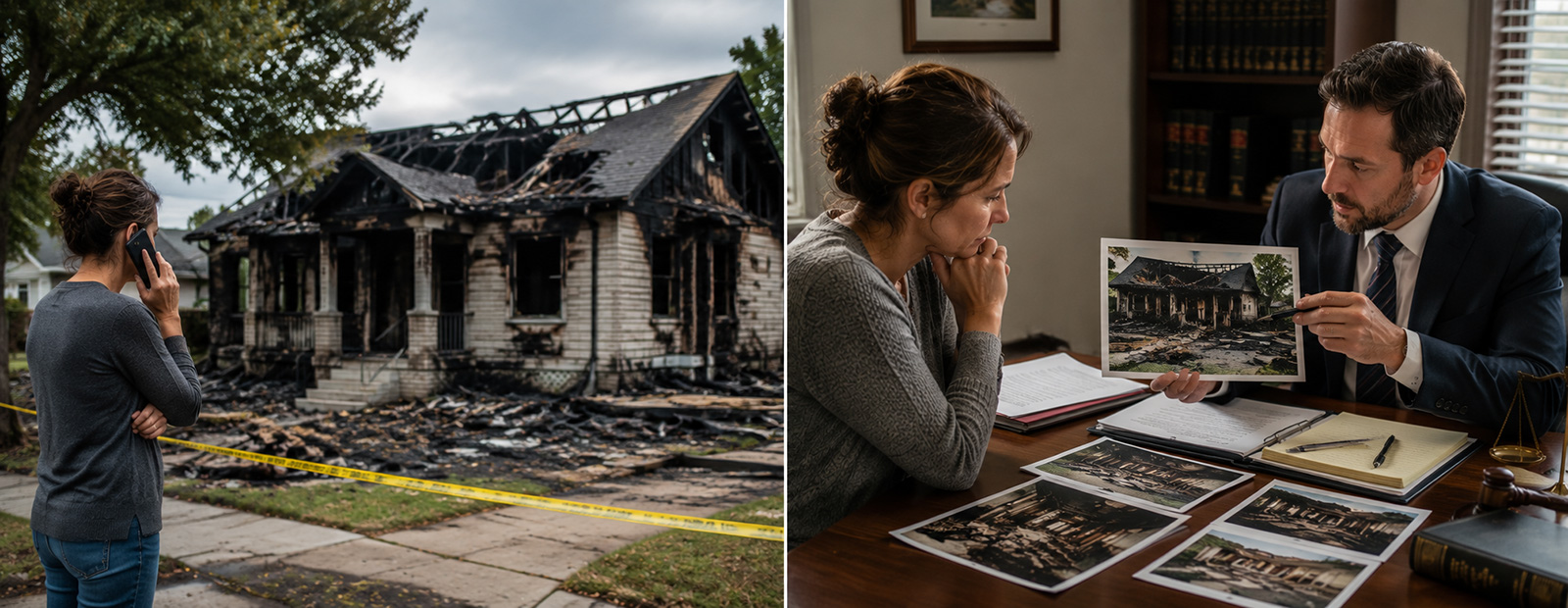
Experiencing fire damage to your property is a devastating event that can disrupt your life in more ways than one. From the emotional toll to the extensive financial burden, property owners often face numerous challenges when repairing and rebuilding after a fire. While insurance policies are designed to provide some relief by covering the costs associated with fire damage, property owners frequently find themselves battling with insurance companies over claims or discovering that their policies do not cover the full extent of the damage.
A fire damage lawsuit may become necessary when an insurer wrongfully denies or underpays a claim, a third party’s negligence contributes to the fire, or a defective product causes or spreads the damage. When these circumstances arise, consulting an attorney can help you understand your legal options and determine whether pursuing legal action may be appropriate. An attorney can evaluate your claim, identify the legal issues involved and advise you on the appropriate course of action.
This guide explains when you may want to seek legal help after your property is damaged or destroyed by fire. Knowing when to contact a property damage attorney can help you understand your options, address concerns with your insurance claim, and take appropriate steps to protect your legal rights.
Understanding Fire Damage and Insurance Claims
When a fire damages your property, you naturally turn to your homeowners insurance or commercial insurance policy for help covering repair and replacement costs. Typically, insurance policies provide coverage for fire and smoke damage, but this does not guarantee that the process will be straightforward or that your claim will be accepted without an insurance dispute.
Property owners need to understand that insurance companies are for-profit businesses that often attempt to minimize payouts on claims. As a result, many property owners encounter difficulties in dealing with insurers, such as delays, undervalued settlements, or outright denials. When this happens, legal action may be required. An attorney can evaluate your claim and help determine whether further negotiations, a formal dispute, or litigation may be appropriate.
When It May Be Time to Get Legal Help With a Fire Damage Claim
While you may hope to resolve your fire damage claim through negotiations with your insurance company, consider speaking with a property damage attorney if you encounter challenges with your claim, such as:
- Claim Denial: If your insurance company denies your fire damage claim outright, an attorney can evaluate the reason for the denial and help you understand your legal options. Common reasons for claim denials include alleged policy exclusions, disputes over the cause of the fire, or claims that the fire resulted from negligence.
- Undervalued Settlement Offers: Insurance companies may offer settlements that do not fully cover the costs of repairing or replacing your property. If you receive an offer that does not reflect the true extent of the damage, an attorney can review your claim and help determine whether further negotiations, a formal dispute, or litigation may be appropriate.
- Bad Faith Insurance Practices: Insurance companies are legally obligated to act in good faith when handling claims. If your insurer engages in bad faith practices, such as delaying your claim, misrepresenting policy terms, or refusing a proper investigation, a property damage attorney can evaluate the insurer’s conduct and advise you on the appropriate next steps.
How a Fire Damage Attorney Can Protect You

Recovering from a fire can be overwhelming, especially when you are dealing with insurance disputes, investigating the cause of the fire, or considering legal action against a responsible party. A property damage attorney can help you understand your options, protect your rights, and guide you through each stage of the claims and litigation process.
You may benefit from legal guidance if your claim has been denied, delayed, significantly undervalued, or if a third party’s negligence or a defective product contributed to the fire.
A fire damage attorney can help by:
- Reviewing Your Insurance Policy: Your attorney can explain your policy’s coverage, exclusions, and conditions and identify issues that may affect your claim.
- Building a Strong Claim: They can help gather photographs, repair estimates, fire investigation reports, expert opinions, and other supporting documentation needed to strengthen your case.
- Handling Communications and Negotiations: Your attorney can communicate with the insurance company and adjusters on your behalf and work to resolve disputes over coverage, liability, or the value of your claim.
- Identifying Liable Parties: If someone else’s negligence or a defective product contributed to the fire, your attorney can help determine who may be legally responsible and the type of claim that may apply.
- Representing You Throughout Litigation: If a lawsuit becomes necessary, your attorney can manage the legal process, including filing court documents, handling discovery, participating in settlement discussions or mediation, and representing you at trial if needed.
- Protecting Your Legal Rights: Throughout the process, your attorney can help you meet important deadlines, comply with legal requirements, protect your rights, and pursue fair compensation available under your insurance policy.
Whether your case involves an insurance company, a negligent third party, or a defective product, obtaining legal guidance early can help you better understand your rights and make informed decisions when navigating a fire damage insurance claim.
Navigating the Fire Damage Lawsuit Process With an Attorney
If your property has been damaged by fire and you believe your insurance company is not handling your claim fairly, getting legal guidance can help you understand your options and determine the appropriate next steps.
While every case is different, your attorney can guide you through the legal process and handle the appropriate legal proceedings on your behalf.
1. Document the Damage
Thoroughly document the extent of the damage as soon as possible. This evidence can be important for your insurance claim and any subsequent legal action. Make sure to:
- Take photographs and videos of the damaged areas.
- Keep a detailed inventory of all personal property that was damaged or destroyed by fire.
- Obtain estimates for repair or replacement costs from licensed contractors and appraisers.
- Keep all receipts for additional living expenses and any other costs you incur due to the fire.
The more detailed your documentation, the more information your attorney and insurance company will have when evaluating the claim.
2. Notify Your Insurance Company
Report the fire to your insurance company as soon as possible and follow the claims reporting requirements in your policy. Keep copies of claim forms, correspondence, photographs, receipts, repair estimates, and any other records related to your claim. Organized documentation can help your attorney evaluate the claim if a dispute arises later.
3. Review the Claim and Insurance Policy
Review your insurance policy carefully to understand what is covered, what exclusions apply, and the coverage limits available for different types of losses. In the case of fire damage, policies typically cover:
- Structural Damage: Damage to the physical structure of your home or building, including walls, ceilings, roofs, and floors.
- Personal Property Damage: Damage to belongings such as furniture, clothing, electronics, and other valuables.
- Additional Living Expenses (ALE): Temporary living costs, such as hotel stays or rental homes, increased food and commuting costs, and everyday necessities, if your home becomes uninhabitable while repairs are underway.
If your insurer disputes coverage, applies exclusions you believe do not apply, disputes coverage limits, or makes a claim decision you do not understand, an attorney can help interpret the policy and evaluate the insurer’s position.
4. Know When to Seek Legal Help
Getting legal guidance early can help you understand your options before an insurance dispute escalates. Consider speaking with a property damage attorney if your claim has been denied, delayed, significantly undervalued, or if you have concerns about how your insurer is handling the claim.
5. Attorney Investigates and Evaluates the Case
Your attorney can review the facts and circumstances surrounding the fire, examine relevant documents and evidence, evaluate the insurance claim and policy, and determine what legal issues may apply. This investigation can help your attorney assess the strength of your claim and determine the appropriate legal strategy.
6. Attorney Handles Negotiations or Pre-Lawsuit Resolution
Your attorney may communicate with the insurer, challenge coverage positions, negotiate the value of the claim, and pursue available pre-suit remedies. These efforts may help resolve the disputes without requiring litigation.
7. Attorney Determines Whether Litigation Is Appropriate
If the dispute cannot be resolved through negotiations or other available remedies, your attorney can evaluate whether filing a lawsuit is appropriate based on the facts of your claim, applicable law, potential recovery, and deadlines.
8. Attorney Files and Manages the Lawsuit
If litigation is appropriate, your attorney will handle the filing and manage the legal process on your behalf. This includes preparing and filing the necessary court documents, meeting applicable deadlines, and representing your interests throughout the lawsuit.
9. Discovery and Evidence Gathering
After a lawsuit is filed, your attorney can manage the discovery process and help gather and exchange relevant evidence. This may include documents, written questions, expert reports, and witness testimony.
10. Settlement, Mediation or Trial
Many fire damage cases are resolved through settlement negotiations or mediation before reaching trial. Your attorney can negotiate on your behalf and advise you about whether a proposed resolution is appropriate.
If the parties cannot reach an agreement, your attorney can represent you at trial, where both sides present evidence and legal arguments before the court.
11. Resolution and Compensation
The legal process may conclude through a settlement, mediation, or court judgment. If the court rules in your favor, it may award compensation consistent with the evidence presented and applicable law. The specific outcome depends on the facts of the case, the legal claims involved, and the available evidence.
Compensation in Fire Damage Lawsuits
If legal action is appropriate, the compensation available will depend on the type of claim, the applicable law, the insurance policy, and the losses supported by evidence. An attorney can evaluate which damages may be recoverable in your specific case. These may include:

- Smoke and Ash Remediation: The reasonable cost of cleaning, deodorizing, and restoring property affected by smoke residue, soot, and ash may be recoverable when those losses are covered or otherwise legally recoverable.
- Property Damage: Compensation may be available for the cost of repairing or rebuilding the damaged property, including structural damage and the replacement of any destroyed personal property, when supported by evidence.
- Additional Living Expenses (ALE): If the fire forces you to leave your home temporarily, you may be able to recover certain additional costs, such as hotel stays, meals, and transportation, depending on your policy and applicable law.
- Business Interruption Losses: For commercial property owners, a fire can result in lost revenue due to business interruption. Compensation may be available for certain business losses, depending on the applicable coverage, law, and evidence supporting the loss.
- Emotional Distress and Pain and Suffering: In some cases, property owners may be able to recover damages for emotional distress or trauma resulting from a fire, depending on the circumstances and applicable law.
- Punitive Damages: If the fire was caused by egregious negligence, intentional misconduct, or bad faith practices by the insurance company, punitive damages may be available in some cases where permitted by applicable law.
Conclusion
Filing a fire damage lawsuit can be a challenging and time-consuming process, especially when insurance disputes, third-party negligence, or product liability issues arise. Working with a property damage attorney can help you understand your legal options, protect your rights, and navigate the claims and litigation process with confidence, helping you move forward with greater confidence after a devastating fire.
You do not have to face these challenges alone. If your property has been damaged by fire in Louisiana or Texas, contact Pandit Law for a free case evaluation. Our team can review your situation, explain the legal options available, and help you determine the appropriate next steps based on the facts of your case.