
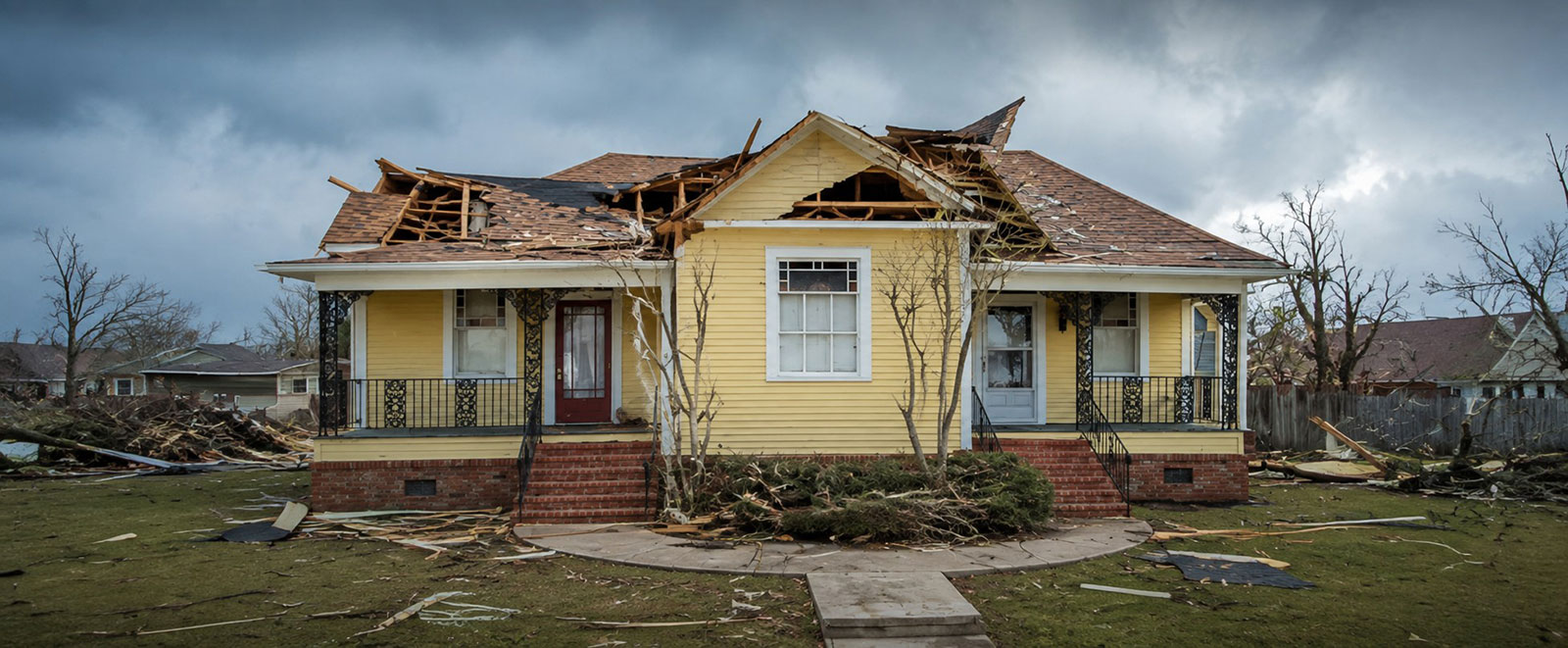
One moment, you’re sheltering from the storm. The next, you’re looking at shattered walls, scattered belongings, and wondering where your family will sleep tonight. After a tornado, it’s normal to feel frightened and unsure what to do next.
If you’re asking what happens if your house is destroyed by a tornado, you’re not alone. Knowing what comes next can help you make informed decisions, avoid costly mistakes, and protect your insurance claim.
This guide walks you through what to expect, from staying safe and documenting damage to understanding your coverage and rebuilding your home. If your claim is delayed, denied, underpaid, or disputed, Pandit Law can help homeowners in Louisiana and Texas understand their legal options and navigate complex insurance claim disputes.
Step 1: Make Sure Everyone Is Safe and Secure the Property
The first few hours after a tornado can be chaotic. Before thinking about repairs or insurance, focus on everyone’s safety. Once the immediate danger has passed, take careful steps to secure the property without putting yourself at risk.
What Happens After a Tornado?
A home that has been hit by a tornado may have hidden hazards even if the damage appears manageable. Structural damage, broken utility lines, and debris can create dangerous conditions. Local authorities may also restrict access until they determine the area is safe.
Take a moment to assess the situation from a safe distance. If you believe someone is injured or trapped, contact emergency services immediately. Your safety should always come before inspecting damage or recovering belongings.
What You Should Do
Once it is safe to act, you can begin protecting yourself and your property.
- Check that everyone in your household and your pets are safe and accounted for.
- Leave the property if you notice structural damage, unstable walls, or a risk of collapse.
- Stay away from downed power lines, gas leaks, standing water, and exposed electrical wiring.
- Wait until local officials say it is safe before re-entering your home.
- Contact emergency services if you suspect immediate hazards or anyone needs medical attention.
These precautions reduce the risk of injury and allow you to move forward with the recovery process safely.
Step 2: Protect Your Insurance Claim Before It Begins
Once everyone is safe, your next priority is preserving evidence. The condition of your property immediately after the storm can play an important role in how your insurer evaluates the claim.
What Happens Next?
It may be tempting to start clearing debris right away, but cleaning up too soon can make it harder to show the full extent of the damage. Before moving or repairing anything, create a clear record of what the tornado damaged.
Good documentation helps establish the condition of your property and supports conversations with your insurer throughout the claims process.
What You Should Do
Start collecting information before major cleanup begins.
- Photograph and record every damaged room, structure, and personal belonging from multiple angles.
- Create an inventory of damaged or destroyed items, including descriptions and purchase information if available.
- If it is safe to do so, make temporary repairs, such as tarping the damaged roof, to limit further damage to your home.
- Keep receipts for emergency repairs, temporary supplies, lodging, and other disaster-related expenses.
- Leave damaged materials and belongings in place until your insurer confirms they can be removed, unless they create a safety hazard.
Careful documentation now can help prevent unnecessary questions or disputes later in the claims process.
Step 3: File Your Tornado Insurance Claim
After you’ve documented the damage, it’s time to notify your insurer. Reporting the loss promptly starts the claims process and gives you a clear record of when the process began.
What Happens After You Report Tornado Damage?
Once your insurer receives your report, it typically opens a claim, assigns a claim number, and begins reviewing the information you’ve provided. An adjuster may contact you to schedule a property inspection and request additional documentation before determining what your policy covers.
Responding promptly and keeping organized records can help the process move more smoothly.
How to File a Tornado Insurance Claim
When filing a tornado damage insurance claim, most homeowners can stay organized by following these steps:
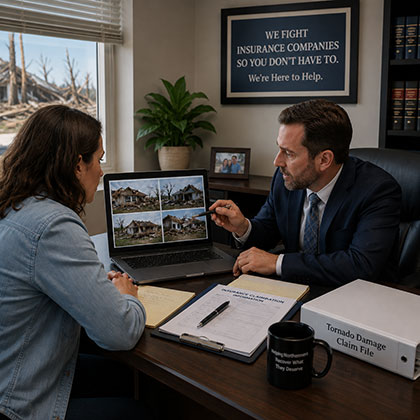
- Report the tornado damage to your insurer as soon as reasonably possible.
- Gather your insurance policy, photographs, videos, receipts, and other supporting documents.
- File the claim and save your claim number for future reference.
- Prepare for the adjuster’s inspection by making damaged areas accessible when it is safe to do so.
- Review your policy to understand your coverage, deductibles, and any applicable limits.
- Keep copies of emails, letters, estimates, and notes from every conversation.
- Follow up regularly to stay informed about the status of your claim.
Building a complete claim file from the beginning can make it easier to respond to requests from your insurer as the claim moves forward.
Step 4: Find Out Whether Your Home Can Be Repaired or Must Be Rebuilt
As your claim moves forward, your insurer will determine whether your home can be repaired or should be treated as a total loss. Understanding how that decision is made can help you evaluate your options with confidence.
How Insurers Assess Tornado Damage to Your House
Insurers typically rely on inspections, repair estimates, engineering reports, and your policy terms to evaluate damage to your home. They consider the condition of the structure, the cost of repairs, and whether rebuilding is more appropriate than restoring the existing home.
A total-loss determination depends on factors such as structural integrity, repair feasibility, applicable building requirements, and your policy terms rather than the visible damage alone. It generally means the home cannot be repaired safely or economically under the terms of the policy and applicable laws.
What to Know Before Accepting a Tornado Damage Settlement
Before agreeing to a settlement, review the basis for your insurer’s decision before accepting a settlement.
- Review the inspection findings and ask questions if anything is unclear.
- Understand why the insurer determined that your home can be repaired or should be treated as a total loss.
- Compare the settlement with your policy’s coverage, limits, and deductible.
- Consider obtaining an independent repair estimate if the insurer’s assessment appears incomplete or inaccurate.
A careful review now can help you make informed decisions before rebuilding begins.
Step 5: Understand What Your Insurance Will Pay For
Once your insurer completes its assessment, you’ll have a better idea of what your policy covers. Reviewing those details carefully can help you plan your recovery and avoid surprises as repairs or rebuilding move forward.
What Happens Next?
The amount your insurer pays depends on your policy, the type of damage, applicable deductibles, and the documentation supporting your claim. Your insurer will also determine whether covered losses are paid based on Replacement Cost Value (RCV) or Actual Cash Value (ACV), depending on your policy terms.
Understanding these provisions can help you interpret your claim decision more confidently.
What Your Homeowners Insurance May Pay For
While coverage varies by policy, it typically includes:

- Repairs or rebuilding costs for covered structural damage
- Personal property damaged by the tornado, subject to your policy terms
- RCV or ACV, depending on your coverage
- Additional coverages for debris removal or other covered expenses, if included in your policy
- Policy limits, deductibles, and any endorsements that affect how covered losses are valued
- Additional Living Expenses (ALE), which may help cover temporary housing, meals, storage, or similar costs while your home is being repaired. Keep receipts for every eligible expense.
If the tornado is part of a federally declared disaster, you may also qualify for FEMA assistance or U.S. Small Business Administration (SBA) disaster loans if you meet eligibility requirements. These programs generally supplement, rather than replace, insurance coverage.
Understanding your policy before rebuilding begins can help you make more informed financial decisions throughout the recovery process.
Step 6: Begin Rebuilding Your Home
After your claim is approved and you understand your available coverage, you can begin rebuilding. Taking a thoughtful approach now can help the project stay organized and reduce complications during construction.
What Happens After Your Tornado Insurance Claim is Approved
Depending on your policy and the scope of the damage, rebuilding may begin after your insurer issues payment or authorizes covered repairs. Contractors, inspectors, and local building officials may all play a role as work progresses.
Keep communicating with your insurer if the project uncovers additional covered damage during construction.
How to Rebuild After Tornado Damage
Choosing qualified professionals and keeping accurate records can make the rebuilding process much smoother.
- Hire licensed and insured contractors with experience repairing storm-damaged homes.
- Be cautious of storm-chasing contractors who pressure homeowners into making quick decisions.
- Follow local permit requirements and updated building codes before work begins.
- Keep photographs and written records as construction progresses.
- Save contracts, invoices, receipts, inspection reports, and approved change orders in one place.
Maintaining complete construction records can help verify completed work if your insurer requests additional information during the rebuilding process.
Step 7: Know What to Do If Your Claim Doesn’t Go as Planned
Not every insurance claim moves forward without complications. If you experience unexpected delays or disagree with your insurer’s decision, understanding your options can help you respond appropriately.
When Your Tornado Insurance Claim Hits a Roadblock
Some homeowners encounter challenges after the initial inspection or claim review. These issues may involve disagreements about the extent of the damage, questions about coverage, or delays in processing the claim.
While these situations can be frustrating, you do not have to accept a decision without understanding the reasons behind it.
How to Handle Tornado Insurance Claim Disputes
If your claim encounters problems, consider taking these steps:
- Review your insurer’s explanation carefully and request clarification if needed.
- Compare repair estimates if you believe the damage was undervalued.
- Ask for additional information if part of your claim was denied.
- Gather supporting documents, photographs, and inspection reports that address disputed issues.
- Follow your insurer’s appeal process when appropriate.
- Consider speaking with a property damage attorney if your claim is delayed, denied, underpaid, or involves a disputed total-loss determination.
Understanding your rights and staying organized can help you address claim disputes more effectively while protecting your interests.
State Insurance Laws You Should Know
Insurance claims involving tornado damage are often governed by state-specific laws that establish important deadlines and claim-handling requirements. If your home is in Louisiana or Texas, understanding these rules can help you stay informed and avoid missing key steps during the claims process.
Louisiana
Louisiana law provides several protections for homeowners pursuing property damage claims after a tornado. Some key requirements Louisiana homeowners must understand include:
- Under La. R.S. 22:1892, insurers generally must pay undisputed claim amounts within 30 days after receiving satisfactory proof of loss.
- Insurers are expected to investigate and handle claims promptly and in good faith, communicating clearly and evaluating covered losses fairly.
- Following a declared catastrophic event, homeowners generally have 180 days to submit proof of loss for covered wind damage. If emergency conditions prevent access to the property, this period may begin once access is restored.
- Depending on the circumstances, insurers may also receive up to 30 additional days to meet certain claim-handling deadlines.
- Homeowners should review their policy carefully for wind or hurricane deductibles, as these may differ from your standard deductible.
- Recent changes to some Louisiana homeowners insurance policies may also affect how roof damage and depreciation are valued.
If you have concerns about how your claim is being handled, you can seek information or assistance from the Louisiana Department of Insurance.
Texas
Texas law also establishes claim-handling requirements that help homeowners understand the insurance process after tornado damage.
- Under the Texas Prompt Payment of Claims Act (Insurance Code Chapter 542), insurers generally must acknowledge a claim within 15 days and accept or deny it within 15 business days after receiving all requested information. Once a claim is approved, payment is generally due within 5 business days.
- Insurers are expected to process claims fairly and in good faith while communicating their decisions and any requests for additional information.
- Texas Insurance Code Chapter 542A generally requires a 60-day pre-suit notice before filing many weather-related property damage lawsuits.
- Depending on the circumstances, applicable law may also allow extensions of up to 60 days for certain statutory or procedural deadlines.
- Homeowners need to review their policy for any windstorm or named-storm deductibles, as these may apply differently than the standard homeowners deductible depending on coverage terms and the location of the property.
Understanding the laws and policy provisions that apply to your claim can help you stay informed, meet important deadlines, and respond appropriately if claim issues arise.
When Should You Contact a Tornado Insurance Claim Lawyer?
Not every tornado insurance claim leads to a dispute. However, if problems arise during the process, speaking with a property damage attorney can help you understand your rights and the options available under your policy.
You may want to seek legal guidance if:

- Your insurer repeatedly delays the claim without providing a clear explanation.
- Your claim was denied, and you believe the decision does not reflect your policy or the documented damage.
- The insurer offers a settlement that appears inconsistent with the documented damage or policy coverage.
- There is a disagreement over whether your home can be repaired or should be considered a total loss.
- You need help understanding your policy, responding to coverage disputes, or protecting your interests throughout the claims process.
An experienced tornado insurance claim lawyer can review your situation, explain your legal options, and communicate with the insurer on your behalf when appropriate.
If you’re facing delays, denials, or other claim challenges in Louisiana or Texas, Pandit Law can help you evaluate your claim and help you move forward with confidence.
Conclusion
Recovering after a tornado is about more than repairing a house. Every decision you make, from documenting the damage to reviewing your insurance coverage and rebuilding, can affect your financial recovery and peace of mind. While you cannot control the damage a tornado causes, you can control how you respond afterward. Understanding your policy, keeping thorough records, and making informed decisions at every stage can put you in a stronger position if questions or disputes arise.
If questions arise or your claim becomes delayed, denied, underpaid, or disputed, you do not have to face those challenges alone. Pandit Law helps homeowners in Louisiana and Texas understand their legal options when insurance claim issues become complicated.
If you’re looking for guidance tailored to your situation, schedule a FREE claim evaluation with the Pandit Law team to discuss your claim and learn how we may be able to help.