
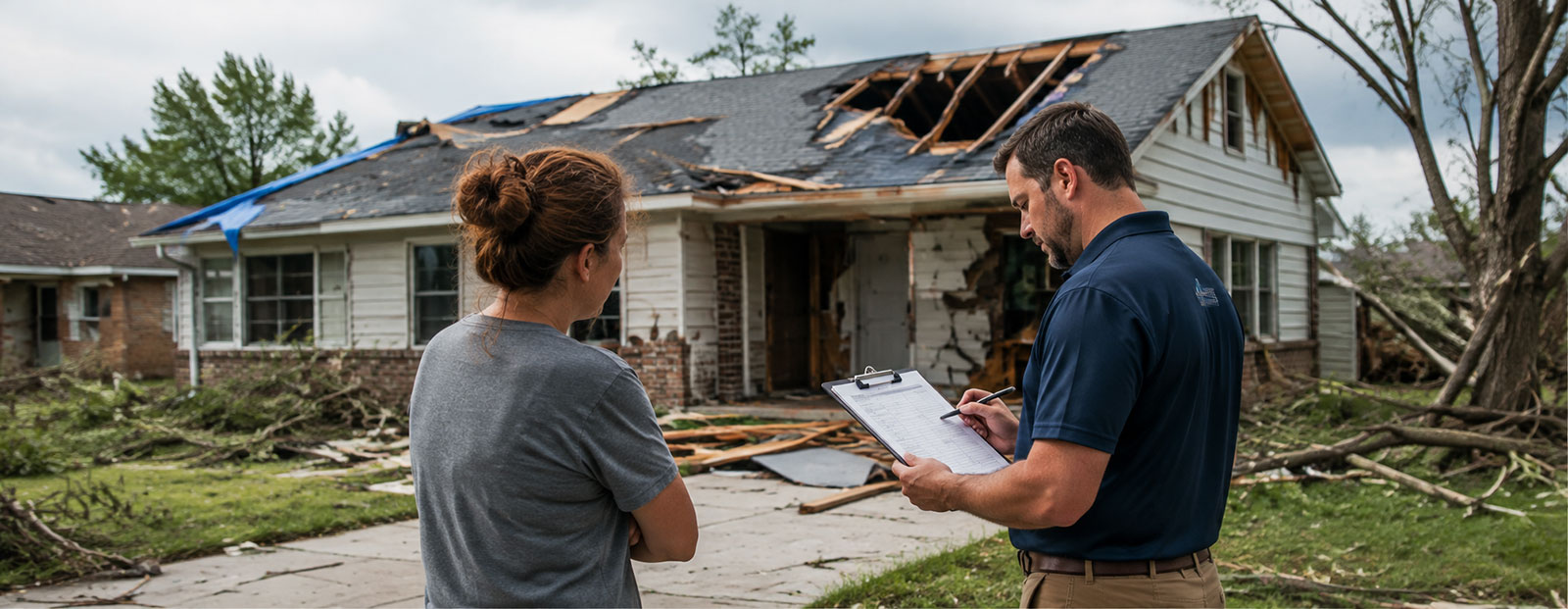
Most homeowners don’t lose money on storm claims because of their policy. They lose it because their damage was never fully assessed in the first place. It is easy to focus on visible damage and miss hidden issues that later become costly problems. Filing a claim too early can also work against you, especially if the full extent of damage has not been identified or documented.
A thorough storm damage assessment directly impacts how your claim is evaluated and valued. This guide will walk you through how to assess damage carefully, so you can approach the claims process with clarity and confidence.
Why Storm Damage Assessment Matters Before Filing a Claim
A rushed or incomplete review of your property can directly affect how your claim is handled. When damage is overlooked or poorly documented, it often leads to underpaid or even denied claims. Insurance companies rely heavily on what is reported at the beginning of the process, and that initial record often shapes how the claim is evaluated.
This is where a thorough storm damage assessment becomes critical. It gives you the opportunity to identify both visible and less obvious damage before involving the insurer, helping you present a more accurate picture of your loss.
Insurance companies evaluate claims based on documented damage, not what may have been missed. If certain damage is not identified early, especially in less visible areas, it can be difficult to revisit later. As a result, gaps in your initial assessment may limit what can be recovered.
Taking the time to prepare a clear, well-documented initial damage assessment before contacting your insurance company can help you avoid unnecessary disputes and strengthen your position from the start.
Understand Storm Type and Severity
Before you assess the damage itself, it is important to understand the type of storm that impacted your property and how severe it was. Different storms cause different patterns of damage, and identifying these patterns can help support your claim. When you can clearly connect the damage to a specific weather event, it becomes easier to explain and document your loss accurately.
Identify the Type of Storm Damage
Not all storm damage looks the same, and identifying the type of damage is an important first step in assessing your property. Different weather events leave behind different patterns, and understanding these can help establish the cause of loss.
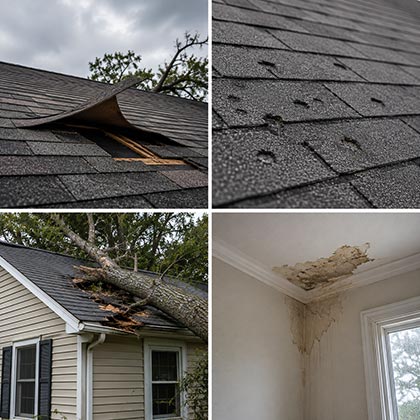
- Wind damage may result in missing shingles, lifted roofing, or structural stress.
- Hail can leave dents, cracks, or impact marks on roofs, siding, and windows.
- Tornadoes often cause widespread structural damage and debris impact.
- Water intrusion can occur through roof openings, windows, or compromised seals.
- Debris impact may damage exterior walls, windows, or outdoor structures.
Recognizing the source of the damage helps connect it directly to the storm event, which is important when presenting your claim.
Use the Enhanced Fujita Scale (EF Scale)
The EF Scale or Enhanced Fujita Scale is used to classify tornado strength based on wind speeds and the type of damage caused. It provides a simple way to understand storm severity and the type of property damage it can cause.
According to the National Weather Service, the EF Scale ranges from EF0 to EF5, with increasing wind speeds and damage intensity.
- EF0 (65–85 mph): Minor damage, such as broken branches and superficial roof damage
- EF1 (86–110 mph): Moderate damage, including missing shingles and damaged windows
- EF2 (111–135 mph): Considerable damage, including roof loss and structural impact
- EF3 (136–165 mph): Severe damage, with major structural failures
- EF4 (166–200 mph): Devastating damage to well-built homes
- EF5 (200+ mph): Complete destruction of structures
Understanding storm severity can help support the damage you report and strengthen your position if questions arise during the claims process.
Collect Storm Evidence
In addition to inspecting your property, gathering external evidence can help support your findings. This information helps link the damage to a specific storm event, which can be useful if the cause is ever questioned during the claim process.
Start by reviewing local weather reports from the date of the storm. These reports can confirm whether severe conditions were recorded in your area. You can also look for wind speed data and hail size reports, which help establish the intensity of the event. In some cases, storm tracking data may provide additional context about how the system moved through your location.
When combined with your property inspection, this type of evidence helps show that the damage was directly caused by a storm rather than other factors. It also adds credibility to your assessment if the insurance company requests further verification.
Step-by-Step Storm Damage Assessment
A thorough assessment requires a structured approach. Taking it step by step helps ensure you do not miss critical damage that could affect your claim.
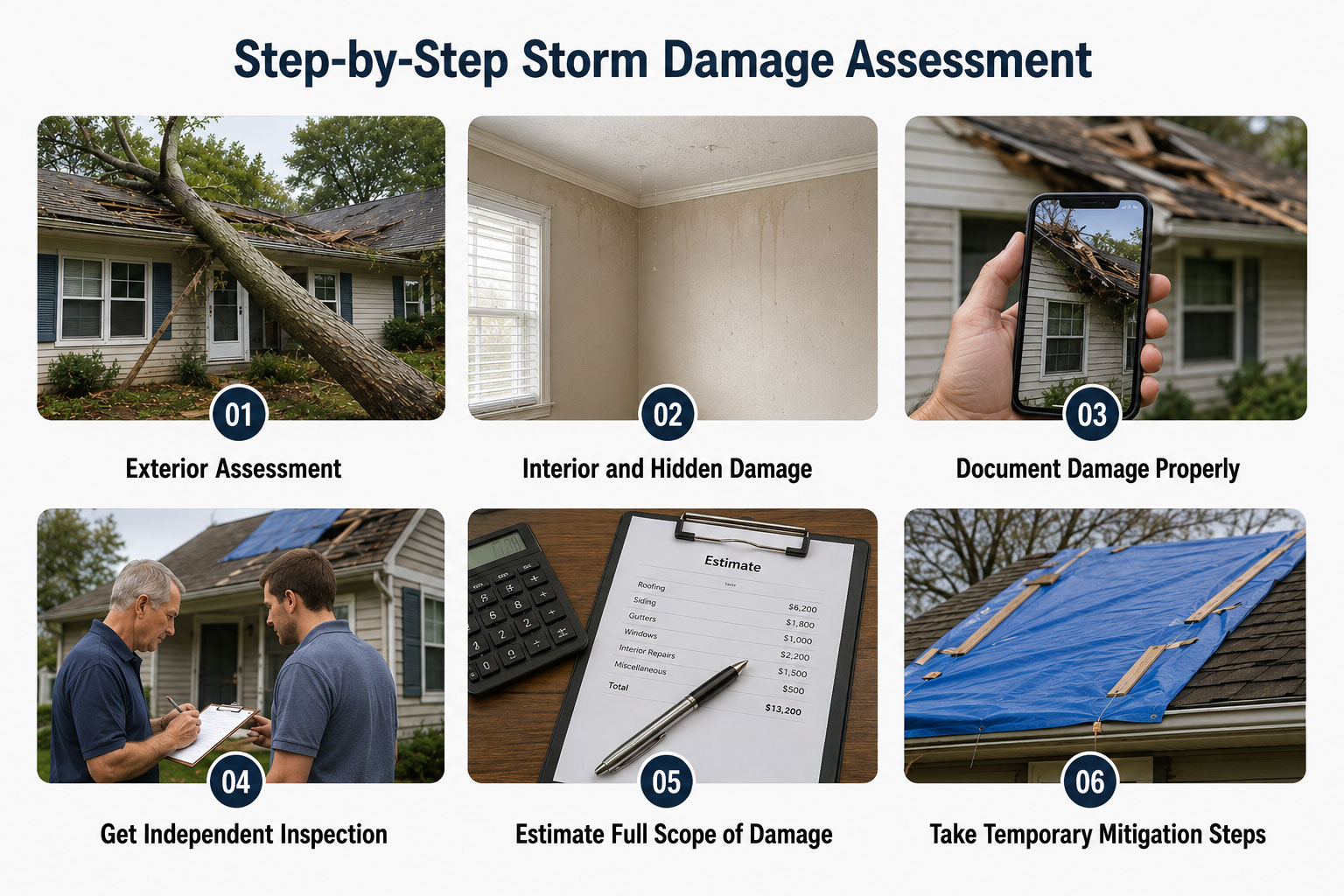
Step 1: Exterior Assessment
Start with a careful inspection of your property’s exterior. Safety comes first, so avoid climbing onto the roof or entering unstable areas. Instead, assess visible damage from the ground or with proper assistance if needed.
Focus on key areas where storm damage commonly appears:
- Roof areas may show missing shingles, dents from hail, or signs of leaks.
- Gutters and siding can appear bent, cracked, or detached.
- Windows and doors may have broken seals, cracks, or impact damage.
- Outdoor structures like fences, sheds, and patios often show debris impact.
Look for damage that appears sudden and irregular, which typically indicates storm impact rather than gradual wear.
Step 2: Interior and Hidden Damage
Many homeowners overlook interior damage, but this is often where more serious issues begin. Hidden damage can develop behind walls or above ceilings and may not be immediately visible.
Check for water stains, discoloration, or musty odors that suggest moisture intrusion. Pay close attention to ceilings, walls, and flooring for signs of softening or warping. Inspect areas like the attic and basement, where damage tends to go unnoticed.
Missing these issues early can lead to disputes later in the claims process, especially if the damage worsens over time.
Step 3: Document Damage Properly
Clear documentation is one of the most important parts of any storm damage assessment. Take both wide-angle and close-up photos to capture the full extent of the damage.
Record everything before any cleanup begins. Create a room-by-room inventory of damaged areas and items, and avoid discarding anything until it has been documented. This record serves as your proof of loss and supports your claim.
Step 4: Get Independent Inspection
If the damage appears significant or unclear, consider involving a qualified professional such as a contractor or building inspector. An independent inspection can provide a more detailed evaluation and help identify issues that may not be obvious.
This step becomes especially important if the insurance company’s estimate does not reflect the full scope of damage.
Step 5: Estimate Full Scope of Damage
Understanding the full extent of damage requires looking beyond visible repairs. In some cases, replacement may be necessary rather than a simple fix, especially when materials need to match existing structures.
It is also important to consider factors such as labor, debris removal, and any required code-related upgrades. A complete assessment ensures that all aspects of the damage are accounted for, not just the most obvious ones.
Step 6: Take Temporary Mitigation Steps
After documenting the damage, take reasonable steps to prevent further issues. This may include placing tarps over exposed areas, boarding up broken openings, or drying out affected spaces.
Keep records and receipts for any temporary measures taken. At the same time, avoid starting permanent repairs until your claim has been properly reviewed, as this can impact how the damage is evaluated.
Pre-Claim Strategy
What you do before filing a claim can significantly influence how it is reviewed and resolved. A careful approach helps you avoid common missteps that weaken your position.
Avoid rushing into the claims process before you fully understand the extent of the damage. Filing too early often means important issues are left out of the initial report. It is also important not to rely solely on the insurance company’s adjuster, as their evaluation may not always capture the full scope of loss. Similarly, accepting the first estimate without review can leave damage unaddressed.
Your assessment is “complete enough” when you have clearly identified visible and potential hidden damage, supported by documentation and, where needed, an independent inspection. Taking the time to prepare strengthens your claim and helps ensure that your loss is evaluated more accurately from the start.
Louisiana and Texas Specific Rules
Storm-related claims are often shaped by state-specific rules. Understanding how these apply can help you better prepare your assessment and avoid unnecessary issues.
Louisiana
Louisiana homeowners frequently deal with hurricane-related claims, which often involve percentage-based deductibles. Because these deductibles are calculated based on the home’s insured value, even moderate damage can result in significant out-of-pocket costs.
Louisiana law also allows for supplemental claims if additional damage is discovered after the initial claim is filed. This makes it especially important to conduct a thorough initial review, as frequent storms in the region often lead to stricter scrutiny of claims.
Texas
For coastal properties in the state, the Texas Windstorm Insurance Association (TWIA) may apply, particularly when standard policies exclude certain wind-related risks. TWIA has its own requirements, including strict documentation expectations and proof of damage tied to a specific storm event.
Texas law also requires policyholders to pay their deductible, and contractors are not allowed to waive or absorb it. This makes accurate damage assessment and documentation even more important. Failing to meet these requirements can complicate the claims process and delay resolution.
Common Mistakes During Storm Damage Assessment
Even small oversights during a storm damage assessment can lead to larger issues during the claims process. Many of these mistakes happen early and are difficult to correct later.
- Missing roof damage can result in structural issues being overlooked and excluded from the claim.
- Ignoring minor leaks may allow hidden damage to worsen and become harder to attribute to the storm.
- Failing to check hidden areas like attics or basements can leave significant damage undocumented.
- Throwing away damaged items removes critical evidence needed to support your loss.
- Filing a claim too early can lock in an incomplete assessment.
Each of these mistakes can limit what is considered during the claim review. Taking the time to assess thoroughly and document carefully helps reduce the risk of disputes and strengthens your overall claim.
How Insurance Companies Undervalue Storm Damage
Insurance companies often base their evaluations on limited or incomplete information. When a property is not thoroughly assessed, it creates opportunities for damage to be undervalued.
In many cases:
- Only visible damage is considered, while less obvious issues are overlooked.
- Storm severity data, such as wind speeds or impact patterns, may not be factored into the evaluation.
- The scope of repair is minimized, focusing on partial fixes instead of addressing the full extent of the damage.
These challenges highlight why a detailed and well-documented assessment is so important. The more clearly you can present the full extent of the damage, the less room there is for key issues to be overlooked during the claims process.
When to Contact a Storm Damage Lawyer
Sometimes, even a well-prepared claim does not move forward as expected. When that happens, it may be time to seek legal guidance.

You may consider speaking with a property damage attorney if your claim is denied, underpaid, or delayed without a clear explanation. These situations can be difficult to navigate on your own, especially when the insurer disputes the extent or cause of damage.
A storm damage lawyer can review your documentation, identify gaps or issues in the claim, and help you understand your options. Their role is to advocate for a fair evaluation based on the evidence you have gathered, particularly when challenges arise during the claims process.
Conclusion
A thorough storm damage assessment is key to how your claim is evaluated and valued. The more complete and accurate your assessment, the stronger your position during the claims process.
Avoid rushing to file before you fully understand the extent of the damage. Take time to document everything carefully and seek a detailed inspection when needed. This approach can help reduce disputes and ensure nothing important is overlooked.
If you encounter challenges such as delays, denials, or underpaid claims, you can contact Pandit Law for a free claim evaluation to understand your options.
Frequently Asked Questions
Damage assessment typically includes exterior inspection, interior evaluation, and documentation of visible and hidden damage. It may also involve reviewing structural impact, water intrusion, and debris-related damage to determine the full extent of loss caused by a storm.
The main purpose of damage assessment is to identify and document all damage caused by the storm event. This helps establish the cause of loss, supports your claim, and ensures that both visible and hidden issues are considered during the insurance review process.
EF5 is the current classification used under the Enhanced Fujita Scale and represents the most severe level of tornado damage. It replaced the older F5 category, so EF5 is considered the highest and most destructive rating today.
Yes, an EF2 tornado is considered a strong tornado. It can cause significant structural damage, including roof loss and damage to well-built homes, making it capable of causing serious property damage.