
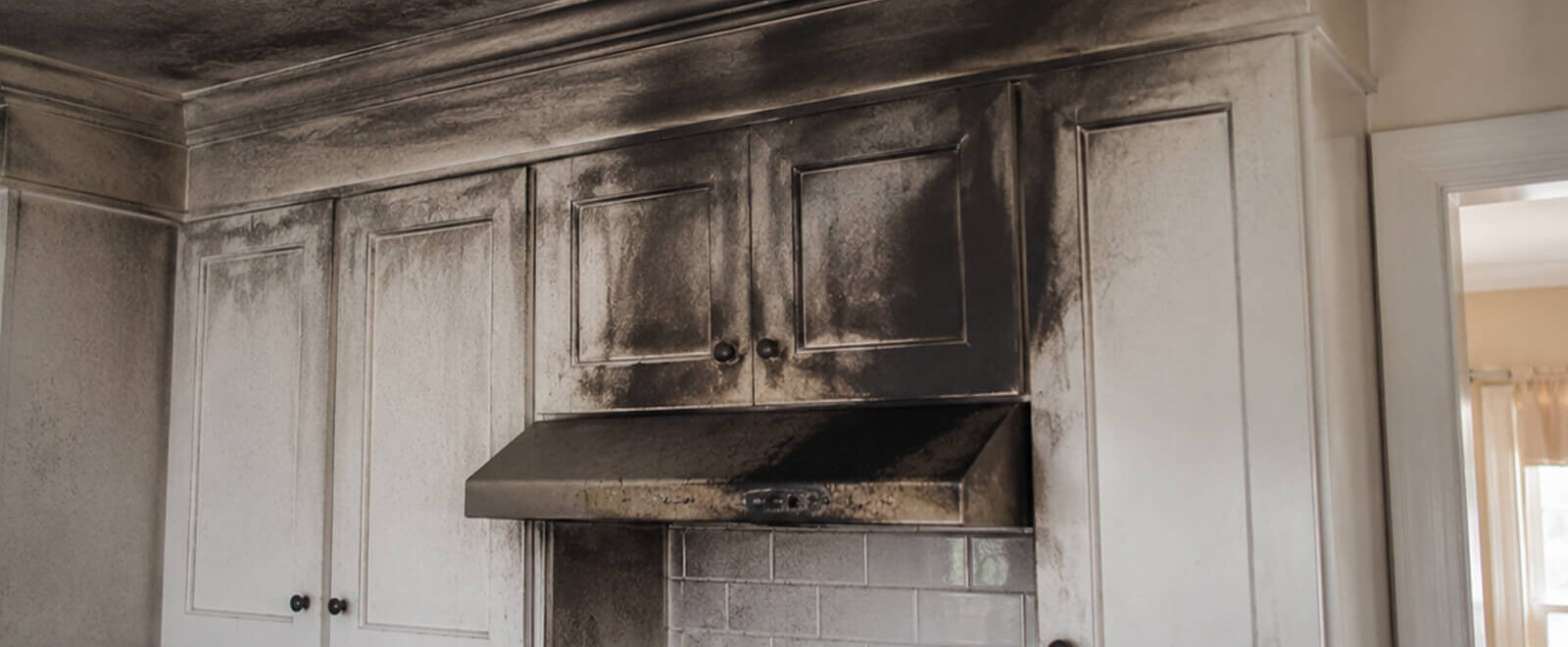
A fire does not need to burn through walls to leave lasting damage. Smoke and soot can spread far beyond the flames. Tiny particles travel quickly, settling into walls, fabrics, air systems, and electronics, creating damage that is easy to overlook but difficult to fully fix.
After a fire, insurers often focus on what they can see, while minimizing contamination, odor, and long-term risks. As a result, smoke and soot damage after a fire is frequently treated as minor or cosmetic, even when it affects indoor air quality, personal property, and structural materials. These valuation shortcuts leave many policyholders facing underpaid claims and unresolved damage.
Below, we break down how smoke and soot damage spreads, where insurers tend to undervalue losses, how the insurance claim process works, and what policyholders can do to protect their claim.
What Smoke and Soot Damage Really Does to a Property
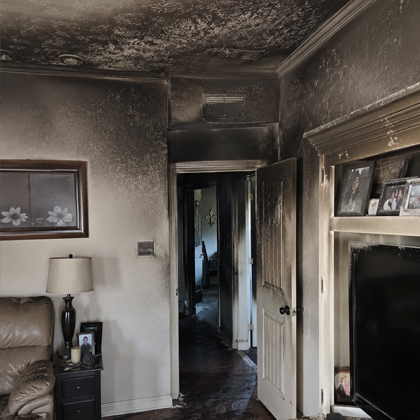
Smoke damage rarely stays confined to what you can see. While charred surfaces draw attention, hot gases and microscopic soot particles move quickly through the entire structure, settling on exposed surfaces and penetrating hidden spaces. Walls may discolor, furniture may absorb residue and odor, and air systems may carry contamination across rooms.
This is why smoke and soot damage after a fire is frequently more extensive and more expensive to address than people expect. Even areas that appear untouched can hold particles that affect air quality, materials, and long-term livability.
Visible Smoke and Soot Damage (Walls, Furniture, Surfaces)
Visible damage is usually the first thing homeowners notice. Common examples include:
- Dark soot staining on walls, ceilings, cabinets, and hard surfaces
- Smoke residue on furniture, countertops, and personal belongings
- Discoloration or film that reappears after basic cleaning
While these issues are obvious, they represent only a portion of the total loss. Cleaning visible soot does not address particles that have already migrated deeper into the property.
Hidden Damage Insurers Often Minimize (HVAC, insulation, crevices)
Smoke spreads easily through air movement and small openings. It often reaches:
- HVAC systems, where residue circulates throughout the home
- Insulation, wall cavities, and attic spaces
- Gaps behind baseboards, outlets, and fixtures
Insurers may downplay this contamination because it is harder to document, even though it can continue affecting the property long after surface repairs.
Lingering Odor and Contamination Risks
Smoke odors persist because particles embed themselves into materials rather than sitting on top. Without proper remediation:
- Odors can return weeks or months later
- Indoor air quality may remain compromised
- Occupants may experience ongoing discomfort or health concerns
This is why professional assessment and thorough remediation matter, even when surfaces look clean.
Smoke and Soot Damage to Electronics and Appliances
Electronics and appliances are especially vulnerable to smoke exposure. Even light residue can interfere with sensitive electronic components, leading to delayed failures that occur long after a claim closes. These risks are a common source of dispute in smoke and soot damage to electronics insurance claims, where insurers may underestimate the long-term impact of contamination.
Corrosion and Failure Risks in TVs, Computers, and Circuit Boards
Microscopic soot particles are often acidic and conductive. Once they settle into electronics, they can:
- Trigger corrosion on circuit boards and connectors
- Cause short circuits or erratic performance
- Lead to gradual failure rather than immediate breakdown
Because the damage progresses over time, problems may not appear until weeks or months after the fire.
Why Smoke-Damaged Electronics Often Require Replacement
Cleaning electronics rarely restores full reliability. Residue can remain in sealed components, and testing cannot always predict future failure. Despite this, insurers often push for cleaning or limited repairs instead of replacement, citing short-term functionality rather than long-term risk.
Common Disputes Over Repair vs Replacement Value
Disagreements frequently arise over whether an item can be repaired safely. Homeowners have the right to question estimates that:
- Ignore manufacturer guidance on smoke exposure
- Fail to account for loss of reliability or lifespan
- Rely on surface cleaning without internal inspection.
Challenging these assessments can be critical to protecting claim value.
Hidden Smoke Damage Insurers Commonly Overlook
Smoke damage rarely stops at what is visible or easy to wipe down. Particles travel through the structure and embed into materials that are difficult to access or replace. Surface cleaning alone often leaves behind contamination that continues to affect air quality and comfort.
HVAC System Contamination
Heating and cooling systems act like distribution networks for smoke. Common issues property owners face include:
- Residue inside ducts and air handlers
- Odors that re-circulate when the system runs
- Disputes over whether cleaning is sufficient or replacement is necessary
Insulation, Ductwork, and Airborne Particle Spread
Porous and enclosed materials absorb smoke readily. Once contaminated, they can:
- Release particles back into the air over time
- Undermine indoor air quality
- Contribute to persistent odor problems
These risks are often underestimated because the damage is hidden behind walls or ceilings.
Soft Materials (Carpet, Drapes, Mattresses, Clothing)
Soft goods absorb smoke deeply and unevenly. Insurers may favor cleaning, but replacement is often more appropriate when odors or residue remain trapped in fibers.
Structural Odor Rebound After Improper Cleaning
When remediation is rushed or incomplete, odors can return. This rebound effect signals that contamination remains and that deeper cleaning or material removal may be necessary to truly resolve the damage.
Smoke and Soot Damage Insurance Claim Process

Smoke and soot damage claims often become complicated because much of the damage is not immediately visible. Following a clear, methodical process can help protect the value of your smoke damage claim and reduce the risk of underpayment.
Below is a practical overview of how smoke and soot damage insurance claims typically unfold, along with best practices at each stage.
Step 1: Report the Damage and Secure a Claim Number
Notify your insurance company as soon as it is safe to do so. Prompt reporting helps avoid disputes about delays and establishes a formal record of the loss. Always request and save your claim number for future reference.
Step 2: Document Smoke and Soot Damage Thoroughly
Detailed documentation is critical, especially for damage that may worsen over time. Take photos and videos of:
- Visible soot staining, residue, and discoloration
- Smoke-affected contents, furniture, and electronics
- Areas that show odor, corrosion, or air quality concerns
Written notes describing odors or irritation can also help support your claim.
Step 3: Prevent Further Damage Without Destroying Evidence
You have a duty to prevent additional damage but avoid premature cleaning or disposal. Simple steps, such as ventilating the space or covering exposed items, can help while preserving evidence of the loss.
Step 4: Get Repair and Replacement Estimate
Obtain estimates that account for both visible and hidden smoke contamination. Estimates should address cleaning, repair, and replacement where appropriate, rather than assuming surface cleaning will resolve all issues.
Step 5: Track Cleaning, Repair, and Living Expenses
Smoke damage often makes a property temporarily unlivable. Keep records of:
- Cleaning and remediation costs
- Temporary housing or increased living expenses
- Storage or transportation costs for personal property
These expenses may be covered under your policy.
Step 6: Review the Insurer’s Estimate Carefully
Insurer estimates may focus on cosmetic damage or minimal cleaning. Review them closely for omissions, undervaluation, or assumptions that conflict with the actual condition of the property.
Step 7: Negotiate and Follow Through with Insurers
You are not required to accept the first offer your insurer makes. Negotiation may involve submitting additional documentation, clarifying scope issues, or challenging repair-versus-replacement decisions.
Step 8: Contact a Lawyer
If your claim is delayed, denied, or underpaid, legal guidance can help. An attorney can review policy language, identify missed damage, and advocate for a more complete evaluation of smoke and soot-related losses.
Why Smoke and Soot Damage Claims Are Underpaid
Insurance companies tend to prioritize what they can easily see and measure. When there are no obvious burn marks, smoke-related losses often receive less attention, even though the damage may be widespread. This bias is a major reason smoke and soot damage insurance claims are frequently undervalued.
Common reasons insurers underpay these claims include:
- Labeling Smoke Damage as Cosmetic or Minor: Adjusters may treat staining or odor as superficial issues rather than signs of deeper contamination.
- Preferring Cleaning Over Replacement: Insurers often push for surface cleaning, even when materials or contents have absorbed smoke and cannot be fully restored.
- Disputes Over Odor, Residue, and Air Quality: These issues are harder to quantify, which makes them easier for insurers to minimize.
- Adjuster Shortcuts and Incomplete Inspections: Limited inspections may miss hidden damage in HVAC systems, insulation, or enclosed spaces.
- Pressure to Accept Early, Low Settlement Offers: Quick payouts can discourage further investigation into the full scope of loss.
- Exploiting the Lack of Visual Proof: Smoke damage that develops over time may not be immediately obvious, making it easier to dispute.
- Narrow Interpretation of Policy Language: Insurers may apply restrictive readings of coverage provisions tied to smoke and soot losses.
Common Mistakes That Reduce Smoke and Soot Claim Payouts
Homeowners can unintentionally weaken their own soot damage insurance claim. Insurers often rely on these missteps to justify lower payouts, especially with smoke and soot damage after a fire:
- Cleaning or discarding damaged items before documenting them
- Relying solely on insurer-recommended vendors or assessments
- Accepting insurer estimates without independent review
- Overlooking damage to electronics, soft goods, or air systems
- Failing to document hidden or delayed smoke-related damage
- Missing deadlines, policy limits, or coverage conditions
- Assuming odor will fade without professional evaluation
Understanding why smoke and soot damage claims are undervalued, and avoiding common missteps, can make a meaningful difference in how a smoke and soot damage claim is evaluated and resolved.
How a Lawyer Helps in Smoke and Soot Claims
Smoke and soot claims often require more than basic documentation to receive fair consideration. A lawyer can provide structured advocacy and oversight throughout the process, including:
- Reviewing policy language and coverage triggers to identify benefits that may apply to smoke-related losses.
- Documenting losses thoroughly, including hidden damage that insurers may overlook or minimize.
- Gathering expert evidence, such as engineers, industrial hygienists, or restoration professionals, to support the true scope of damage.
- Challenging undervalued estimates that rely on surface cleaning or incomplete inspections.
- Negotiating or litigating when necessary to address delays, denials, or underpayment.
- Assisting with state-specific laws in Louisiana and Texas that affect claim handling and deadlines.
This support helps level the playing field when insurers dispute the extent of smoke and soot damage.
Conclusion
Smoke and soot damage often extends far beyond what is visible, yet insurance evaluations frequently focus on surface issues. This mismatch leads to underpaid claims that leave property owners dealing with lingering odors, contamination, and unresolved losses. Underpayment is common, but it is not final. Claim decisions can be reviewed, challenged, and corrected with the right documentation and advocacy.
If your smoke or soot damage claim feels undervalued, request a free claim evaluation with Pandit Law to better understand your options and next steps.
FAQs About Smoke and Soot Damage Claims
Homeowners insurance often covers smoke and soot damage caused by a covered event, such as a fire. Coverage may apply even if flames never reached your property. However, the scope of coverage depends on your policy terms, exclusions, and limits, which insurers may interpret narrowly.
A smoke damage claim may include cleaning, repair, or replacement of affected materials and personal property. It can also cover odor remediation, damage to electronics, and additional living expenses if the property becomes temporarily uninhabitable, subject to policy conditions.
Yes, you can file a claim for smoke damage from a neighbor’s fire, even if your property did not burn. Claims may be handled through your own policy or, in some cases, another party’s insurance, depending on liability and coverage details.