

Hailstorms can cause serious problems for commercial property owners in Louisiana and Texas. Large hail can damage roofing systems, HVAC units, windows, siding, signage, and other exterior components that businesses rely on every day. In many cases, the damage goes beyond cosmetic issues and creates operational disruptions, safety concerns, and unexpected repair expenses.
For some businesses, a severe hailstorm may temporarily shut down operations, interrupt revenue, damage inventory, or affect tenants and customers. Handling a commercial hail damage insurance claim can quickly become overwhelming, especially when business owners are also trying to protect their property and keep operations running smoothly.
Severe storms continue to cause extensive property damage across the United States. In fact, severe storm events, including hailstorms, account for the largest share of billion-dollar weather disasters nationwide. Since 1980, both Texas and Louisiana have experienced significant financial losses tied to major storm events, making commercial hail damage a growing concern for business owners across both states.
After a hailstorm, business owners need to act quickly to inspect the damage, document losses, review their property insurance policy, and communicate with the insurance company. Taking the right steps early can help support a stronger commercial hail damage insurance claim and reduce disputes over coverage, deductibles, or repair costs.
Whether the damage affects a retail property, warehouse, office building, apartment complex, or industrial facility, understanding how commercial hail damage claims work can help business owners protect their property and prepare for the recovery process.
What Does Commercial Hail Damage Look Like?
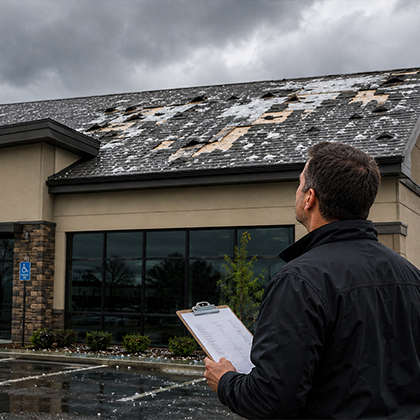
Commercial hail damage is not always easy to spot after a storm. While some damage appears immediately, other issues may remain hidden until leaks, structural problems, or equipment failures develop over time. After a hailstorm, commercial property owners should inspect the property carefully and document any visible or suspected damage.
Commercial hail damage often affects areas like:
- Roof: Hail can crack roofing membranes, puncture metal panels, loosen flashing, and damage shingles or protective roof coatings. Even minor roof damage can allow water intrusion over time.
- Rooftop HVAC and Equipment: Rooftop air conditioning units, vents, and mechanical equipment often sustain dents, coil damage, or protective cover damage during severe storms.
- Siding and Exterior Walls: Hail may dent metal siding, crack stucco, chip paint, or damage exterior building materials. These issues can affect both appearance and structural protection.
- Windows and Skylights: Strong hail impacts can crack glass, damage seals, or weaken skylights and window frames, increasing the risk of leaks and interior water damage.
- Signage, Canopies, and Outdoor Fixtures: Exterior signs, awnings, gutters, light fixtures, and canopies frequently sustain visible impact damage after severe hailstorms.
- Parking Structures and Vehicles: Parking garages, covered structures, company vehicles, and loading areas may also suffer significant damage during a major hail event.
Because some damage may not be visible from the ground, business owners may need to arrange professional inspections to fully assess the damage after a storm.
Does Your Commercial Insurance Policy Cover Hail Damage?
Many commercial insurance policies provide coverage for hail-related property damage, but the scope of coverage often depends on the policy language, deductibles, exclusions, and endorsements. Understanding what your policy covers can help you prepare for the commercial hail damage insurance claim process and reduce disputes with the insurance carrier.
Depending on the policy, coverage may apply to:
- Roof and structural damage
- Damage to HVAC systems and exterior equipment
- Interior water damage caused by storm-related openings
- Damage to inventory, equipment, or business personal property
- Lost income tied to temporary business interruptions
However, not every type of damage receives full coverage. Insurance companies may limit or deny portions of a commercial hail damage insurance claim based on:
- Cosmetic damage exclusions
- Wear-and-tear arguments
- Pre-existing damage allegations
- High wind or hail deductibles
- Maintenance-related exclusions
- Policy limits or coverage gaps
Carefully reviewing the property insurance policy after a hailstorm can help commercial property owners understand coverage conditions, reporting requirements, and documentation obligations.
Types of Commercial Coverage That Apply
Several types of commercial insurance coverage may apply after a hailstorm, depending on the nature of the damage and the policy terms, including:
- Commercial Property Insurance: Commercial property insurance typically covers damage to the building itself, including roofing systems, walls, windows, and attached structures affected by hail damage.
- Business Personal Property Coverage: This coverage may apply to inventory, furniture, electronics, machinery, and other business property damaged during the storm.
- Business Interruption Insurance: Business interruption insurance may help cover certain lost income or operating expenses if the business temporarily closes because of covered storm damage.
- Inland Marine Insurance: Some businesses use inland marine insurance to protect mobile equipment, tools, or specialized property stored or transported off-site.
- Building Ordinance or Law Coverage: If local building codes require upgrades during repairs, ordinance or law coverage may help address certain compliance-related construction costs.
ACV vs. RCV: The Most Important Policy Distinction
One of the most important issues in a commercial hail damage claim involves whether the policy pays based on actual cash value (ACV) or replacement cost value (RCV).
| Policy Type | What It Means | Impact on Hail Damage Claims |
| ACV (Actual Cash Value) | Pays the depreciated value of damaged property | The insurer subtracts depreciation based on age and condition, which may reduce the final payment |
| RCV (Replacement Cost Value) | Pays the cost to replace damaged property with similar materials | May provide broader recovery for repairs or replacement if policy conditions are satisfied |
Understanding whether your policy uses ACV or RCV can significantly affect how much the insurance company pays after a hailstorm.
How to File a Commercial Hail Damage Insurance Claim: Step-by-Step

Filing a commercial hail damage insurance claim involves more than reporting visible damage to the insurance carrier. Business owners need to take organized steps to protect the property, document losses, review the commercial insurance policy, and preserve records throughout the claims process. Acting quickly and keeping detailed documentation can help reduce delays, disputes, and coverage issues later.
Step 1: Ensure Safety
Before inspecting the property or beginning cleanup efforts, make safety the top priority. Hailstorms can leave behind dangerous conditions, including unstable roofing materials, broken glass, exposed electrical components, and water intrusion.
Business owners should:
- Restrict access to unsafe areas.
- Check for structural hazards before entering damaged spaces.
- Avoid climbing onto the roof without proper safety equipment.
- Shut down damaged electrical systems or equipment if necessary.
Taking reasonable steps to protect employees, customers, tenants, and the property itself can also help prevent additional damage after the storm.
Step 2: Make Necessary Temporary Repairs
Merged with existing header
While waiting for the insurer to review the damage, business owners may need to make temporary repairs to protect the commercial property from further loss. For example, a leaking roof may require tarping, boarded windows may need securing, or damaged areas may need temporary water mitigation measures.
It is important to understand the difference between temporary repairs and permanent repairs:
- Temporary repairs help prevent additional damage immediately after the storm.
- Permanent repairs restore the property to its pre-loss condition.
Most commercial insurance policies expect property owners to take reasonable steps to reduce additional damage after a hailstorm. Keeping receipts, invoices, photographs, and repair records can help support a commercial hail damage insurance claim if disputes arise later.
Before starting major permanent repairs, it is often important to document and inspect the damage thoroughly to avoid disputes about the original condition of the property.
Step 3: Document the Damage Thoroughly
Merged with existing header
“A thorough inspection and organized documentation can help establish the extent of hail-related property damage early in the claims process. Proper documentation can strengthen a commercial hail damage claim and help establish the extent of the losses.
When inspecting the property:
- Avoid dangerous areas or unsafe roof access.
- Take clear photos and videos from safe locations.
- Capture wide-angle images and close-up damage details.
- Use timestamps when possible.
- Document all affected areas, including roofing, siding, HVAC systems, signage, skylights, and exterior equipment.
Drone photography may help document roof damage safely without requiring direct roof access.
In addition to photographs and videos, business owners may also need to show that the damage resulted from the hailstorm and how much it will cost to fix the hail damage. This may involve organizing:
- Weather reports from the date of the hailstorm
- Inspection reports
- Contractor evaluations
- Repair estimates
- Maintenance records
- Inventory damage records
Well-organized claim files, inspection reports, and repair evidence can help strengthen a commercial hail damage claim during the insurer’s review.
Step 4: Review Your Insurance Policy Before Calling Anyone
Your insurance policy is a contract between you and the insurance company. It says what they’ll pay for and what they won’t. But these policies can be hard to read. Words and rules often don’t make sense unless you’ve studied law.
Reviewing the property insurance policy carefully before speaking with contractors or adjusters can help business owners understand coverage limits, deductibles, exclusions, and reporting requirements related to hail damage.
Step 5: Notify Your Insurance Company Promptly
Now it’s time to tell your insurance company about the damage. This is where things can get tricky. Insurance companies have lots of rules and use big words that can be hard to understand. They might try to say that some of the damage isn’t covered or that it’s not as bad as you think.
When filing a commercial hail damage insurance claim, business owners should keep records of all emails, phone calls, inspection appointments, and claim-related communications with the insurer to avoid confusion or misunderstanding during the claim process.
Step 6: Get Independent Repair Estimates
Obtaining independent repair estimates can help business owners better understand the full scope of hail-related damage before accepting an insurance settlement. Roofing contractors, engineers, or commercial repair professionals may identify issues that were overlooked during the initial inspection.
Independent estimates can also help:
- Compare repair costs
- Identify hidden structural damage
- Support disputes involving underpaid claims
- Provide additional documentation during negotiations
Keeping multiple written estimates may strengthen the overall claim documentation process.
Step 7: Review the Settlement Offer and Negotiate
Before accepting a settlement offer, business owners should review the insurer’s estimate carefully and compare it against repair reports, contractor evaluations, and documented losses. In some cases, the settlement may not fully account for all storm-related damage, replacement costs, or business-related losses.
If important repairs were excluded or undervalued, business owners may choose to:
- Request a supplemental inspection
- Submit additional documentation
- Challenge inaccurate damage assessments
- Negotiate disputed portions of the claim
Detailed repair estimates, inspection findings, and claim records often become important during settlement negotiations.
Step 8: Hire a Commercial Hail Damage Attorney
Some hail-related commercial property claims become complicated when the insurance company delays payment, disputes the extent of the damage, applies exclusions, or underpays the claim. Business owners may consider speaking with a property damage attorney when negotiations stall or significant losses remain unpaid.
An attorney can help review the insurance policy, evaluate claim documentation, address disputed coverage issues, and explain available legal options related to the hail damage claim process.
Common Reasons Commercial Hail Damage Claims Are Denied or Underpaid
Not all commercial hail damage claims receive full approval from the insurer. In many cases, insurers dispute the extent of the damage, apply policy exclusions, or argue that the losses fall outside the scope of coverage. Understanding the most common reasons claims become delayed, denied, or underpaid can help business owners prepare stronger documentation and respond more effectively during the claims process.
Common issues business owners face include:
- Late Reporting: Many commercial insurance policies require prompt notice after a hailstorm. Delays in reporting the damage may lead the insurer to question whether the storm caused the property damage.
- Cosmetic Damage Exclusions: Some policies exclude coverage for cosmetic damage that affects appearance but not functionality. Insurance companies may argue that dents or surface damage do not require repairs.
- Pre-Existing Damage Arguments: Insurers sometimes claim the damage existed before the hailstorm due to age, wear and tear, or poor maintenance.
- Failure to Mitigate: Commercial property owners are generally expected to take reasonable steps to prevent additional damage after a storm. Failing to make temporary repairs or secure exposed areas may affect coverage.
- Insufficient Documentation: Missing photos, incomplete inspection records, or limited repair estimates can make it harder to support the value of the claim.
- Policy Exclusions and Gaps: Certain types of roofing systems, exterior materials, or storm-related losses may have limited coverage, separate deductibles, or specific exclusions.
- Bad Faith Insurance Practices: In some situations, insurance companies may delay responses, ignore supporting evidence, conduct inadequate investigations, or undervalue valid damage claims. Business owners who suspect unfair claim handling or “bad faith practices” may need to review their legal options carefully.
Understanding why commercial hail damage claims get denied or underpaid can help business owners avoid common mistakes and respond more effectively during the claims process. Thorough documentation, timely reporting, and careful policy review often play an important role in resolving claim disputes.
Hidden Hail Damage and Long-Term Effects on Commercial Properties
Some commercial hail damage appears immediately after a storm, while other problems develop gradually over time. Hidden damage can create long-term repair costs, structural deterioration, and ongoing business interruptions if the issues go unnoticed during the initial inspection.
For example, hail may create small cracks, punctures, or weakened areas in commercial roofing systems that are difficult to spot from the ground. These openings may not leak right away, but repeated exposure to rain, heat, and moisture can cause the damage to worsen over time.
Hidden hail damage may also affect:
- Roofing membranes and flashing
- Protective roof coatings
- HVAC components and rooftop equipment
- Skylight seals and window systems
- Exterior siding and structural materials
Even when the building appears stable after a hailstorm, the long-term effects of commercial hail damage can include:
- Premature roof deterioration
- Water intrusion and interior damage
- Reduced energy efficiency
- Corrosion or material weakening
- Increased maintenance and repair expenses
Because some forms of damage are not immediately visible, thorough inspections and detailed documentation often play an important role in commercial hail damage claims.
Mediation, Arbitration, or Litigation: Your Options When the Insurer Won’t Pay

Sometimes, even when business owners document the damage carefully and follow the claims process correctly, the insurer may still dispute or deny portions of the claim. The insurer may offer less than the documented repair costs, challenge the cause of the damage, or refuse coverage altogether.
When disagreements over a commercial hail damage claim cannot be resolved through normal negotiations, several dispute-resolution options may be available.
Appraisal
Some commercial insurance policies include an appraisal provision for disputes involving the value of the loss. During appraisal, each side selects an appraiser, and the appraisers work with a neutral umpire to evaluate the amount of damage.
Appraisal may help resolve disagreements involving:
- Repair estimates
- Replacement costs
- Scope of hail damage
- Valuation disputes
However, an appraisal usually focuses on the amount of loss rather than broader coverage disputes under the policy.
Mediation
Mediation is a less formal process where a neutral third party helps both sides discuss the dispute and attempt to reach a voluntary agreement. The mediator does not issue a final decision but works to facilitate productive settlement discussions.
In commercial hail damage insurance claim disputes, mediation may help address:
- Disagreements over repair costs
- Coverage interpretation issues
- Business interruption losses
- Disputed damage evaluations
Mediation can sometimes help resolve disputes without extended litigation.
Arbitration
Arbitration involves a neutral decision-maker who reviews the evidence and issues a decision regarding the dispute. Unlike mediation, arbitration may result in a binding outcome depending on the policy terms and the arbitration agreement.
In hail damage claim disputes, arbitration may involve:
- Conflicting engineering reports
- Disputed repair estimates
- Coverage disagreements
- Questions involving policy interpretation
The arbitration process is generally more formal than mediation, but may still move faster than traditional court proceedings.
Litigation
Most hail damage claims get settled without going to court. But sometimes, if the insurance company won’t be fair, you might need to file a lawsuit. This is an important step, and it can be stressful for business owners already dealing with property damage and business disruption.
A property damage attorney can explain how litigation works, evaluate the disputed issues, and help business owners understand the legal options available when negotiations fail.
Why You Need a Commercial Hail Damage Claim Lawyer
Commercial hail damage claims can become complicated very quickly, especially when the damage affects large properties, multiple buildings, business operations, or specialized equipment. While insurance companies investigate claims to limit their financial exposure, business owners often focus on restoring operations and protecting the property from additional damage.
A commercial property damage attorney can help business owners understand the insurance policy, review claim documentation, address disputed damage assessments, and respond to delays or underpayments during the claims process. Legal guidance can become especially important when the insurer disputes coverage, undervalues repairs, or refuses to pay for certain losses tied to the hailstorm.
Understanding the Claims Process
The commercial insurance claims process can be lengthy and frustrating. There are many steps involved, and commercial hail damage claims may take time to resolve, depending on the extent of the property damage and the insurance company’s investigation. A property damage attorney can explain the claims process, help business owners understand what to expect, and address issues that arise during inspections, documentation reviews, or settlement negotiations.
Dealing With Multiple Commercial Properties or Policies
Merged with existing header
Some businesses have multiple commercial properties, separate insurance policies, or layered commercial insurance coverage for different types of losses. For example, one policy may cover the building itself, while another covers inventory, equipment, signage, or business interruption losses.
When several commercial properties sustain hail damage during the same storm event, the claims process may become more complex. Business owners may need to manage:
- Multiple claim investigations
- Different deductibles or coverage limits
- Separate adjusters or inspections
- Conflicting repair estimates
- Overlapping policy provisions
Legal guidance may become important when multiple policies, overlapping coverages, or several damaged properties complicate the claims process.
Business Interruption: Recovering Lost Income After Hail Damage
If the hail damage is severe, business operations may temporarily stop while repairs take place. This type of financial loss is commonly referred to as business interruption.
Some commercial insurance policies include business interruption insurance that may help cover:
- Lost business income
- Ongoing operating expenses
- Temporary relocation costs
- Payroll obligations during closures
Because business interruption losses often require detailed financial documentation, disputes sometimes arise over how much income the business lost after the hailstorm. Disputes involving business interruption coverage often require careful review of financial records, policy terms, and operational losses.
Avoiding Contractor Scams After a Hailstorm
After a major hailstorm, contractors often move quickly into affected areas, offering immediate repairs. While many contractors provide legitimate services, some may exaggerate damage, demand large upfront payments, or perform incomplete work.
Business owners should carefully review contractors before signing agreements or approving repairs. Important steps may include:
- Verifying licenses and insurance
- Requesting written estimates
- Reviewing references or prior work
- Avoiding high-pressure sales tactics
- Keeping copies of all repair agreements
Working with reputable contractors can help reduce additional disputes during the commercial hail damage insurance claim process.
Keeping Track of Everything When Dealing with a Hail Damage Claim
Merged with existing header
Large commercial property insurance claims often involve extensive records, inspections, invoices, repair estimates, photographs, and communications with the insurer. Keeping organized documentation throughout the process can help support the claim and reduce confusion later.
Business owners should maintain:
- Copies of the insurance policy
- Repair invoices and estimates
- Inspection reports
- Photos and videos of the damage
- Communication logs with adjusters and contractors
- Receipts for temporary repairs and mitigation efforts
Missing invoices, inspection reports, or repair records can create unnecessary delays during the insurance review process. A property damage attorney can also help organize claim-related records and identify missing documentation that could affect the outcome of the claim.
Fighting for Your Business’s Future
Merged with existing header
Recovering from commercial hail damage involves more than repairing visible property damage. Storm-related losses can affect long-term business operations, property value, maintenance costs, and future rebuilding decisions.
In some situations, hail damage may reduce the market value of the commercial property even after repairs are complete. Business owners may also face decisions about upgrading roofing systems, replacing damaged materials with more durable products, or improving storm resistance during reconstruction.
Insurance policies do not always cover every upgrade or long-term financial impact tied to the damage. A property damage attorney can help business owners evaluate disputed repair issues, diminished property value concerns, and coverage questions that may affect the future of the business property.
Negotiating with the Insurance Company
One of the most important things a lawyer does is negotiate with the insurance company. They know how to challenge low repair estimates, disputed damage evaluations, and incomplete settlement offers while supporting the business owner’s position with documentation and inspections.
During negotiations, a property damage attorney may:
- Review the insurer’s estimate for missing items
- Present additional repair evidence
- Respond to disputed coverage positions
- Address undervalued commercial hail damage claims
- Help pursue supplemental payments when necessary
In many cases, organized documentation and experienced negotiation strategies can improve communication during the claims process.
Protecting Your Rights
Insurance companies often rely on adjusters, consultants, engineers, and legal teams when evaluating large commercial property claims. Business owners dealing with major hail losses may face complicated policy language, technical damage disputes, and extensive claim reviews.
Working with a property damage attorney can help business owners better understand their rights under the insurance policy and evaluate whether the insurer handled the commercial hail damage claim fairly and in good faith.
Conclusion
Commercial hail damage can create serious financial and operational challenges for business owners in Louisiana and Texas. From roofing damage and business interruption losses to disputed repair estimates and coverage issues, navigating a commercial hail damage insurance claim often requires organized records, policy analysis, and consistent communication with the insurer.
Taking action early after a hailstorm can help business owners preserve important evidence, avoid costly mistakes, and move forward with greater clarity during the claims process. If your insurer delayed, denied, or underpaid your claim, speaking with a Louisiana hail damage lawyer or Texas hail damage attorney can help you better understand your legal options.
Pandit Law helps commercial property owners evaluate coverage disputes, address claim challenges, and protect their interests throughout the insurance recovery process.