
In the aftermath of a hurricane, many homeowners find themselves facing damaged property and a long list of unanswered questions. You may be staring at a leaking roof, broken windows, fallen trees, or water-soaked belongings while trying to figure out what your insurance policy covers and what steps to take next.
Unfortunately, the hurricane insurance claims process is not always straightforward. Disputes, delays, underpayments, and denials are common. For homeowners in Louisiana and Texas, the process can become even more complicated because state laws and policy requirements may affect how claims are handled. According to reported claims data, 53% of residential claims following Hurricane Helene and 39% of claims after Hurricane Milton were denied in 2024.
Understanding how to file an insurance claim after a hurricane can help you avoid costly mistakes and protect your rights. This guide explains policy coverage, claim filing procedures, adjuster inspections, Louisiana and Texas insurance laws, and when it may be time to speak with a hurricane damage lawyer.
What Your Homeowners Policy Covers and What It Does Not

Before filing an insurance claim after a hurricane, it helps to understand what your homeowners policy may cover and where coverage gaps can exist. While every policy is different, most standard homeowners insurance policies provide protection for certain types of hurricane-related damage, making it important to understand what may and may not be covered before filing a claim.
Coverage often includes:
- Wind damage to your roof, siding, windows, and other parts of the home
- Damage caused by falling trees or branches striking the structure
- Personal belongings damaged by a covered peril
- Additional Living Expenses (ALE) if your home becomes temporarily uninhabitable
- Detached structures, such as sheds or fences, typically covered at a percentage of the dwelling limit, often around 10%
However, some common hurricane-related losses may not be covered under a standard policy. These often include:
- Flood damage and storm surge, which generally require a separate flood insurance policy
- Sewer or drain backups, unless you purchased additional coverage
- Damage the insurer attributes to a pre-existing condition or lack of maintenance
Reviewing your policy early in the hurricane insurance claims process can help you understand which losses may be covered and what additional documentation your insurer may require.
The Named-Storm or Hurricane Deductible: What It Actually Means
Many homeowners are surprised to learn that hurricane deductibles work differently from standard deductibles. Instead of a fixed dollar amount, they are often calculated as a percentage of your dwelling coverage, typically between 1% and 5%.
For example, if your home is insured for $300,000 and your policy includes a 2% hurricane deductible, you would generally be responsible for the first $6,000 of covered damage before insurance coverage applies.
In most cases, this deductible applies only when damage results from an officially named hurricane or tropical storm that meets the policy’s triggering requirements. Understanding your deductible before filing a claim can help you avoid surprises during the claims process.
Before You File: What to Do Immediately After the Hurricane
The hours and days after a hurricane can feel overwhelming. Before you contact your insurance company, take a few important steps to protect your safety, preserve evidence, and strengthen your claim.
If you are wondering how to file an insurance claim after a hurricane, this pre-filing checklist can help you start on the right foot.
Step 1: Confirm It Is Safe to Re-enter
Your safety should always come first. Wait for local officials to issue an all-clear before returning to your property. Hurricane damage can create hazards that are not immediately visible.
Watch for:
- Structural damage that could make the home unsafe
- Gas leaks or the smell of gas
- Downed power lines and electrical hazards
- Standing water that may conceal debris or electrical risks
If authorities have red-tagged the property, do not re-enter until they determine it is safe to do so.
Step 2: Document Everything Before Touching Anything
Before cleaning up or moving damaged items, create a thorough record of the damage. Detailed documentation can play an important role in the claims process.
When documenting damage, take:
- Date-stamped photos of every affected area
- Videos showing the overall condition of the property
- Close-up images of damaged belongings and structural damage
If roof damage is visible, photograph it from a safe location rather than climbing onto the roof. Avoid posting damage photos on social media, and keep damaged items whenever possible until the insurer has had an opportunity to inspect them.
Step 3: Make Only Temporary Repairs
Homeowners generally have a responsibility to take reasonable steps to prevent further damage after a storm. Temporary measures you can take include:
- Tarping damaged roof sections
- Boarding up broken windows
- Removing standing water when safe to do so
Keep receipts for emergency repairs and supplies. However, avoid making permanent repairs until the insurance adjuster has inspected the property.
Step 4: Create a Damage Inventory
As you document the loss, create a list of damaged personal property. Include as much detail as possible and gather supporting records such as receipts, photographs, warranties, and purchase records.
Taking these steps before reporting the loss can help create a clearer record of the damage and reduce potential disputes later in the hurricane insurance claims process.
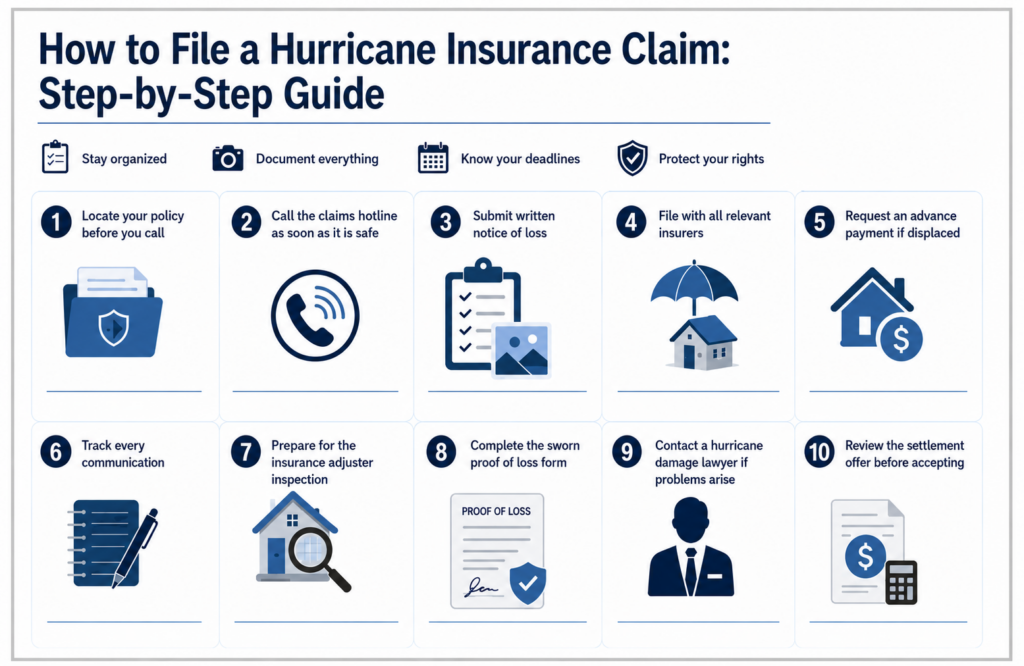
How to File a Hurricane Insurance Claim: Step-by-Step Guide
If you are trying to understand how to file an insurance claim after a hurricane, the process can feel overwhelming at first. The following steps to file a hurricane damage insurance claim can help homeowners stay organized, preserve important evidence, and avoid mistakes that could complicate their claim.
Step 1: Locate Your Policy Before You Call
Before contacting your insurer, gather as much policy information as possible. Having your policy number and coverage details readily available can make the reporting process smoother.
If your policy documents were damaged or lost during the storm, try:
- Accessing your insurer’s online portal or mobile app
- Contacting your insurance company directly
- Requesting information from your mortgage lender, which may have copies of your policy records
Understanding your coverage before reporting the loss can help you ask informed questions and better understand the next steps.
Step 2: Call the Claims Hotline as Soon as It Is Safe
Once you can safely assess the damage, contact your insurance company to open a claim and begin the hurricane insurance claims process. This officially starts the hurricane insurance claims process.
When reporting the loss, be prepared to provide:
- Your policy number
- The date of the storm
- A brief description of the damage
- Contact information and property address
Stick to the facts and avoid guessing about the cause, scope, or value of the damage. Before ending the call, record the claim number, the representative’s name, and any instructions provided.
Step 3: Submit Written Notice of Loss
Even if you report the claim by phone, creating a written record is important. Written notice can help document when you reported the damage and what information you provided.
In your written notice of loss, include:
- Photos and videos of the damage
- A summary of affected areas
- Any emergency repair documentation
- Relevant receipts and invoices
Keeping copies of everything you submit can help resolve questions later if disputes arise.
Step 4: File With All Relevant Insurers
Hurricane losses can involve multiple insurance policies. Depending on the circumstances, you may need to notify more than one insurer.
For example, you may need to file with:
- Homeowners insurance for covered wind damage
- Flood insurance for flood-related losses
- Windstorm coverage, if provided through a separate policy
- Auto insurance for vehicle damage
Because coverage responsibilities can overlap, review each policy carefully and follow all reporting requirements.
Step 5: Request an Advance Payment if Displaced
If hurricane damage makes your home temporarily uninhabitable, ask your insurer whether advance funds are available under your policy.
Additional Living Expense (ALE) coverage may help pay for reasonable expenses such as:
- Temporary housing
- Meals above your normal living costs
- Laundry and other necessary living expenses
Keep detailed receipts and records of every additional expense. Insurers often require documentation before reimbursing covered expenses.
Step 6: Track Every Communication
Claim disputes often arise because of misunderstandings or incomplete records. Maintaining a communication log can help you stay organized throughout the process.
Your log should include:
- Dates and times of conversations
- Names and job titles of representatives
- Phone numbers and email addresses
- Summaries of discussions and promised actions
After important conversations, consider sending a brief written follow-up confirming what was discussed. A clear paper trail can help prevent delays and confusion.
Step 7: Prepare for the Insurance Adjuster Inspection
After opening your claim, the insurer will typically assign an adjuster to inspect the property. The inspection plays a significant role in how the claim is evaluated.
Before the inspection:
- Organize your photos, videos, and damage inventory.
- Gather repair estimates and receipts for temporary repairs.
- Prepare a list of all damaged areas and belongings.
Attend the inspection whenever possible. Walk through the property with the adjuster, point out all visible damage, and provide supporting documentation. Do not assume the adjuster will automatically identify every issue without your assistance.
Step 8: Complete the Sworn Proof of Loss Form
Some policies require a sworn Proof of Loss form. This document summarizes the damages being claimed and serves as a formal statement submitted to the insurer.
Supporting documentation should include:
- Contractor estimates
- Personal property inventories
- Repair invoices
- Photographs and videos
Accuracy is critical at this stage. Review the information carefully before submission and pay close attention to any filing deadlines that apply to your policy. In case of a declared catastrophic event, certain statutory deadlines may be extended under applicable law. An insurance claim attorney can help you determine which deadlines apply to your claim.
Step 9: Contact a Hurricane Damage Lawyer if Problems Arise
Not every claim proceeds smoothly. Legal guidance may become important if the insurer disputes coverage, delays the investigation, underpays the claim, or issues a denial.
A hurricane damage lawyer may be able to:
- Review the policy and coverage provisions
- Evaluate the insurer’s findings
- Identify potential claim-handling issues
- Explain available legal options
In many situations, it is beneficial to seek legal advice before accepting a disputed settlement, signing releases, or approaching important deadlines.
Step 10: Review the Settlement Offer Before Accepting
Once the insurer completes its evaluation, it may issue a settlement offer. Take time to review the offer carefully before making any decisions.
Consider comparing the proposed payment against:
- Contractor estimates
- Repair documentation
- Damage inventories
- Other supporting records submitted with the claim
Do not automatically assume the first offer reflects the full scope of covered damage. If questions remain about the valuation or coverage determination, seek clarification before accepting the settlement.
What to Do If Your Hurricane Insurance Claim Is Denied or Underpaid
Receiving a denial letter or a settlement offer that seems too low can be frustrating, especially when you are still recovering from a hurricane. Unfortunately, claim disputes are not uncommon. Reported claims data showed denial rates of 53% following Hurricane Helene and 39% following Hurricane Milton, highlighting the challenges many policyholders face. But a denial or underpayment does not always mean the insurer’s decision is final.
Common Reasons Hurricane Claims Are Denied or Underpaid
Insurers may deny or reduce claims for several reasons. Understanding the basis for the decision can help you determine your next steps.
Common issues resulting in claim denial include:
- Disputes over whether the damage is covered under the policy
- Allegations that the damage existed before the hurricane
- Insufficient documentation of the loss
- Disagreements over repair estimates or the scope of damage
- Flood exclusions when wind and flood damage occurred together
- Policy provisions that address multiple causes of loss
Carefully reviewing the insurer’s explanation can help identify whether additional evidence may help support your position.
Next Steps if Your Claim is Denied or Underpaid
If you disagree with the insurer’s decision, start by requesting a complete explanation and any documents the company relied upon during its evaluation.
You may then:
- Gather additional photos, videos, and repair estimates.
- Obtain supporting opinions from qualified contractors.
- Submit supplemental information or a formal appeal.
- Request reconsideration of disputed findings.
If the dispute remains unresolved, further legal or contractual remedies may be available depending on the policy and circumstances.
The Appraisal Process
Some policies include an appraisal provision that can help resolve disputes about the value of a covered loss. During appraisal, each side selects an appraiser, and the two appraisers attempt to reach an agreement. If they cannot, they select a neutral party to help resolve the disagreement.
Appraisal can sometimes provide a faster and less expensive alternative to litigation when the primary dispute involves the amount of damage rather than whether coverage exists.
Understanding why a claim was denied or underpaid is often the first step toward determining whether the decision can be challenged and what options may be available moving forward.
Critical Hurricane Claim Deadlines and Laws in Louisiana and Texas
Filing an insurance claim after a hurricane means navigating a complex network of overlapping timelines, state statutes, and policy types. Because these storms bring high winds, rain, and rising water, homeowners often find themselves dealing with separate windstorm, property, and flood policies simultaneously. Missing a filing deadline or failing to comply with a state requirement can drastically reduce your payout or jeopardize your entire claim.
Key Claim Deadlines Every Policyholder Should Know
Prompt action is critical after a hurricane. Homeowners must report all structural and personal property losses promptly to comply with homeowners, windstorm, and flood insurance policy requirements. Although acting quickly is important, certain statutory deadlines may be extended following a declared catastrophic event, depending on the applicable law and type of claim.
To keep your claim on track, you must follow several critical timelines:
- NFIP Proof of Loss: National Flood Insurance Program (NFIP) policies strictly require a sworn Proof of Loss within 60 days of the flood.
- Supplemental Claims: If you discover hidden structural damage or mold after your initial payout, you must file a supplemental claim within your state’s legal window.
- Lawsuit Windows: State statutes strictly limit how much time you have to file a breach of contract lawsuit if your insurer underpays.
- Pre-Suit Notice: State insurance laws may require you to send a pre-suit notice before taking legal action against the insurer. For example, Texas law requires you to send a formal written notice 60 days before filing a lawsuit against an insurer.
Failing to meet these deadlines can give your insurance company a legal reason to deny an otherwise valid claim.
Louisiana Hurricane Insurance Laws
Louisiana has specific laws designed to protect policyholders after a catastrophic storm. Under the state’s Valued Policy Law, if your home is deemed a total loss by a covered peril, the insurer is generally required to pay the full face value of the policy.
Additionally, state statutes enforce strict good-faith claim handling requirements:
- The 30-Day Rule: Under La. R.S. 22:1892, insurers must pay undisputed claim amounts within 30 days of receiving satisfactory proof of loss.
- Bad-Faith Penalties: Insurers that unreasonably delay payments face a statutory penalty in addition to the damages owed and reasonable attorney fees.
- Percentage Deductibles: Louisiana uses specific hurricane deductibles calculated as a percentage of your dwelling coverage rather than a flat dollar amount.
- Catastrophic Event Extensions: During a declared catastrophic event, Louisiana law generally provides a 180-day period to submit a Proof of Loss for wind damage. If a declared emergency prevents access to the property, that period does not begin until access is restored. In addition, applicable law may provide up to an additional 30 days for certain insurer claim-handling deadlines during catastrophic events. Because these extensions depend on the circumstances, homeowners should confirm which deadlines apply to their claim.
If you believe an insurer is not responding appropriately or you need assistance understanding your rights, you may contact the Louisiana Department of Insurance for information and assistance.
Texas Hurricane Insurance Laws
Texas uses a combination of strict consumer deadlines and procedural rules that both insurers and policyholders must navigate. The Texas Prompt Payment of Claims Act (Insurance Code Chapter 542) dictates exactly how quickly insurance companies must investigate and pay out your losses.
In Texas, insurers must comply with the following statutory requirements:
- Investigation Deadlines: Insurers must acknowledge your claim within 15 days and accept or deny it within 15 business days of receiving your paperwork.
- Prompt Payment: Once a claim is approved, the company must issue your payment within 5 business days.
- Delay Penalties: If an insurer violates these timelines, they can face steep interest penalties plus reasonable attorney fees.
- Chapter 542A Notice: You must provide a detailed pre-suit notice 60 days before suing a carrier over weather-related property damage.
- Catastrophic Event Extensions: During a declared catastrophic event, applicable law may provide up to 60 days for certain statutory notice or procedural requirements in qualifying circumstances. Because these extensions depend on the facts of the claim, homeowners should confirm which deadlines apply before taking legal action.
Policyholders also face common wind-versus-flood disputes when insurers attempt to blame storm damage on excluded rising water. If your carrier misrepresents your policy coverage during this process, you can seek assistance by filing a complaint with the Texas Department of Insurance (TDI).
Because deadlines, legal requirements, and any catastrophe-related extensions vary depending on the policy, the type of claim, and applicable law or emergency orders, understanding these local state regulations gives you the tools needed to hold your insurance company accountable for their legal obligations.
When a Hurricane Damage Lawyer Can Help
Many homeowners assume they only need legal help after receiving a claim denial. In reality, a hurricane damage lawyer can provide valuable guidance at several stages of the claims process, particularly when significant disputes or delays begin to develop.
When to Consider Calling a Hurricane Damage Lawyer
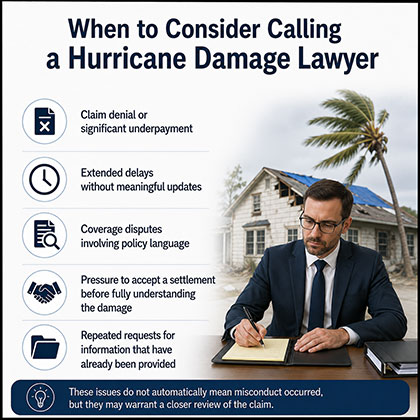
Certain situations may indicate that legal assistance could be beneficial. For example, an experienced hurricane damage lawyer can help in situations involving:
- A claim denial or significant underpayment
- Extended delays without meaningful updates
- Coverage disputes involving policy language
- Pressure to accept a settlement before fully understanding the damage
- Repeated requests for information that have already been provided
These issues do not automatically mean misconduct occurred, but they may warrant a closer review of the claim.
What a Hurricane Damage Lawyer Can Do
A hurricane damage lawyer can evaluate the claim and explain the options available under the policy and applicable law. Depending on the circumstances, legal counsel may:
- Review the policy and identify available coverage
- Analyze the insurer’s claim determination
- Assist with communications and dispute resolution
- Challenge denials or disputed findings when appropriate
- Explain legal remedies available under applicable state laws
The earlier potential issues are identified, the more opportunities homeowners may have to address disputes before they become larger problems. If questions arise about coverage, delays, or claim handling, seeking legal guidance can help you better understand your rights and available options.
Conclusion
Filing a hurricane insurance claim is more than a paperwork exercise. The actions you take in the days and weeks after a storm can significantly affect how your claim is evaluated and resolved. Thorough documentation, prompt reporting, and a clear understanding of your policy can help you avoid common obstacles and put your in a stronger position throughout the claims process.
Homeowners in Louisiana and Texas also benefit from important legal protections, including claim-handling requirements, policyholder rights, and regulatory oversight designed to promote fair treatment. However, navigating those protections can become difficult when claims are delayed, disputed, underpaid, or denied.
Because claims after a hurricane often involve complex coverage questions and valuation disputes, do not assume you must handle those challenges alone. An experienced hurricane damage lawyer can review your situation, explain your options, and help protect your rights.
If you have questions about a delayed, denied, or underpaid hurricane claim, speak with the team at Pandit Law to better understand your options and rights and learn how our team may be able to assist.