
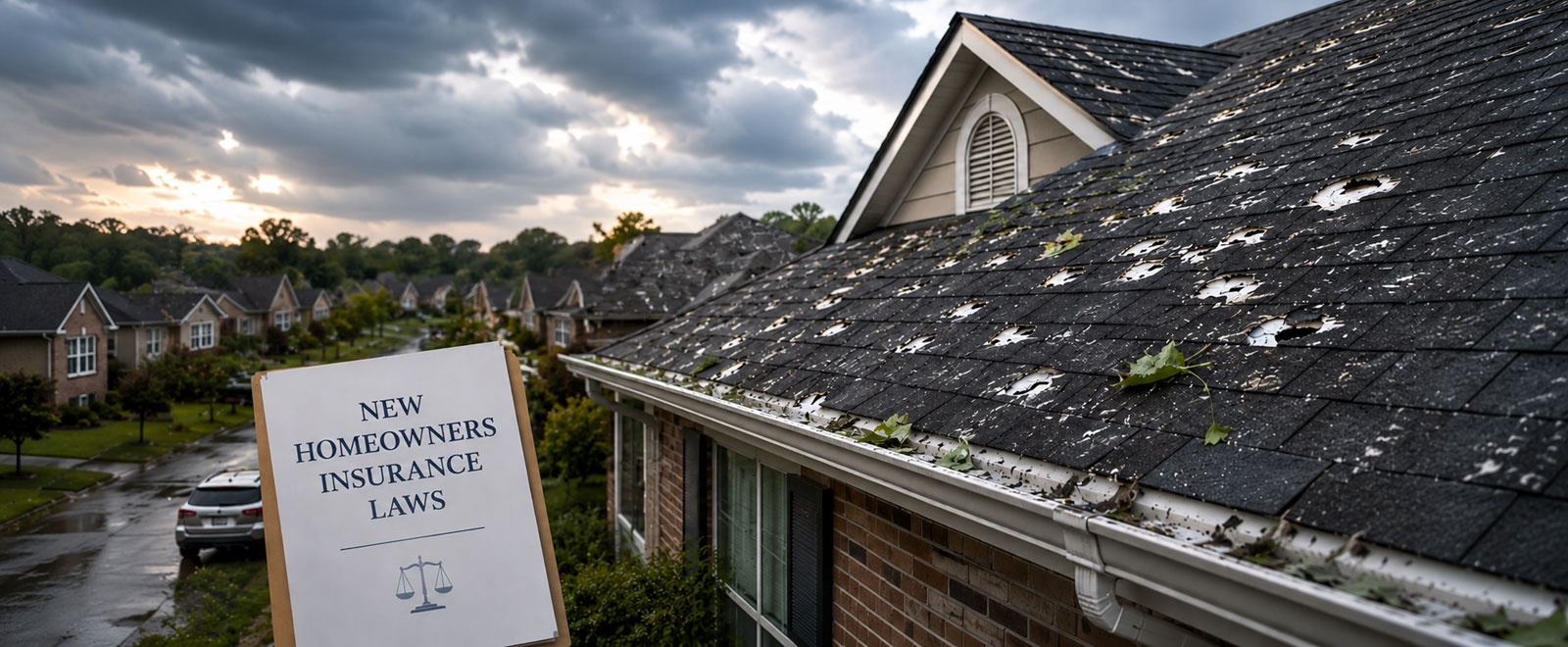
After a severe hailstorm, Louisiana homeowners expect their insurance policy to cover the cost of repairing or replacing a damaged roof. But when the claim decision arrives, the approved amount falls short of what they anticipated. Questions quickly follow: Was depreciation applied? Does the policy provide replacement cost coverage? Did recent law changes affect the claim?
Many property owners are facing similar confusion as Louisiana’s new roofing regulations and homeowners insurance changes reshape how roof claims are evaluated and resolved. At the same time, rising insurance premiums have made it more important than ever for homeowners to understand exactly what their policies cover.
Louisiana’s new roofing laws and related insurance reforms have introduced new rules involving roof repairs, contractor licensing, documentation requirements, and coverage considerations. This guide explains the key 2026 changes, how they may affect hail damage roof claims, and practical steps homeowners can take to protect their rights and strengthen their claim position.
Louisiana’s Insurance Landscape: What Hail Claimants Need to Know
Recent Louisiana homeowners insurance changes have introduced new rules that can affect how hail damage roof claims are evaluated and resolved. For homeowners, understanding these updates is just as important as documenting storm damage, especially when roof repairs or replacement are involved.
Several key reforms that may impact hail-related claims include:
- Stated-Value Policies (Act 480): Some insurers can now offer policies that limit recovery to a declared value rather than the full cost to replace damaged property. Homeowners should carefully review their policy terms to understand how roof damage may be valued after a hailstorm.
- Changes to Deductible Rules: Louisiana relaxed its long-standing Three-Year Rule, giving insurers greater flexibility to adjust policy terms at renewal. As a result, some homeowners may see higher wind and hail deductibles when their policies renew.
- Greater Renewal Transparency (HB 148): Renewal notices must now display the prior year’s premium alongside the new premium. This change makes it easier for homeowners to identify rate increases and review coverage changes before renewal.
These reforms underscore the importance of reviewing your policy regularly and understanding how changing insurance rules may affect a future hail damage roof claim.
The New Louisiana Roof Law: What Homeowners Need to Know
Recent roofing reforms have introduced new requirements that affect how roofs are repaired, documented, and insured. Understanding these changes is important because the relationship between Louisiana’s new roof laws and homeowners insurance requirements may play a role when a hail damage claim arises.
New Contractor Licensing Requirements for Roof Repairs

Louisiana now requires contractors performing residential roofing work valued at more than $7,500 to hold the proper roofing license. A Home Improvement Registration alone is no longer sufficient for many roofing projects.
Before hiring a contractor, homeowners should confirm that the contractor:
- Holds the appropriate roofing classification through the Louisiana State Licensing Board for Contractors (LSLBC)
- Maintains required liability insurance coverage
- Carries workers’ compensation insurance when required by law
Homeowners can verify contractor licenses directly through the LSLBC.
These requirements help promote accountability and professionalism within the roofing industry. They can also become important during a hail damage dispute. If prior roof repairs were performed by an unlicensed contractor, an insurer may question the quality of the work or whether existing damage resulted from improper repairs rather than a storm event.
Permit and Inspection Rules for Roofing Projects
Many residential roofing projects now require permits and inspections. These requirements create an official record of roof repairs, replacements, and code compliance.
When reviewing a hail damage claim, insurers may examine permit records and inspection reports to better understand the roof’s history. These records can help establish when repairs occurred and whether the roof complied with applicable requirements before a hail loss.
Louisiana Roof Registry and Claim Documentation (Voluntary Roof Registry (Act 62))
Louisiana’s Voluntary Roof Registry allows homeowners to document the condition of their roofs before a storm occurs. This information can create a valuable record that exists independently of a future insurance claim.
The registry may help homeowners:
- Establish the roof’s pre-storm condition
- Address disputes involving alleged pre-existing damage
- Respond to wear-and-tear arguments
- Support claim documentation after a hail event
While participation is voluntary, the registry can provide an independent record of roof condition that may help resolve disputes about whether damage existed before a hailstorm.
FORTIFIED Roof Requirements, Grants, and Insurance Benefits (Tax Credits for Fortified Roofs (Act 425))
Louisiana continues to encourage stronger, storm-resistant roofs through FORTIFIED construction standards. These standards are designed to improve a roof’s ability to withstand severe weather, including hail and high winds.
Several programs and incentives may benefit homeowners, such as:
- Eligible homeowners may qualify for the Louisiana Fortify Homes Program grants.
- Certain insurers may offer premium discounts for qualifying FORTIFIED roofs.
- Louisiana provides tax incentives for eligible fortified roof improvements.
- Insurers must offer certain FORTIFIED endorsements following qualifying roof replacement claims.
Because eligibility requirements can change, homeowners should review current program guidelines before beginning roof replacement work.
Contractor Contracts and Claim Protection (Public Adjuster and Contractor Restrictions (Act 144))
Louisiana has also placed greater focus on contractor agreements that affect insurance claim rights. Some arrangements may transfer important rights from the homeowner to another party, creating complications during a claim dispute.
Before signing a roofing contract, homeowners should:
- Read all contract terms carefully.
- Confirm that the agreement clearly describes the work to be performed.
- Avoid provisions that transfer insurance claim rights without fully understanding their effect.
- Keep signed copies of all contracts and supporting documents.
Taking these precautions can help homeowners maintain control over their claim while complying with current Louisiana roof laws and homeowners insurance requirements.
As Louisiana’s roofing regulations continue to evolve, homeowners who understand these requirements will be better positioned to protect their property and preserve important claim documentation before the next storm arrives.
How These Changes Directly Affect Your Hail Damage Roof Claim Payout
Louisiana’s new roofing laws do more than regulate contractors and roof repairs. Combined with recent insurance reforms, these changes can influence how insurers evaluate roof damage, apply policy terms, and resolve hail-related disputes.
Why Your Hail Damage Payout May Be Smaller Than Expected
Many homeowners assume their policy will automatically cover the full cost of replacing a hail-damaged roof. However, coverage often depends on the policy’s valuation method.
Two common approaches include:
- Actual Cash Value (ACV): The insurer may reduce the payment based on the roof’s age and condition through depreciation.
- Replacement Cost Coverage: The policy generally covers the cost to repair or replace the damaged roof with similar materials, subject to policy terms and conditions.
For example, if an older roof has lost a significant portion of its value due to age, depreciation may reduce the amount initially available under an ACV calculation. These limitations can become especially important after a major hail event, when repair or replacement costs exceed the amount recognized under the policy’s valuation method.
Because of these differences, homeowners should carefully review how their policy addresses roof settlements before a storm occurs.
Understanding Wind and Hail Deductibles
Wind and hail deductibles often operate differently from standard property deductibles. Unlike standard property deductibles, wind and hail deductibles rely on a percentage of the home’s insured value instead of a fixed dollar amount.
For example, a homeowner with a 2% wind and hail deductible on a home insured for $300,000 would be responsible for a $6,000 out-of-pocket deductible before insurance benefits apply.
Recent policy changes also allow some insurers greater flexibility when adjusting deductibles at renewal, making annual policy reviews increasingly important.
The One-Time Wind/Hail Deductible Rule
Louisiana provides protections for homeowners affected by multiple named storms during the same calendar year. Under certain circumstances, policyholders may not be required to satisfy a separate wind or hail deductible for each qualifying storm event.
To help preserve these protections, homeowners should maintain:
- Storm photographs
- Inspection reports
- Repair invoices
- Claim correspondence
- Weather-related documentation
Organized records can help establish when damage occurred and support future claim discussions.
Louisiana’s Updated Deadlines for Hail Damage Disputes
Homeowners generally have a limited period to pursue legal action involving denied hail damage claims. Louisiana currently provides a two-year window for many property insurance lawsuits.
Separate requirements may apply to bad faith allegations, including notice requirements that must be satisfied before certain legal actions proceed. Missing important deadlines can affect available legal options, making early review of a dispute important.
Insurer Claim Handling Deadlines
Louisiana law generally requires insurers to begin adjusting a claim within 14 days after receiving notice of a covered loss.
If significant delays occur, homeowners should keep detailed records of:
- Claim submissions
- Inspection requests
- Emails and letters
- Phone conversations
- Requests for additional information
Documenting claim activity can help create a clear timeline if questions later arise about how the claim was handled.
The practical impact of Louisiana’s new roofing laws extends well beyond construction standards. Because modern roof claims often involve policy-specific limitations and documentation requirements, homeowners should review their coverage carefully after a hailstorm and before making major repair decisions.
Your 2026 Action Checklist for Hail Damage Roof Claim
The best time to protect a future hail damage claim is before a storm ever reaches your property. As Louisiana’s insurance and roofing requirements continue to evolve, homeowners should take proactive steps to understand their coverage and strengthen their documentation, such as:
- Confirm whether your policy provides actual cash value (ACV) coverage or replacement cost coverage for roof damage.
- Review your wind and hail deductible and understand when it applies.
- Compare your current renewal premium to the previous year’s premium and look for coverage changes.
- Ask your insurance agent about all available discounts, endorsements, and roof-related savings opportunities.
- Verify your roofing contractor’s license through the Louisiana State Licensing Board for Contractors before signing a contract.
- Carefully review all contracts and avoid agreements that transfer insurance proceeds or important claim rights.
- Explore eligibility for the Louisiana Fortify Homes Program and related roof improvement incentives.
- Ask whether FORTIFIED Roof endorsements or other roof-related coverage options are available.
- Consider registering your roof in Louisiana’s Voluntary Roof Registry.
- Photograph your roof regularly, date-stamp the images, and store them securely in the cloud.
These simple steps can help homeowners maintain stronger records and reduce confusion if a hail damage claim arises in the future.
When Your Claim Is Denied or Underpaid: How a Hail Damage Claim Lawyer Can Help

A denied, delayed, or underpaid hail damage claim can leave homeowners facing uncertainty at a time when they need answers. An experienced Louisiana hail damage claim lawyer can review the circumstances of the claim and help identify available options under the policy.
Depending on the situation, legal assistance may include:
- Reviewing the insurance policy, claim file, and insurer’s decision
- Gathering and organizing photographs, inspection reports, estimates, and other supporting evidence
- Challenging claim determinations that may undervalue or overlook covered damage
- Communicating with the insurance company on the homeowner’s behalf
- Assisting with appraisal proceedings when available under the policy
- Pursuing legal remedies when a coverage dispute cannot be resolved through other means
Every hail damage claim presents unique facts and policy language. Obtaining legal guidance can help homeowners better understand their rights, evaluate the insurer’s position, and make informed decisions about how to move forward with a claim dispute.
Conclusion
Louisiana’s recent insurance reforms and roofing regulations have changed more than contractor requirements. They have also affected how some roof claims are valued, documented, and reviewed after a hailstorm. Homeowners who understand their policy’s coverage terms, wind and hail deductibles, documentation requirements, and available FORTIFIED-related benefits are often better prepared when storm damage occurs.
Just as importantly, these changes highlight the value of reviewing your policy before a loss happens. As insurers place greater emphasis on roof condition, valuation methods, and policy-specific limitations, homeowners who understand these requirements before a loss occurs may be better positioned to address coverage disputes after a storm.
If your hail damage claim has been denied, delayed, or underpaid, you do not have to navigate the situation alone. An experienced Louisiana property damage attorney can evaluate your claim, explain your options, and help protect your rights. Contact Pandit Law for a free consultation to discuss your hail damage roof claim and learn how we may be able to assist.