
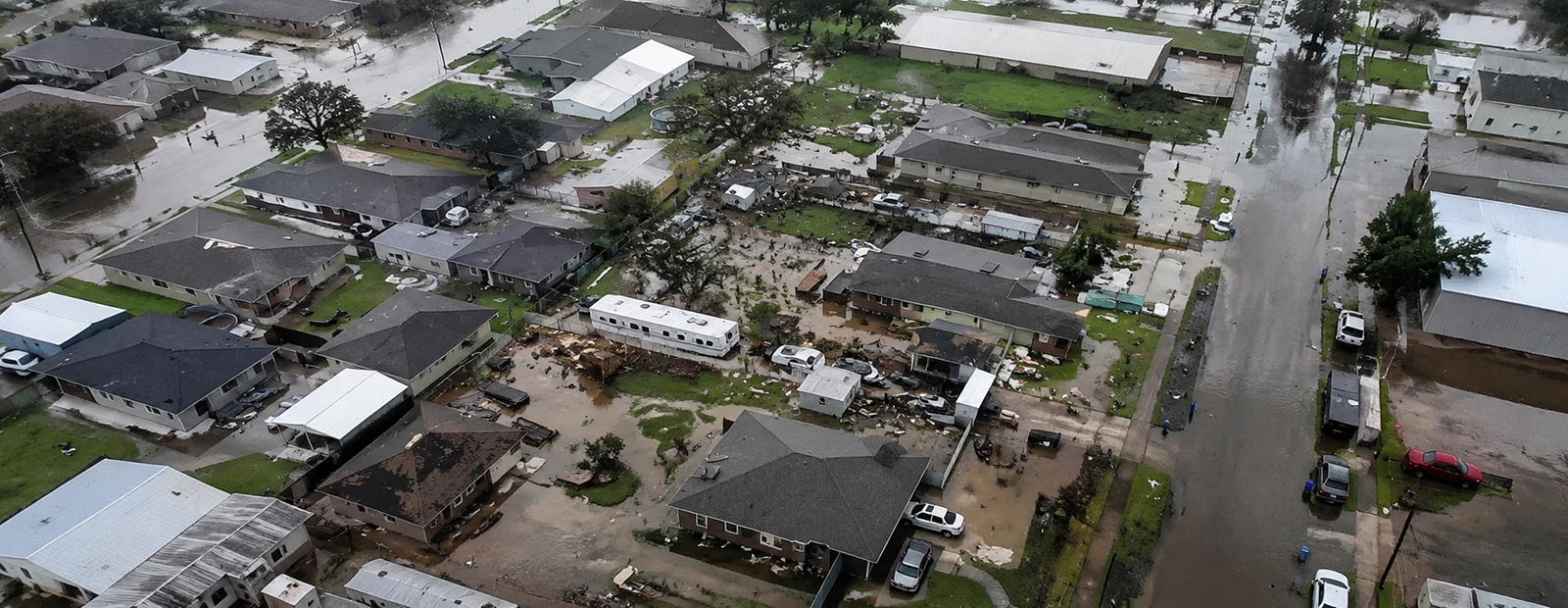
You return home after a hurricane hoping the worst has passed, only to find muddy water covering your floors, soaked belongings, and damage in nearly every room. Once the initial shock wears off, new questions quickly follow. Does homeowners insurance cover this damage, or do you need to file a flood insurance claim? If wind and flood both damaged your home, should you file one claim or two?
If you’re wondering what to do if your house floods during a hurricane, you’re not alone. Louisiana and Texas consistently rank among the states with the highest National Flood Insurance Program (NFIP) flood claim activity, making this a familiar challenge for many Gulf Coast homeowners. This guide walks you through the key steps to protect your insurance claim, avoid common mistakes, and understand when legal guidance can help.
10 Claim-Protecting Steps if Your House Floods During a Hurricane
The steps you take in the hours and days after a hurricane can shape the outcome of your insurance claim. Acting quickly, keeping accurate records, and understanding which policies apply can help you avoid unnecessary setbacks.
Follow these practical steps to put your claim on the right track.
1. File Your Insurance Claim Immediately
After a hurricane, notify your insurance company as soon as it is safe to do so. Filing your claim promptly starts the review process and gives your insurer the information needed to begin assessing the damage. Waiting too long can create avoidable delays, especially after widespread storms when insurers receive a high volume of claims.
Depending on how your home was damaged, you may need to file one or both of the following:
- File a homeowners insurance claim if wind, hail, or a damaged roof allowed water to enter your home.
- File a flood insurance claim if rising floodwater or storm surge caused the damage, whether you have an NFIP or private flood insurance policy.
If you’re unsure which policy applies, report the loss to the appropriate insurer without delay. Filing early helps protect your rights under your policy while giving your insurer time to begin reviewing the damage as you gather additional documentation.
2. Understand Whether Your Damage Falls Under a Flood Claim, a Hurricane Claim, or Both
One of the most common sources of confusion after a hurricane is determining which insurance policy covers the damage. Although the same storm caused the loss, different types of damage often fall under different policies.
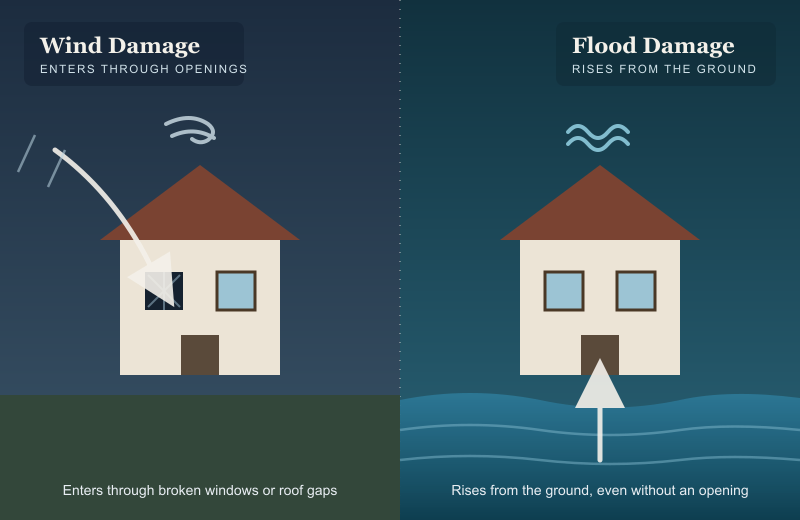
In general:
- Wind-driven damage, such as roof damage, broken windows, or rain entering through storm-created openings, is typically covered by homeowners insurance.
- Rising water, storm surge, or floodwater entering from the ground is typically covered by a separate flood insurance policy.
Many homeowners experience both types of damage during the same hurricane. If you carry both homeowners and flood insurance, consider reporting the loss under both policies rather than waiting for insurers to determine which coverage applies. This approach allows both claims to be reviewed at the same time while coverage questions are being resolved, reducing the chance of avoidable delays.
3. Confirm Whether You Have Flood Insurance Coverage
Many homeowners assume their homeowners insurance covers flooding, but standard policies generally exclude damage caused by rising floodwater. Flood protection usually comes through a separate policy, either from the National Flood Insurance Program (NFIP) or a private flood insurer.
As soon as possible, review your insurance declarations page to confirm:
- Whether you have flood insurance coverage
- Which company administers your policy
- Your policy number and coverage details
If you cannot locate your policy documents, contact your insurance agent or insurer for assistance.
Because of the region’s higher flood risk, many homeowners in Louisiana and coastal Texas carry separate flood insurance policies. Even if you know you purchased coverage, verifying the details early can help you file the correct claim, understand your available benefits, and avoid unnecessary confusion during recovery.
4. Document Every Sign of Flood Damage Before Cleanup Begins
Before you begin cleaning up, take time to thoroughly document the damage. Clear, detailed records help establish what happened and support your insurance claim if questions arise later.
Capture photographs and videos of both the exterior and interior of your property, including:
- Water lines showing how high the floodwater reached
- Mud, debris, and other signs left behind by the flood
- Damaged walls, flooring, furniture, appliances, and personal belongings
- Roof, siding, windows, or other exterior damage caused by the hurricane
If emergency repairs are necessary to prevent additional damage, document the affected areas first whenever it is safe to do so. Keep damaged items until your insurer advises otherwise, unless they pose a health or safety risk.
The more complete your documentation, the easier it becomes to demonstrate the extent of your losses and support the value of your insurance claim.
5. Create a Detailed Inventory of Damaged Property
Once you’ve documented the damage, create an inventory of everything affected by the flood. A detailed list gives your insurer a clearer picture of your losses and supports your hurricane flood insurance claim.
For each damaged item, include as much detail as possible, such as:
- A description of the item
- Its estimated value
- The approximate purchase date, if known
- Available receipts, invoices, photographs, or warranty information
In addition to damaged belongings, save receipts for expenses related to the hurricane, including temporary housing, emergency repairs, debris removal, and cleanup supplies. Depending on your policy, some of these costs may be eligible for reimbursement.
Keeping your inventory organized and updating it as you discover additional damage can make the claims process more efficient and reduce the chance of overlooking important losses.
6. Know Your Important Insurance Claim Deadlines
Every insurance claim comes with deadlines, and missing them can create unnecessary complications. As soon as you report your loss, keep track of every important date and respond promptly to any requests from your insurer.
If you have an NFIP flood insurance policy, you generally must submit a signed Proof of Loss within 60 days of the flood unless FEMA announces an official extension after a major disaster. Even when extensions are available, submit your documentation as early as possible rather than relying on additional time.
State laws also set important claim-handling deadlines. For example, in Louisiana:
- Under La. R.S. 22:1892, insurers generally must pay undisputed claim amounts within 30 days after receiving satisfactory proof of loss.
- Following a declared catastrophic event, homeowners generally have 180 days to submit proof of loss for covered wind damage.
- Insurers may receive up to 30 additional days to meet certain claim-handling deadlines when permitted.
In Texas,
- Under the Texas Prompt Payment of Claims Act, insurers generally must acknowledge a claim within 15 days and accept or deny it within 15 business days after receiving all requested information.
- Once a claim is approved, payment is generally due within 5 business days.
- Depending on the circumstances, applicable law may also allow extensions of up to 60 days for certain statutory or procedural deadlines.
Staying organized makes it easier to meet deadlines and respond promptly throughout the claims process. Create a simple calendar or checklist to track filing dates, document requests, inspections, and correspondence.
7. Keep Every Communication and Claim Document
As your claim moves forward, keep all claim-related information in one place. A well-organized record makes it easier to answer questions, monitor your claim, and resolve disagreements if they arise.
Your file should include:
- Claim numbers and policy information
- Emails, letters, and other written correspondence
- Repair estimates and contractor reports
- Adjuster reports and inspection summaries
- A log of phone calls, including dates, names, and a brief summary of each conversation
Review these records regularly to ensure you have responded to any requests for additional information. A complete paper trail can help clarify what was reported, when it was reported, and how your insurer responded throughout your claim.
8. Understand Your Hurricane Deductible Before Your Claim Is Resolved
Many homeowners in Louisiana and Texas have a separate hurricane or named-storm deductible in addition to their standard deductible. Your hurricane deductible may not be a set dollar amount. In many policies, it is calculated as a percentage of your home’s insured value, which can increase your out-of-pocket responsibility.
Review your policy to understand:
- Whether a hurricane or named-storm deductible applies
- When that deductible is triggered
- How it differs from your standard homeowners deductible
If any part of your policy is unclear, ask your insurer to explain how the deductible affects your covered losses. Understanding your deductible before your claim is evaluated allows you to set realistic expectations and better understand how your insurer applies the deductible when evaluating your claim.
9. Watch for Common Insurance Claim Problems
Although many claims are processed without significant issues, disputes can arise, especially after major hurricanes when insurers handle a large number of claims at once. Staying informed can help you identify potential problems early.
Common issues homeowners encounter include:
- Delays in claim processing
- Underpayment for covered damage
- Disagreements over whether damage resulted from wind or floodwater
- Allegations that damage existed before the hurricane
- Repair estimates that do not account for all documented damage
Review your insurer’s estimate carefully and compare it with your photographs, inventory, and repair documentation. If the settlement does not appear to reflect the damage you documented, ask questions and request an explanation before accepting the outcome.
10. Use Government Resources That Can Help During Recovery
You do not have to navigate hurricane recovery alone. Several government resources provide information and assistance while your insurance claim is being processed.
Some helpful resources include:
- FEMA Individual Assistance, which may provide financial assistance for eligible disaster-related needs not covered by insurance
- FloodSmart.gov, which offers information about flood insurance coverage and the claims process
- The NFIP Flood Insurance Advocate, which helps policyholders understand and address certain concerns about NFIP claims
- The Louisiana Department of Insurance and Texas Department of Insurance, which provide consumer guidance and information about insurance rights and claim handling
If the federal government declares a disaster in your area, register for available FEMA assistance as soon as possible. Keep in mind that FEMA assistance generally supplements, rather than replaces, insurance benefits.
The NFIP has paid billions of dollars in flood insurance claims over the years. If you have flood insurance through the NFIP, follow its claims requirements carefully and use the available resources to better understand the process and address any questions along the way.
When Should You Contact a Flood Damage Claim Lawyer?
Not every flood insurance claim requires legal assistance. However, if unexpected issues arise during the claims process, speaking with a property damage attorney can help you better understand your options and protect your rights.
You may want to seek legal guidance if you experience:

- A denied flood insurance claim
- Unexplained delays in claim processing or payment
- Underpayment that does not reflect your documented losses
- Disputes over whether damage resulted from wind or flooding
- Questions about a missed or disputed Proof of Loss
- Challenges managing both homeowners and flood insurance claims after the same hurricane
An attorney can review your policy, explain complex coverage provisions, help organize supporting documentation, and identify important legal and insurance deadlines.
If your NFIP claim receives a written denial, keep in mind that lawsuits against the NFIP generally must be filed within one year of the denial. An experienced insurance claim attorney can help you understand the applicable deadlines and the steps available to protect your legal rights.
Conclusion
Recovering from a flooded home involves more than repairing the damage. It also requires protecting your insurance claim from the very beginning. The actions you take after the storm, from filing the right claims and documenting every loss to meeting deadlines and keeping organized records, can help keep the process on track. Government resources may also provide valuable support as you navigate both recovery and the insurance claims process.
Hurricane recovery can feel overwhelming, but staying organized from the beginning can make the claims process easier to manage. When questions or disputes arise, early legal guidance can help you make informed decisions at every stage of your claim.