
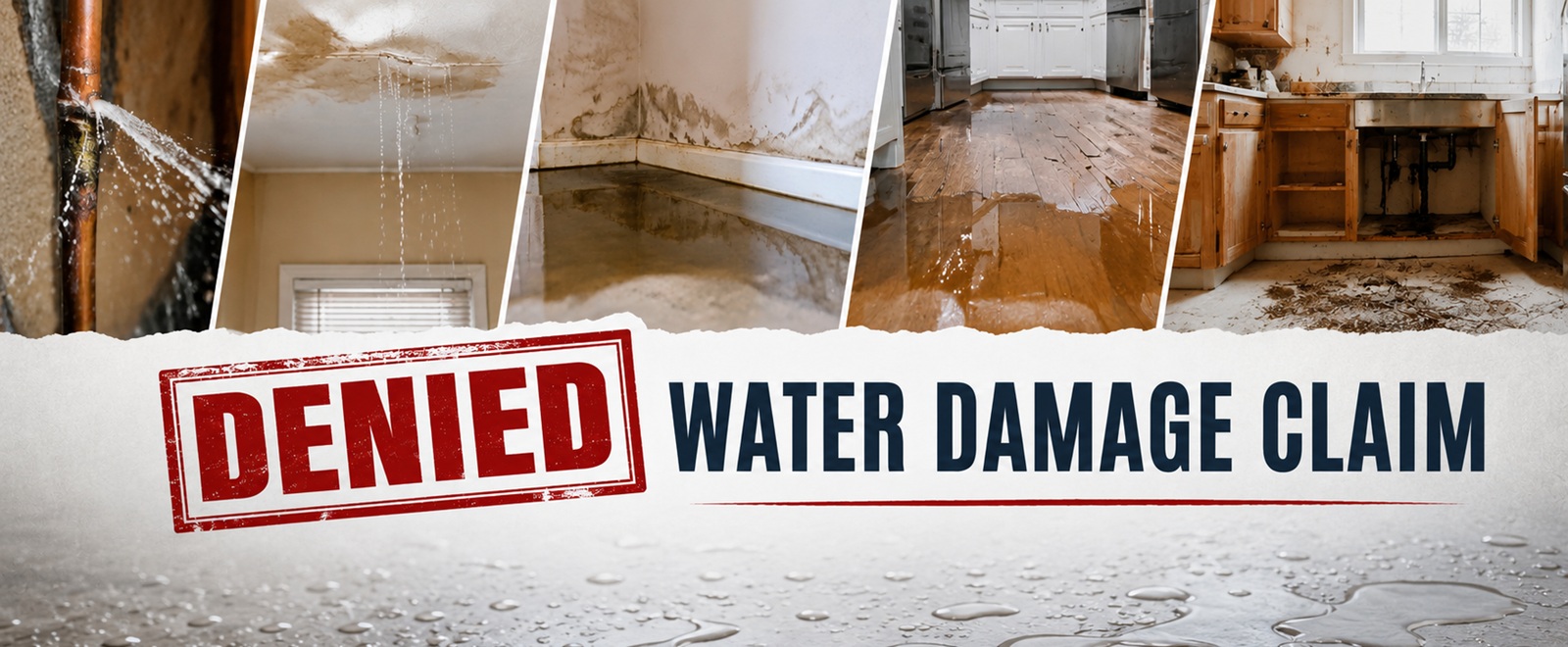
Picture walking into your home and seeing water where it should never be, on the floors, creeping up the walls, or pooling near your business equipment. You file a claim expecting help, only to be told your water damage claim was denied. For homeowners and business owners across Texas and Louisiana, that moment can feel confusing, frustrating, and unfair.
A denial, however, is not the end of the road. It often comes down to how an insurer interprets policy language, not whether the damage is real or costly. According to the Insurance Information Institute, only about 1.5% of U.S. homes file water damage claims each year, yet these claims are among the most expensive, with average payouts around $15,400.
This guide explains why denials happen, what policyholders need to do next, and how they can protect their rights after a denial.
Why Would a Water Damage Claim Be Denied
When a water damage claim denial letter arrives, many policyholders assume the insurer believes the damage is minor or not serious enough. In reality, denials usually have little to do with how severe the damage looks. Insurers focus on technical details such as the cause of loss, when the damage occurred, and how well it was documented. Understanding these decision points helps explain why valid-looking claims often get rejected.
Here are some of the most common reasons insurers rely on when denying water damage claims:
Policy Exclusions Most People Don’t Realize Apply
Insurance policies draw sharp lines between covered and excluded types of water damage. Many denials stem from these distinctions.

- Flood vs. Water Damage: Most homeowners policies cover sudden internal water damage but exclude flooding caused by rising water from outside. Even a few inches of storm surge can trigger a flood exclusion.
- Sewer and Drain Backups: Damage from backed-up drains or sewer lines often requires a specific endorsement. Without it, insurers frequently deny these claims.
- Groundwater and Surface Water: Water seeping in through foundations, crawl spaces, or basement walls often falls under groundwater exclusions, even when heavy rain is involved.
These exclusions surprise many policyholders because the damage feels sudden and unavoidable.
Maintenance, Wear-and-Tear, and “Gradual Damage” Arguments
Another common reason an insurer denies a water damage claim involves how long they believe the problem existed. Insurers may label damage as the result of long-term leaks rather than a sudden event. Claims often get denied based on alleged poor maintenance or pre-existing conditions. A slow pipe leak behind a wall or roof deterioration that allowed water intrusion are frequent examples.
Even when homeowners had no way of knowing about the issue, insurers may still argue that gradual damage falls outside coverage.
Late Reporting, Incomplete Documentation, or Missed Deadlines
Timing and paperwork matter more than many people realize. Waiting too long to report water damage can raise questions about when the loss actually occurred. Disposing of damaged flooring, drywall, or appliances too quickly may eliminate key evidence. Failing to photograph the damage before cleanup can also weaken the claim file.
Insurers often point to these gaps to justify a denial, even when damage is legitimate.
Coverage Limits, Missing Endorsements, and Technical Gaps
Some claims get denied not because coverage is absent, but because limits quietly restrict recovery. Policies often include sub-limits for mold remediation or water backup losses. High deductibles may exceed the estimated repair cost, resulting in no payable amount. Many homeowners never realize they need specific endorsements until after damage occurs.
These technical gaps can turn a covered event into a denied claim.
Vacancy
Vacancy clauses are another frequent issue, especially for rental properties or second homes. Insurers often define a home as vacant if it is unoccupied and lacks personal belongings. Most policies limit or exclude coverage if a property remains vacant for 30 to 60 days. Water damage occurring during this period may lead to a denial based on vacancy provisions.
Policyholders are often unaware that vacancy status affects coverage so significantly.
Disputes Over the Source of Damage
Finally, insurers may deny claims by reclassifying how the damage occurred. Rain damage may be blamed on roof wear instead of storm-related intrusion. A pipe leak might be redefined as groundwater seepage. Appliance failures may be attributed to user error rather than mechanical failure. These subtle shifts can move a claim from covered to excluded.
Challenging such determinations often requires detailed evidence and expert support to clarify the true cause of loss.
What to Do Immediately If Insurance Company Denies Water Damage Claim
How you respond after you receive a water damage claim denied notice matters more than many policyholders realize. A denial does not lock in the insurer’s decision. The early steps you take can directly affect whether the claim gets reconsidered, strengthened, or ultimately reversed.
Review the Denial Letter Line by Line

Start by carefully reading the denial letter rather than skimming it. These letters often rely on broad policy references instead of clear explanations. While reviewing the denial letter:
- Identify the exact reason the insurer gives for denying the claim.
- Match that reason against the specific policy language being cited.
- Look for vague phrases such as “not covered under your policy” without detailed support.
Many water damage insurance claim denial letters leave room for challenge once the stated reason is tested against the policy itself.
Gather Stronger Evidence Than What You Filed Initially
A denial often means the insurer believes the evidence was incomplete or unclear. Stronger documentation can change that. Try gathering evidence such as:
- Independent contractor or plumber reports that identify a sudden cause of damage
- Moisture readings that show active water intrusion rather than long-term exposure
- Photos that distinguish recent damage from older wear
- Maintenance and repair records showing responsible property upkeep
New or clearer evidence is frequently the turning point in most denied claims.
File an Appeal
If informal follow-ups go nowhere, a formal appeal or reconsideration request becomes necessary. When filing an appeal:
- Include your policy number, claim details, and the insurer’s stated denial reasons.
- Address each denial point directly with supporting documentation.
- Clearly explain why the damage should be covered under the policy.
If the insurer still refuses to cooperate, policyholders can also file a complaint to request regulatory review or mediation.
How to Appeal a Denied Water Damage Insurance Claim
Many policyholders never realize that appealing a denied water damage insurance claim is a structured process with clear steps. While it may feel intimidating, understanding how appeals work makes the process far more manageable.
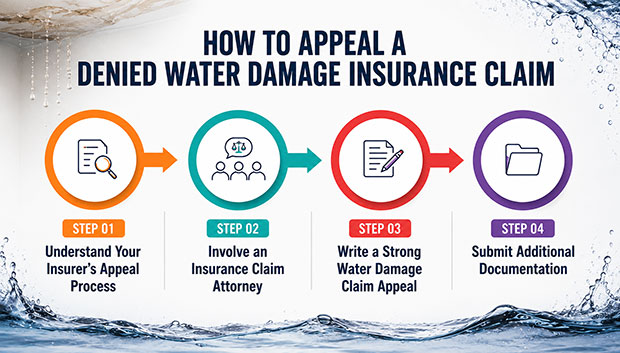
Understand Your Insurer’s Appeal Process
Every insurer sets internal procedures and deadlines for appeals. Confirm how long you have to file an appeal after denial. Verify whether submissions must be written, online, or sent by certified mail. Missing a deadline or submission requirements can end the appeal before it begins.
Involve an Insurance Claim Attorney
After reviewing your insurer’s appeal process, some policyholders may benefit from legal guidance before moving forward. Legal help may make sense when denials repeat, losses are significant, or bad faith handling is suspected. An attorney can help you navigate the appeal, escalate the matter beyond negotiation when necessary, while ensuring the appeal follows legal and procedural requirements.
Write a Strong Water Damage Claim Appeal
Whether you prepare the appeal yourself or with legal guidance, an effective appeal letter focuses on clarity and structure. Reference the exact policy provisions supporting coverage. Address the insurer’s stated reason for denial directly. Use facts, documentation, and timelines rather than emotional arguments.
Submit Additional Documentation
The appeal stage is your best opportunity to strengthen the claim file. Support your claim with additional documentation, such as:
- Licensed inspections or expert evaluations
- Detailed damage photos and moisture reports
- Maintenance logs and a clear timeline of events
Thorough documentation improves credibility and reduces ambiguity in your water damage insurance claim.
Your Legal Rights After a Water Damage Claim Denial in Texas and Louisiana
A denied water damage claim can have serious financial consequences for property owners. Repair costs add up quickly, and many policyholders underestimate the stakes. National averages suggest home water damage repairs typically range from about $6,000 to $18,000 in Texas and roughly $7,000 to $18,000 in Louisiana, depending on the extent and source of the damage. Knowing your legal rights after a denial helps you decide whether to appeal, escalate, or seek legal guidance.
Louisiana-Specific Guidance
Louisiana policyholders face strict timelines and unique coverage issues after their water damage claim is denied.
- Statute of Limitations: Louisiana generally allows two years to file a property damage lawsuit, making early action critical.
- Insurance Deadlines: Under La. Rev. Stat. §22:1892, insurers must act promptly and issue payment after receiving satisfactory proof of loss within specific timeframes, depending on the type of claim:
- Standard water damage claims, such as a burst pipe or appliance leak, must be paid within 30 days.
- Catastrophic residential claims, including hurricane or declared disaster losses, carry a 60-day payment deadline.
- Catastrophic commercial claims involving business properties allow up to 90 days for payment.
Unreasonable delays beyond these timeframes can expose insurers to statutory penalties.
- Regulatory Considerations: Flood exclusions and hurricane-related coverage distinctions often drive denials, especially after major storms.
- Consumer Remedies: If your claim is denied, you may appeal internally or file a complaint with the Louisiana Department of Insurance to request regulatory review.
Texas-Specific Guidance
Texas law provides different protections and timelines for policyholders dealing with a denied water damage claim.
- Statute of Limitations: Policyholders generally have two years from the date of loss to file a property damage lawsuit.
- Insurance Deadlines: Under the Texas Insurance Code, insurers generally have 15 days to acknowledge a claim, begin investigating it, and request any additional information needed to evaluate the loss. Once all requested information has been received, they typically have 15 business days to notify the policyholder whether the claim is accepted or denied. If the claim is approved, payment is generally required within 5 business days of the approval decision. Failure to meet these deadlines may indicate improper claim handling.
- Regulatory Remedies: Texas law allows penalties, including interest, under the Prompt Pay Act, the Deceptive Trade Practices Act, and Insurance Code Chapter 541 for improper delays or unfair handling.
- Consumer Options: If a claim remains unresolved or improperly denied, policyholders may pursue internal appeals, regulatory complaints, or legal action to enforce their rights.
How to Reduce the Risk of a Future Water Damage Claim Denial
While not every denial is avoidable, proactive steps can lower the risk of insurers denying your water damage claim. Take the following steps to reduce the risk of a future water damage insurance claim denial:
- Act fast when water damage occurs. Stop the source, begin drying immediately, and report the loss promptly. Delays can weaken or invalidate a claim.
- Document maintenance and repairs proactively. Save receipts, take photos after repairs, and keep inspection reports to show responsible upkeep.
- Know your coverage before damage happens. Review exclusions annually, understand deductibles and limits, and add endorsements where needed.
Conclusion
A denied water damage claim can feel like a final answer, but it rarely is. Many denials are based on how insurers interpret policy language, not on whether the damage is real or costly. Policyholders who respond with clear documentation, timely action, and a solid understanding of their coverage often improve their position. When the issues involve significant losses, repeated denials, or signs of unfair claim handling, legal guidance can help level the playing field and protect your rights.
Pandit Law works with Texas and Louisiana policyholders to review denied water damage claims and explain next steps. Contact Pandit Law for a free case evaluation to better understand your options.
Frequently Asked Questions
Report the damage immediately, stop the source of water, and document everything with photos, videos, and repair records. Keep damaged materials when possible and follow up in writing with your insurer. Clear documentation and timely communication strengthen your claim.
Homeowner insurance often covers sudden and accidental water damage, such as burst pipes or appliance leaks. It usually excludes flooding, groundwater intrusion, and long-term leaks unless specific endorsements apply. Coverage depends on the cause of the damage and the policy language.
Yes. You can challenge an inaccurate or misleading report by submitting independent inspections, expert opinions, and supporting documentation. Appeals often succeed when new evidence shows the damage resulted from a covered cause rather than the insurer’s stated reason.
In many cases, yes. Claim denial and policy cancellation are separate actions, each governed by specific rules. Policyholders may appeal the denial, challenge improper cancellation, or file regulatory complaints depending on the circumstances.
You can dispute this by showing the damage was hidden and not reasonably detectable. Plumber reports, moisture readings, repair records, and timelines can help demonstrate that the leak was sudden or recent rather than ongoing.