
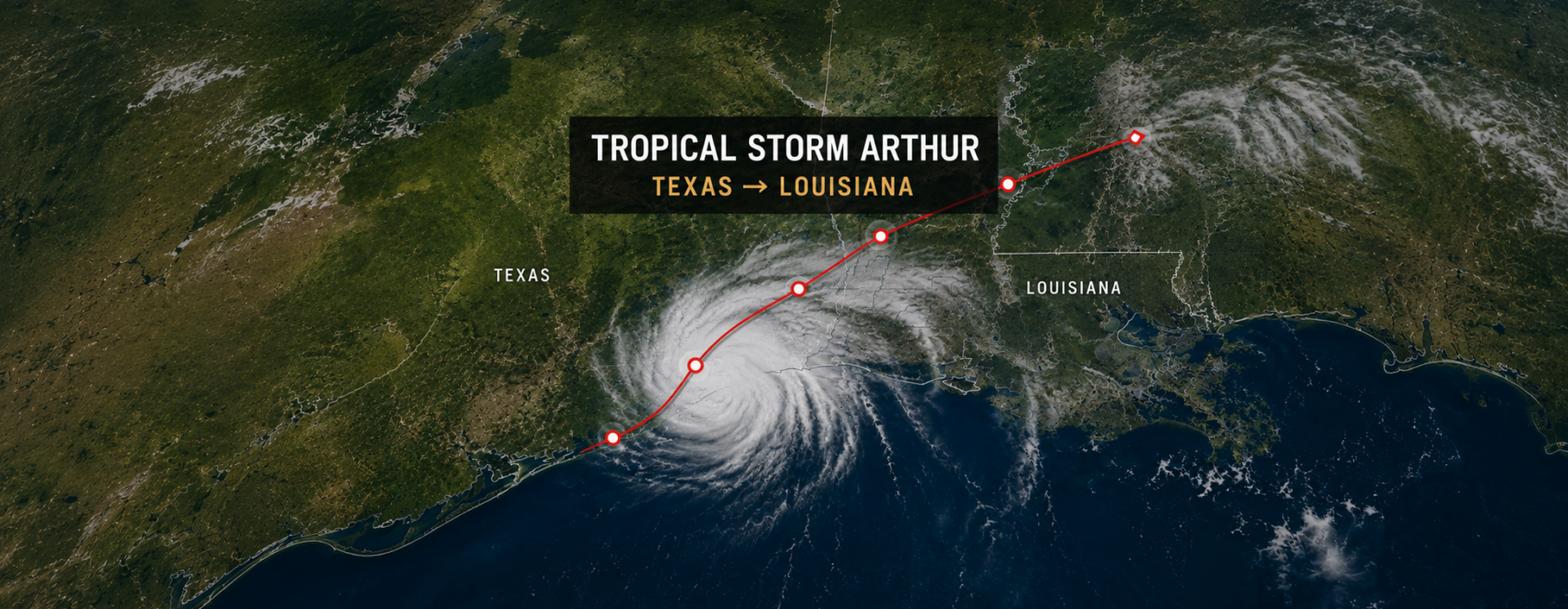
Tropical Storm Arthur may have passed, but the property damage it left behind can create problems long after the storm has moved on. Arthur was the first named storm of the 2026 Atlantic hurricane season and brought tropical-storm conditions, heavy rainfall, and flooding concerns to parts of the Texas and Louisiana Gulf Coast.
If your home or business suffered wind, roof, water, flooding, or other storm damage, knowing what caused the loss can be important when you seek insurance coverage. Different types of damage may raise different coverage questions under your policy.
This guide explains Arthur’s impacts, common types of property damage, and practical steps for handling an Arthur storm insurance claim. If your insurer denies, delays, underpays, or disputes your claim, a property damage attorney can review your policy and help you understand your legal options.
What Was Tropical Storm Arthur?
The term “tropical storm” describes the system’s sustained wind speed, not the severity of property damage. Even a relatively weak tropical cyclone can produce damaging rain, flooding, wind, and debris across a wider area. That distinction can matter when evaluating what caused damage to your property and how your insurance policy may respond.
Tropical Storm Arthur began as a low-pressure system near the south Texas coast on June 16, 2026. At first, the National Hurricane Center classified it as Potential Tropical Cyclone One while it organized over the northwestern Gulf of Mexico. On the morning of June 17, the system developed enough organization and tropical-storm-force winds to be officially designated Tropical Storm Arthur.
Arthur moved generally northeast along the Texas coast, reaching maximum sustained winds of 45 mph. The storm’s center moved inland over Matagorda County, Texas, during the afternoon, although its broader wind and rain impacts extended well beyond the center. Later that evening, the center re-formed near Galveston before Arthur weakened into a post-tropical low around 10 p.m. CDT on June 17.
Where Did Tropical Storm Arthur Cause Impacts?
Arthur’s effects extended beyond the location of its center. The National Hurricane Center issued a Tropical Storm Warning from Sargent, Texas, to Morgan City, Louisiana, and warned of life-threatening flooding across portions of the region. Arthur was moving northeast along the Texas coast, with impacts expected across coastal communities and farther inland.
Texas Gulf Coast and Nearby Communities
Arthur’s main track followed the Texas coast, with impacts extending across coastal and nearby inland communities. The National Hurricane Center reported the center moving inland over Matagorda County and later re-forming near Galveston. The storm brought tropical-storm-force winds and a significant rainfall and flooding threat to the region.
For affected property owners, the main concerns included:
- Heavy rainfall and flooding that affected homes, businesses, roads, and other property
- Tropical-storm-force winds and stronger gusts capable of damaging roofs, siding, windows, doors, fences, and exterior structures
- Power and infrastructure disruptions and debris that could create additional concerns during cleanup and recovery
TDEM also encouraged Texans with tropical-weather or flooding damage to homes, businesses, or agricultural property to report the damage through iSTAT as part of the state’s preliminary damage assessment process.
Louisiana Gulf Coast and Surrounding Parishes
Arthur’s warning area extended into coastal Louisiana, and the National Hurricane Center forecast the system to move inland toward southwestern Louisiana as it weakened. Louisiana also activated a state emergency response following severe weather associated with Arthur.
On June 18, Louisiana Governor Jeff Landry declared a state of emergency for Avoyelles, Lafourche, Pointe Coupee, St. Landry, St. Tammany, and Terrebonne parishes. The declaration activated the state’s emergency response and recovery program to support parish-level operations.
The severity and type of storm impacts varied by parish, so property owners should focus on the specific conditions and damage at their property rather than assuming that every Arthur-related loss resulted from the same cause.
What Types of Property Damage Did Tropical Storm Arthur Cause?
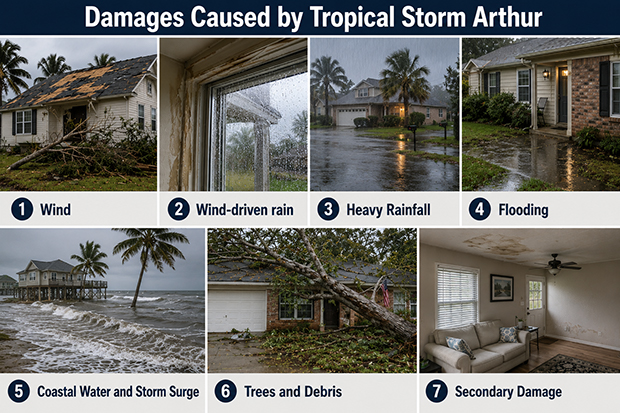
Tropical Storm Arthur brought a combination of wind, heavy rainfall, flooding, and coastal hazards that can damage property in different ways. Storm-related damage can occur through several mechanisms, including:
- Wind: Strong winds and gusts can damage roof shingles, roofing systems, siding, windows, doors, fences, and other exterior structures.
- Wind-driven rain: Rain can enter through openings created by damaged roofing, windows, doors, or other parts of the building envelope.
- Heavy Rainfall: Intense rainfall can contribute to water intrusion and interior damage, particularly where water finds existing or storm-created entry points.
- Flooding: Rising water can damage floors, walls, electrical systems, contents, and structural components. Standard homeowners insurance generally does not cover flood damage.
- Coastal Water and Storm Surge: Storm surge involves seawater or coastal water being pushed inland by the storm. It is different from rainwater entering a property and can raise separate insurance coverage questions.
- Trees and Debris: Fallen trees or flying debris can damage roofs, vehicles, windows, fences, and other structures.
- Secondary Damage: Water left unaddressed can lead to additional deterioration, mold, and other problems, making prompt documentation and reasonable mitigation important.
While a storm can result in several types of damage at the same property, that does not mean every loss falls under the same coverage. For example, insurance guidelines specifically distinguish flood losses from wind-related property damage, so policyholders should review their coverage carefully.
For an insurance claim, the key issue may be determining whether the damage resulted from wind, rain, flooding, storm surge, or a combination of causes. Your policy’s exclusions, endorsements, deductibles, and other terms can affect coverage, so avoid assuming that all damage associated with Arthur will be covered under one policy.
What Should You Do If Tropical Storm Arthur Damaged Your Property?
If Arthur damaged your home or business, taking the right steps early can help preserve evidence and create a clearer record of the loss. Start with safety, then focus on documenting the condition of the property and protecting it from additional damage.
- Make Sure the Property Is Safe: Stay away from downed power lines, unstable structures, standing water around electrical systems, and other hazards. If the property is unsafe, wait until authorities or qualified professionals determine that it is safe to enter.
- Document the Damage: Take photographs and videos of affected rooms, the roof, exterior areas, contents, water intrusion, and debris before making substantial repairs. Keep receipts for reasonable emergency expenses and temporary repairs.
- Prevent Further Damage: Take reasonable steps to protect the property from additional loss, such as covering a damaged opening or addressing an active leak when it is safe to do so. Keep records of the work and, when practical, avoid permanent repairs until the insurer has had an opportunity to inspect the damage.
- Notify Your Insurance Company: Report the loss promptly, obtain the claim number, provide requested information, and keep copies of communications and documents related to the claim.
- Review Your Policy: Pay attention to coverage limits, deductibles, exclusions, endorsements, wind or hail provisions, flood coverage, and additional living expense provisions.
Once you have documented the damage and notified the insurer, keep your records organized throughout the claim process. If questions arise about the cause of the loss, the scope of damage, or the insurer’s position, a property damage attorney can review the policy and available evidence with you.
How to File a Tropical Storm Arthur Insurance Claim
If Tropical Storm Arthur damaged your property, documenting the loss and staying organized can make the insurance process easier to navigate. The steps below can help you build a clear record of what happened and how the damage affected your property.
Step 1: Document Your Arthur-Related Property Damage
When it is safe to do so, photograph and video the damage before making substantial repairs. If immediate temporary repairs are necessary to prevent further damage, document the condition first when practical and keep records of the work. Document the roof, siding, windows, doors, interior areas, personal property, and any visible water intrusion. If flooding occurred, document the water’s impact on floors, walls, electrical components, and contents when it is safe to do so.
Keep receipts for reasonable temporary repairs and other related expenses. Where practical, preserve damaged materials rather than discarding them before they can be inspected.
Step 2: Notify Your Insurance Company
Report your Arthur storm insurance claim promptly and follow your policy’s notice requirements. Provide the information your insurer requests, obtain your claim number, and keep copies of claim-related correspondence, photographs, estimates, and other documents. Maintaining a written record of your communications can also help you track what information you provided and what the insurer requested.
Step 3: Prepare for the Insurance Inspection
Before the inspection, organize your photographs, videos, receipts, repair records, and other supporting evidence. During the inspection, document which areas were examined and identify damage that may not be immediately visible. If the inspection overlooks relevant damage, you can request a reinspection and provide additional documentation supporting your Arthur storm insurance claim.
Step 4: Review the Insurer’s Estimate and Settlement Offer
Do not assume the insurer’s estimate accounts for every aspect of your loss. Compare it with the documented damage and repair estimates, looking for items that may be missing or undervalued. Review the applicable policy provisions, exclusions, deductibles, and coverage limitations before deciding how to respond to a settlement offer.
Step 5: If You Are Not Satisfied, Speak With a Property Damage Attorney
If your Arthur storm insurance claim is denied, delayed, underpaid, or disputed, consider having a property damage attorney review the policy, claim evidence, insurer’s estimate, and settlement offer. An attorney can explain the issues involved and advise you on potential next steps based on the circumstances of your claim.
Louisiana and Texas Guidance for Arthur-Damaged Property
Property owners in Louisiana and Texas may have different state-specific resources and insurance requirements following Tropical Storm Arthur. Understanding each state’s guidance, deadlines, and disaster resources can help you avoid overlooking important requirements.
Louisiana
The Louisiana Department of Insurance (LDI) issued Tropical Storm Arthur-specific guidance covering homeowners and flood insurance, including recommendations for documenting damage, contacting the insurer, and understanding flood coverage. LDI also provides an Arthur Insurance FAQ and Storm Resource Center with storm recovery and claims information.
Louisiana declared a state of emergency covering Avoyelles, Lafourche, Pointe Coupee, St. Landry, St. Tammany, and Terrebonne parishes. LDI also issued Emergency Rule 50, which temporarily suspended or modified certain insurance-related deadlines and requirements for affected policyholders through July 22, 2026.
Louisiana law provides specific treatment for catastrophic losses. For covered residential property losses classified as catastrophic, an insurer generally has up to 60 days after satisfactory written proof of loss to transmit payment. State law also provides additional protections concerning proof-of-loss deadlines following a catastrophic event.
Texas
TDEM’s Tropical Storm Arthur resources provide information on storm impacts, recovery, and damage reporting. Texans affected by tropical weather or flooding were encouraged to report damage to homes, businesses, and agricultural property through iSTAT. This report supports government damage assessments and is separate from submitting a private insurance claim.
For Texas property insurance claims, insurers generally must acknowledge a claim within 15 days and, after receiving the information needed to evaluate it, provide a coverage decision within 15 business days. An approved claim generally must be paid within 5 business days. If the Texas Department of Insurance designates a weather-related event as a catastrophe or major natural disaster, the applicable claim-handling deadlines may be extended by an additional 15 days.
These deadlines can vary based on the circumstances and applicable law, so policyholders should not assume that a government disaster report changes their private insurance claim obligations.
How Can a Property Damage Lawyer Help With Your Arthur Claim?
When a Tropical Storm Arthur claim becomes difficult to resolve, a property damage lawyer can help you understand where the dispute lies and what options may be available. This can be particularly important when the insurer’s position differs from your understanding of the damage or coverage.
A property damage lawyer can help:
- Review your policy and coverage position to identify provisions, exclusions, deductibles, and other terms relevant to the loss.
- Analyze the insurer’s estimate and settlement offer and compare them with the documented damage and available repair information.
- Identify missing or undervalued damage, including damage that may not have been fully considered during the initial inspection.
- Evaluate causation disputes, particularly whether the damage resulted from wind, rain, flooding, or storm surge.
- Request or assist with a reinspection and help organize additional evidence when appropriate.
- Communicate and negotiate with the insurer regarding disputed aspects of the claim.
- Challenge an improper denial, delay, or underpayment based on the policy and available evidence.
- Assess whether additional legal action may be warranted if the insurance dispute cannot be resolved through the claims process.
The goal is to help you understand your rights and the issues affecting your claim so you can make informed decisions about how to proceed.
Conclusion
If Tropical Storm Arthur damaged your home or business, document the loss carefully, report it promptly to your insurer, and review the insurer’s estimate and settlement offer before making decisions about your claim. Keep photographs, videos, receipts, policy documents, and claim communications organized throughout the process. If the insurer denies, delays, underpays, or disputes your claim, a property damage attorney can review the policy, evidence, and insurer’s position and explain your options.
Arthur was followed by Tropical Storm Bertha and Tropical Storm Cristobal, the next named storms of the 2026 Atlantic season. For property owners, that progression is a useful reminder that storm-related damage can occur throughout the season. The same basic steps covered here, including documenting damage, reporting losses, and carefully reviewing insurance coverage, can help you respond if another storm affects your property.