
Ice storms rarely damage a property in just one way. While many people picture roof damage or fallen branches, the more serious issues often occur inside the home or building. When freezing rain coats structures in thick layers of ice, temperatures drop rapidly, and plumbing systems, roofs, and exterior materials can fail under pressure. Once that happens, water may begin entering interior spaces quickly and unexpectedly.
For homeowners and business owners, the resulting damage can be extensive. Water can spread through ceilings, insulation, flooring, cabinetry, and electrical systems within hours. Cleanup and repairs may disrupt daily life and raise complicated insurance questions.
This guide explains ice storm water damage, what typical homeowners insurance policies may cover, and how to approach an ice storm water damage claim if your property suffers interior water damage after severe winter weather.
What Is Ice Storm Water Damage?
Ice storms occur when freezing rain coats surfaces such as roofs, gutters, power lines, and exterior walls with a thick layer of ice. As ice accumulates, structures experience significant weight and temperature stress. At the same time, freezing conditions affect plumbing systems and building materials.
Ice storm water damage refers to interior water damage caused directly or indirectly by these freezing conditions. Unlike flooding from rising water outside the property, this type of damage typically begins within the structure itself.
Several situations may lead to an ice storm water damage claim, including:
- Frozen plumbing lines that expand and rupture
- Ice buildup on roofs that traps melting snow
- Heavy ice accumulation that shifts flashing or roofing materials
- Freeze–thaw cycles that create small openings around windows or siding
In these situations, water enters the structure unexpectedly and spreads through interior building materials. Because the damage often results from sudden winter weather events, many homeowners insurance policies address these losses under certain conditions.
Common Types of Water Damage After an Ice Storm
Ice storms can cause interior water damage in several different ways. While each property is unique, certain patterns appear repeatedly after severe winter weather events.
Burst Frozen Pipes
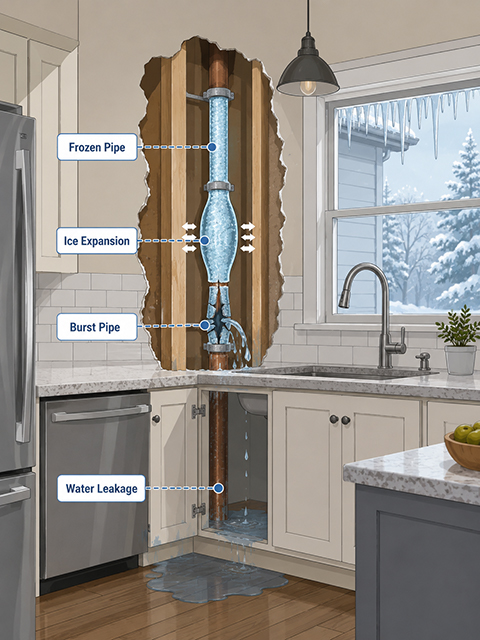
Frozen pipes are one of the most frequent sources of water damage during ice storms. When water inside a pipe freezes, it expands and creates pressure within the plumbing line. That pressure can eventually split the pipe. Expanding ice inside plumbing systems can generate enough pressure to break pipes even when the ice blockage occurs several feet away from the rupture point.
Once temperatures rise or the ice inside the pipe melts, water begins flowing again. Instead of moving through the plumbing system normally, it escapes through the rupture and spreads into surrounding materials such as drywall, insulation, and flooring.
Ice Dam-Related Interior Leaks
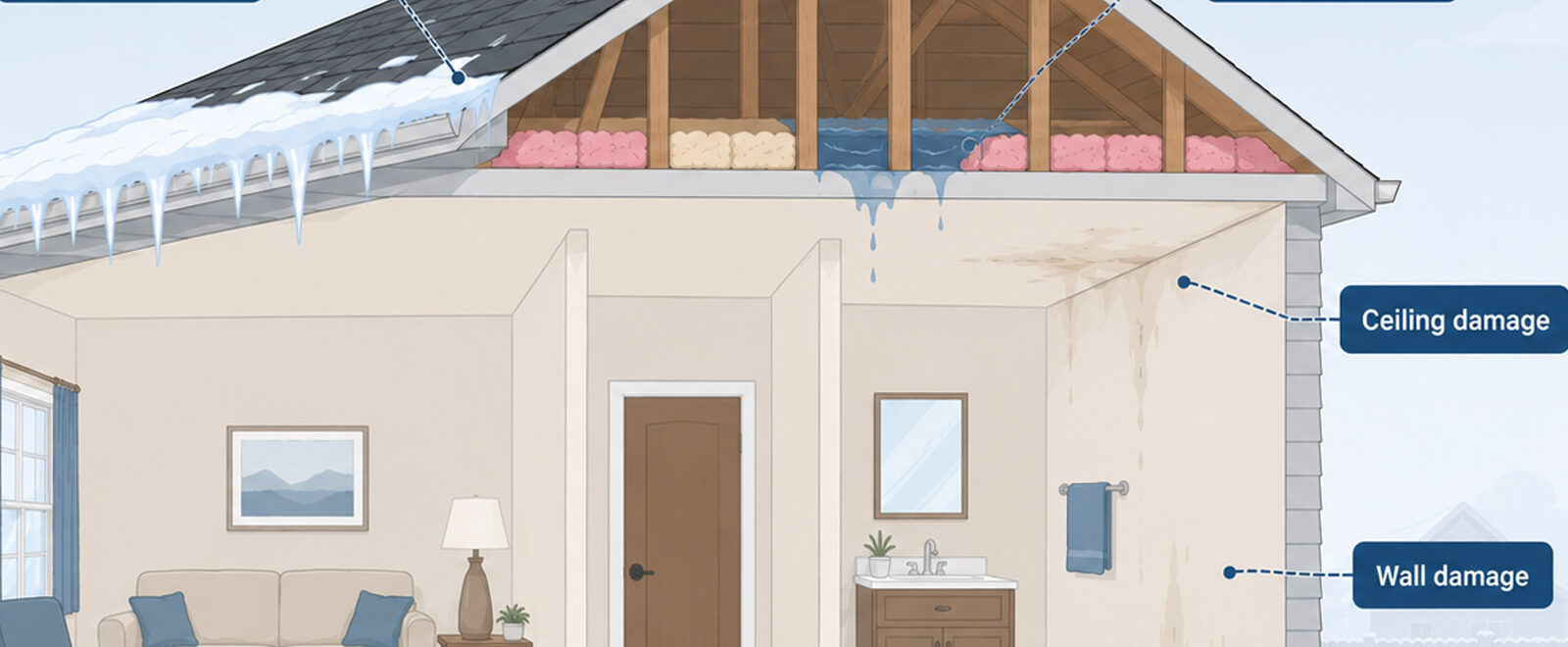
Ice dams develop when melting snow flows down a roof and refreezes along the colder edge near the gutters. Over time, this ridge of ice blocks drainage and traps water behind it.
As trapped water accumulates, it may work its way beneath roofing materials and enter the attic or interior ceiling spaces. Homeowners may first notice ceiling stains or moisture around light fixtures.
Because ice dams form gradually during freeze-thaw cycles, leaks sometimes appear hours or even days after the storm itself.
Roof or Flashing Leaks from Heavy Ice Accumulation
Roofs are designed to withstand snow loads, but freezing rain can create unusually heavy ice buildup. This additional weight may loosen flashing around vents, chimneys, or roof joints.
Even small shifts in roofing materials can create openings where melting ice and water begin entering the structure. Once inside, water may travel along rafters or beams before appearing inside living areas.
Water Intrusion Through Damaged Siding or Windows
Ice storms can affect exterior building materials as well. When freezing rain coats siding, window frames, and exterior trim, repeated freeze-thaw cycles may cause materials to expand and contract.
These movements can open small gaps where wind-driven rain or melting ice enters the building envelope. While the initial opening may appear small, water can spread through insulation cavities and interior walls.
Sewer or Drain Backups During Freezing Conditions
Extreme cold can affect sewer and drain lines in some circumstances. Ice buildup may obstruct sections of the drainage system, preventing wastewater from flowing normally.
When blockages occur, water can back up through drains or plumbing fixtures. The resulting interior water damage may affect flooring, cabinets, and nearby structural components.
What Does Homeowners Insurance Typically Cover for Water Damage?

Many homeowners insurance policies include coverage for certain types of sudden water damage caused by winter weather events. This protection usually falls under the dwelling portion of the policy, which covers the structure itself, along with personal property coverage for belongings inside the home. A key factor in many claims is whether the damage resulted from a sudden and unexpected event rather than a condition that developed over time.
When an ice storm leads to a sudden pipe rupture or interior leak, the coverage may address several types of loss, including:
- Structural repairs to walls, ceilings, or flooring damaged by water
- Replacement of insulation and built-in components affected by the leak
- Restoration of interior surfaces such as drywall, trim, and cabinetry
- Damage to furniture, electronics, or stored belongings exposed to water
- Access work needed to reach and repair plumbing behind walls or ceilings
What Is Usually Not Covered for Water Damage?
Although many winter storm losses fall within policy coverage, insurers may rely on certain exclusions when evaluating an ice storm water damage claim. Common issues include:
- Damage attributed to long-term leaks or deterioration
- Structural issues caused by a lack of maintenance
- Water intrusion that occurred gradually over time
- Situations where property systems were not reasonably protected during freezing temperatures
Because coverage decisions often depend on the cause of the damage, insurers typically investigate the circumstances surrounding the storm and the condition of the property beforehand.
How to File an Ice Storm Water Damage Claim
Taking prompt and organized steps after discovering water damage can help support a strong ice storm water damage claim. The process typically begins immediately after the damage is discovered.
1. Mitigate Further Damage
Stopping additional water intrusion should be the first priority. This may involve shutting off the main water supply, covering damaged roof areas temporarily, or removing standing water from affected rooms.
2. Document All Damage with Photos and Video
Detailed documentation helps establish what happened and how the damage spread. Photos and videos should capture affected rooms, structural damage, plumbing failures, and any visible ice buildup or storm-related conditions.
3. Notify the Insurance Carrier Promptly
Insurance policies generally require policyholders to provide timely notice after discovering property damage. Reporting the incident allows the insurer to begin evaluating the ice storm water damage claim.
4. Preserve the Damaged Materials
If sections of pipe, roofing material, or building components are removed during repairs, keeping those items may help demonstrate how the failure occurred.
5. Obtain Repair Estimates
Professional repair assessments can help identify the full scope of the damage and the work required to restore the property.
6. Review Settlement Offer
Once the insurer completes its evaluation, the policyholder receives an estimate addressing the damage. Reviewing the details carefully helps ensure the assessment reflects the actual repairs required.
7. Contact a Water Damage Claim Lawyer
If coverage questions arise or the claim evaluation does not fully address the damage, speaking with a water damage claim lawyer may help clarify policy rights and available options.
Why Ice Storm Water Damage Claims Get Denied or Underpaid
Insurance disputes sometimes arise during the claim process when insurers and policyholders disagree about what caused the damage. Several recurring issues appear in ice storm water damage claim disputes:
- Insurers may argue that the damage resulted from long-term deterioration rather than the storm.
- Questions may arise about whether heating systems were maintained during freezing temperatures.
- Documentation showing when the pipe ruptured or a leak occurred may be limited.
- The insurer may dispute whether all interior damage resulted from the storm event.
- Investigators may attribute the damage to structural or installation issues unrelated to the weather event.
These disagreements can affect how the claim is evaluated and whether certain repairs are included in the final settlement.
Ice Storm Water Damage Claims in Texas and Louisiana
Winter storms in Texas and Louisiana have caused significant property damage in recent years. Severe cold events have frozen plumbing systems, damaged roofs, and resulted in widespread interior water losses across both states.
For example, the Texas Department of Insurance reported that Texans filed more than 450,000 property damage claims after the February 2021 winter storm, totaling over $8 billion in insured losses. This illustrates the scale of damage that freezing conditions can create.
Both states have laws that require insurers to investigate property damage claims and respond within certain timeframes once a loss is reported. These rules are intended to ensure that policyholders receive timely communication and fair claim evaluations.
Texas
Texas law requires insurers to handle property insurance claims within specific timeframes under the Texas Prompt Payment of Claims Act. After receiving notice of a claim, an insurer generally must:
- Acknowledge the claim, begin an investigation, and request any information reasonably necessary to evaluate the claim within 15 days;
- Accept or reject the claim within 15 business days after receiving all requested information and documentation, although limited extensions may apply in certain circumstances; and
- Pay the claim within 5 business days after notifying the policyholder that the claim has been approved.
Following a catastrophe, such as a hurricane, tornado, wildfire, or other event designated by the Texas Department of Insurance, the Commissioner may authorize temporary extensions of certain statutory deadlines to account for the extraordinary volume of claims. These extensions do not eliminate an insurer’s obligation to investigate, communicate, and process claims in good faith. Once any authorized extension expires, insurers remain subject to the Prompt Payment of Claims Act and may be liable for statutory interest, attorney’s fees, and other penalties if they fail to comply with the applicable deadlines without a valid legal basis.
Louisiana
Louisiana law also imposes deadlines on insurers handling property damage claims. After receiving satisfactory proof of loss, insurers generally must issue payment within 30 days. If the insurer’s failure to pay is found to be arbitrary or capricious, Louisiana law may allow policyholders to seek penalties and additional damages for the delay.
However, disputes can still arise when insurers question whether property owners maintained heating systems, protected plumbing lines, or addressed conditions that may have contributed to the damage.
Understanding how policies apply to winter storm losses can help homeowners and businesses navigate these claims more effectively.
When to Speak with an Insurance Claim Attorney for Water Damage from an Ice Storm
Some water damage claims proceed smoothly, but others involve disputes over coverage or the scope of repairs. Homeowners and business owners may consider consulting an insurance claim attorney when:

- The insurer delays responding to the claim
- Coverage is denied despite evidence of storm-related damage
- The scope of repairs included in the claim appears incomplete
- Disputes arise regarding the cause of the water intrusion
- Communication with the insurer becomes difficult or unclear
A water damage claim lawyer can review policy language, analyze claim documentation, and address disputes regarding how the insurer evaluated the loss.
Conclusion
Ice storms can cause far more than visible exterior damage. When freezing rain, ice buildup, and extreme cold affect plumbing systems and building materials, significant interior water damage may follow. Ceilings, walls, flooring, and personal belongings can be affected once water spreads through the structure. Timely documentation and a clear understanding of insurance coverage can help property owners navigate the claims process after a winter storm.
If questions arise about coverage or claim handling, professional guidance can help clarify available options. Pandit Law offers a FREE Claim Evaluation for homeowners and businesses facing property damage disputes related to winter storm water damage.
Frequently Asked Questions
Flood damage typically refers to rising water entering the property from outside sources, such as overflowing rivers or surface runoff. Ice storm water damage usually involves interior leaks from frozen pipes or roof issues, which homeowners insurance may cover.
Insurance policies often include specific requirements for properties that remain unoccupied during the winter months. Insurers may examine whether reasonable precautions were taken, such as maintaining heat or draining plumbing systems, before determining coverage for frozen pipe damage.
If water from a frozen pipe or ice-related roof leak spreads through interior building materials, homeowners insurance may cover repairs to flooring, drywall, insulation, and other affected structural components, depending on the cause of damage and the policy terms.
The age of plumbing alone does not automatically determine coverage. Insurers typically evaluate whether the pipe failed because of freezing conditions or long-term deterioration. If freezing caused the rupture, the resulting water damage may still fall within policy coverage.