
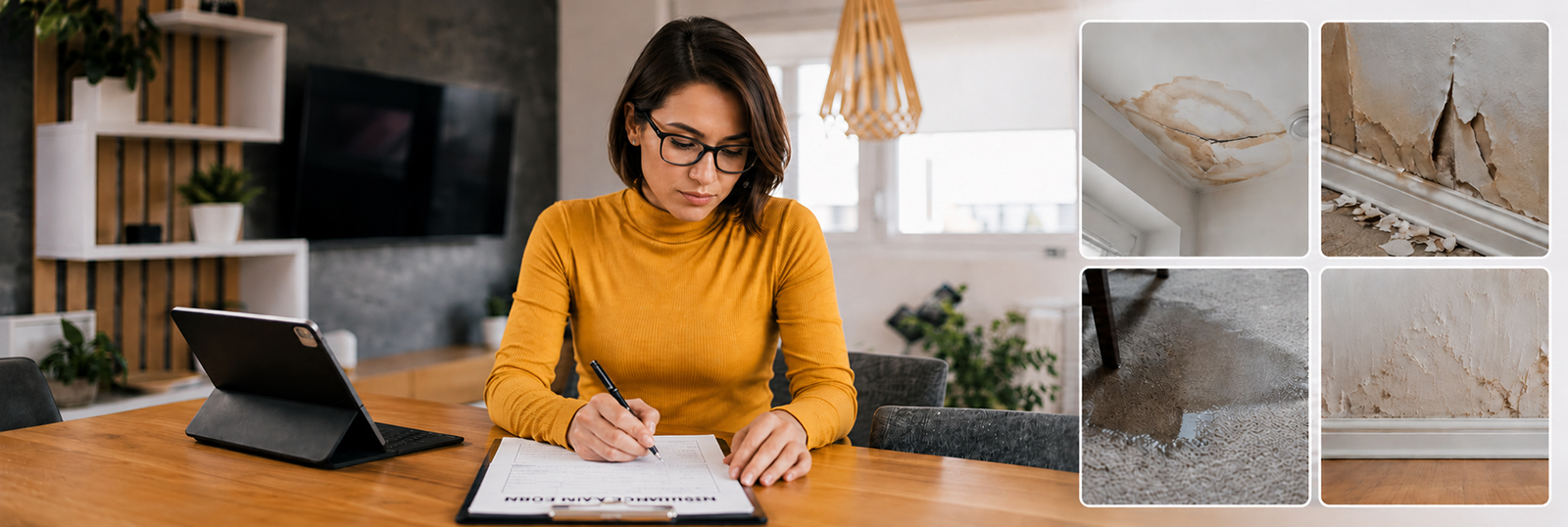
From burst pipes to sudden leaks, water damage puts homeowners in the position of navigating an insurance claim they never expected to file. A water damage insurance claim allows homeowners to seek financial recovery when sudden, accidental water causes damage inside the home.
Water damage is among the most common property insurance issues nationwide. According to the Insurance Information Institute, about 1 in 67 insured homes files a water damage or freezing claim each year across the U.S. In high-risk states like Louisiana and Texas, extensive repairs and full restorations can push total remediation and reconstruction costs up to $18,000, depending on severity and structural impacts.
While the process can feel overwhelming, breaking it into clear steps makes it more manageable and helps protect your rights. This guide explains what water damage coverage typically includes, when to file a home insurance claim for water damage, and how the water damage claim process works from start to finish. It also covers what you need to do if your insurer delays, denies, or underpays your claim, with insights tailored to Louisiana and Texas homeowners.
What Is a Water Damage Insurance Claim? Coverage and Types of Losses
A water damage insurance claim is a request a homeowner makes to their insurance company after water causes damage inside the home. These claims commonly arise from plumbing failures, appliance malfunctions, or storm-related leaks. What often surprises homeowners is that coverage does not depend on the presence of water alone. Instead, insurers focus on how the water damage occurred and whether the cause falls within the policy’s covered risks.
What Does Your Homeowners Insurance Cover for Water Damage?
Most homeowners policies are designed to cover sudden, accidental events rather than long-term problems. In general, this includes:

- Burst or broken pipes that cause immediate damage
- Appliance failures, including washing machines or water heaters
However, policies typically exclude damage caused by:
- Gradual or slow leaks that develop over time
- Flooding or water entering from outside the home
This distinction plays a major role in claim outcomes and is one of the most common sources of confusion during the claims process. Understanding what policies usually cover and exclude can help homeowners set realistic expectations before moving forward with a water damage insurance claim.
Policy details matter as well. Coverage limits, deductibles, and endorsements can affect how much the insurer pays. Claims may be settled using Actual Cash Value (ACV), which accounts for depreciation, or Replacement Cost Value (RCV), which reflects current replacement costs.
Types of Water Damage Losses Homeowners Should Know
Water damage can affect multiple parts of a home at once, and insurers often break losses down by source and scope when evaluating a claim. Understanding these common categories helps homeowners anticipate what may be covered and where disputes tend to arise.
Common water-related losses include:
- Interior plumbing failures
- Appliance-related water damage
- Sewer or drain backups, which usually require a special endorsement
Homeowners in states like Texas and Louisiana should also remember that standard policies do not cover flood damage. Even minor flooding can lead to costly repairs without proper coverage.
Insurers also expect reasonable upkeep from the homeowner. Routine plumbing and roof inspections, along with maintenance records and photos, can help prevent disputes and support future claims.
Should You File a Home Insurance Claim for Water Damage?
Deciding whether to involve your insurer is not always straightforward. The right choice depends on the cause of the damage, the cost of repairs, and how filing may affect you long-term.
When to File a Water Damage Claim
Filing a claim often makes sense when water damage is sudden, accidental, and clearly covered. Common situations include:
- A burst pipe or sudden plumbing failure
- An appliance overflow that damages floors, walls, or cabinets
- A storm-related roof leak that allows water inside the home
These scenarios often align with policy coverage and help clarify when to file an insurance claim for water damage before repair costs escalate.
When Not to File a Water Damage Claim
The situations where filing a claim may not be the best option include:
- Damage from gradual leaks or deferred maintenance, such as slow roof drips or aging pipes
- Basement seepage or water intrusion from outside the home
- Sewer backups without a specific policy endorsement
Homeowners should also weigh repair costs against the deductible and consider possible premium increases. If damage is minor or close to the deductible, paying out of pocket may make more sense. Answering whether you should file a home insurance claim for water damage requires weighing immediate repair costs against long-term financial impact.
Water Damage Insurance Claim Process: Step-by-Step Guide
The water damage claim process can feel complex, especially when you are also dealing with repairs, cleanup, and disruption to daily life. Following a clear, step-by-step approach helps homeowners avoid mistakes that can delay, reduce, or jeopardize coverage.
Here is a practical walkthrough of how the process typically unfolds:
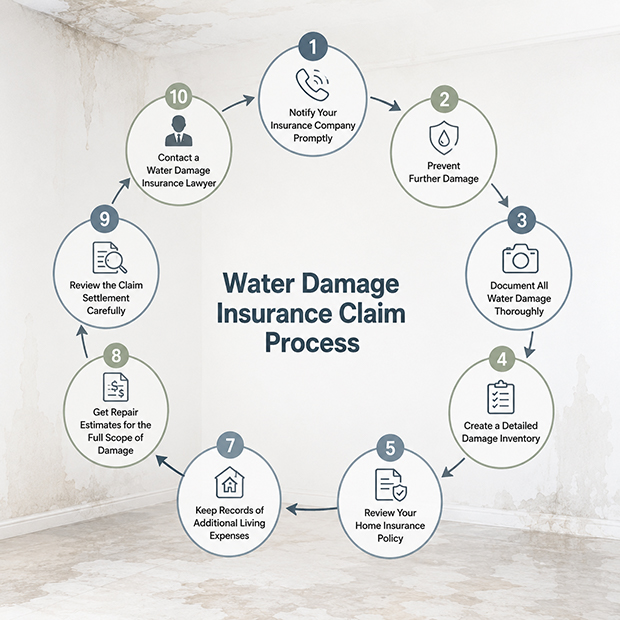
Step 1: Notify Your Insurance Company Promptly
Homeowners should report water damage as soon as they discover it. Delayed notice can raise questions about the cause or extent of damage and may weaken the claim. Early reporting also gives you time to understand how to file a home insurance claim for water damage under your specific policy and submit necessary documents early.
Step 2: Prevent Further Damage
Most policies require homeowners to take reasonable steps to prevent additional damage. This duty to mitigate is both contractual and legal. Acceptable mitigation steps may include:
- Shutting off the water source
- Placing tarps or towels to limit the spread
- Removing standing water
Temporary repairs are not only allowed but encouraged. Failing to mitigate damage can reduce the claim value or lead to partial or complete denial. Permanent repairs, however, should wait until the claim progresses.
Step 3: Document All Water Damage Thoroughly
Documentation is one of the most important parts of the water damage claim process. Take photos and videos before permanent repairs begin. Be sure to capture:
- Structural damage to walls, ceilings, floors, and cabinets
- Warped or water-stained materials
- Damaged personal property, including furniture and electronics
- Visible moisture or soaked insulation
Document the source of the water before fixing it, whether it was a burst pipe, appliance hose failure, or roof opening. This step supports your water damage claim and helps establish coverage.
Step 4: Create a Detailed Damage Inventory
Insurers typically require a damage inventory to evaluate losses. Homeowners should prepare:
- A structural damage inventory
- A personal property inventory
Each item should list the description, brand or model if available, age, prior condition, and estimated replacement cost. Do not throw away damaged items until the insurer confirms they are no longer needed.
Step 5: Review Your Home Insurance Policy
Reviewing the policy before filing helps set expectations. Look for:
- Covered causes of water damage
- Exclusions such as flooding or gradual leaks
- Deductible amounts
- Whether losses are paid on an ACV or RCV basis
Step 6: File a Water Damage Insurance Claim
Once the water source is stopped and damage is documented, file the claim by phone, online portal, or through your agent. Filing opens an official claim number you can use for all subsequent communication with the insurer.
Share key details, including the date of loss, cause, affected areas, and emergency actions taken. Also, keep all confirmation emails and notes. This step is critical when filing a home insurance claim for water damage.
Step 7: Keep Records of Additional Living Expenses
Documentation continues throughout the claim. Save every receipt for:
- Temporary repairs and services
- Hotel or relocation costs, if applicable
- All claim-related correspondence
Keeping a dedicated claim folder, along with easily accessible digital copies, helps support reimbursement, resolve disputes, and strengthen the overall claim.
Step 8: Get Repair Estimates for the Full Scope of Damage
Professional estimates help establish the true cost of repairs. Homeowners should obtain two or three detailed, line-item estimates from licensed and insured contractors. These estimates help challenge insurer estimates, if needed, and prevent underpayment.
Step 9: Review the Claim Settlement Carefully
Before accepting a settlement, confirm that the deductible, payment structure, and coverage limits were applied correctly. Partial payments are common, and additional funds may follow after repairs. Avoid rushing acceptance or signing releases prematurely.
Step 10: Contact a Water Damage Insurance Lawyer
Homeowners may consider legal guidance if a claim is delayed, underpaid, denied, or involves complex or high-value damage. A property damage lawyer can review and clarify policy language, challenge unfair claim handling, and protect homeowner rights under state insurance laws.
Pandit Law focuses exclusively on property damage claims and assists homeowners across Texas and Louisiana when water damage insurance claims become difficult to resolve.
Louisiana and Texas: State-Specific Considerations
Water damage insurance claims can play out differently depending on where you live. Texas and Louisiana both impose claim-handling rules on insurers, but timelines, risks, and coverage gaps vary by state.
Water Damage Claims in Texas
Texas homeowners often deal with winter freeze events, severe storms, and sudden plumbing failures that lead to moderate to severe water damage. National insurance data consistently ranks water damage and freezing among the most frequent homeowners insurance claims, with remediation costs ranging between $6,000 and $18,000, underscoring how often Texas homeowners face these issues.
Texas follows strict claim-handling timelines under the Texas Insurance Code, often referred to as the Prompt Payment of Claims Act. Under the provisions of this act, insurers must:
- Acknowledge the claim, begin investigating it, and request any necessary information within 15 days.
- Make a coverage decision within 15 business days after receiving all requested information.
- Issue payment within 5 business days after notifying the policyholder that the claim has been approved.
While these provisions help protect policyholders’ rights to compensation, they also make prompt reporting especially important.
Water Damage Claims in Louisiana
With the Gulf Coast’s frequent exposure to hurricanes and storm-related events, Louisiana homes are also vulnerable to severe water damage, with remediation costs often ranging from $7,000 to $18,000.
In Louisiana, insurers must pay accepted claims within 30 days after receiving satisfactory proof of loss. Standard homeowners policies do not cover flood damage. And given the state’s exposure to hurricanes and heavy storms, water damage disputes are common after major weather events. Even limited flooding can result in significant repair costs, which is why this distinction matters for homeowners deciding whether they need separate flood insurance.
These state-specific timelines and risks demonstrate the importance of understanding local rules and having appropriate coverage when navigating the water damage insurance claim process.
Dealing with Denials, Disputes, or Partial Payments for Water Damage Claims
Insurance companies deny or limit water damage claims for several common reasons. These often include:
- Allegations of gradual leaks
- Maintenance-related issues
- Policy exclusions such as flooding
- Disputes over the cause or scope of damage
Partial payments may also occur when the insurer applies depreciation, limits coverage, or overlooks certain repairs.
If your claim is denied or underpaid, read the denial or settlement letter carefully. Insurers must explain the specific policy provisions they relied on. Understanding that explanation helps you determine whether the decision is justified or worth challenging. Homeowners typically have the right to appeal within the insurer’s stated guidelines, and doing so promptly matters.
When disputes drag on, communication breaks down, or the insurer’s position seems unfair, legal guidance can help. An attorney can review the policy, assess the claim handling, and review disputed denials or underpayments under applicable state insurance laws.
Water Damage Insurance Claim Tips
Handling a claim carefully from the start can reduce delays and payment issues. These water damage claim tips can help you strengthen your water damage claim and protect your rights to recovery:
- Seek legal guidance if delays, denials, or disputes arise.
- Stop the water source immediately to limit further damage.
- Contact your insurance company as soon as the damage is discovered.
- Photograph and video damage before cleanup or repairs begin.
- Address hidden moisture early to prevent additional problems.
- Keep damaged items until the insurer confirms they are no longer needed.
- Separate sudden, covered damage from maintenance-related issues.
- Understand how depreciation affects payments and when amounts may be recoverable.
- Track claim deadlines and follow up if responses are delayed.
- Question low or incomplete payouts promptly and in writing.
Conclusion
Water damage claims require quick action and careful attention to detail. Early action and careful documentation lay the groundwork for a smoother claims process. Even after the claim is filed, persistence and organization remain essential as inspections, estimates, and settlement decisions unfold.
When a water damage insurance claim becomes complicated by delays, disputes, or partial payments, homeowners do not have to navigate the process alone. Contacting Pandit Law for a free claim review can help clarify policy obligations, address unfair claim handling, and guide homeowners through complex or disputed water damage claims in Texas and Louisiana.
Frequently Asked Questions
Yes, homeowners insurance may cover water damage if it results from a sudden and accidental event, such as a burst pipe or appliance failure. Coverage depends on the cause of the damage and your policy terms. Damage from gradual leaks or flooding is often excluded.
It can be worth filing a claim when repair costs significantly exceed your deductible or involve structural damage. For minor repairs close to the deductible, paying out of pocket may make more sense. Consider potential premium impacts before deciding.
Most policies require homeowners to report water damage promptly after discovery. Delays can weaken a claim or lead to denial. The exact deadline varies by policy and state law, which is why notifying your insurer as soon as possible is important.
You may file a claim if the AC-related damage was sudden and accidental, such as a drain line overflow or component failure. Damage caused by poor maintenance or long-term issues is often excluded, so reviewing your policy is essential.
Shut off the water source immediately, document the damage with photos and videos, and take reasonable steps to prevent further harm. Notify your insurance company promptly and avoid permanent repairs until the claim is evaluated.
Common claims involve burst pipes, appliance failures, roof leaks from storms, and sudden plumbing issues. Sewer backups usually require a specific endorsement, and flood-related damage typically falls outside standard homeowners insurance coverage.
Depending on the situation, liability may rest with a negligent contractor, appliance manufacturer, neighbor, or property owner. An attorney can help evaluate responsibility and determine whether legal action beyond an insurance claim is appropriate.