
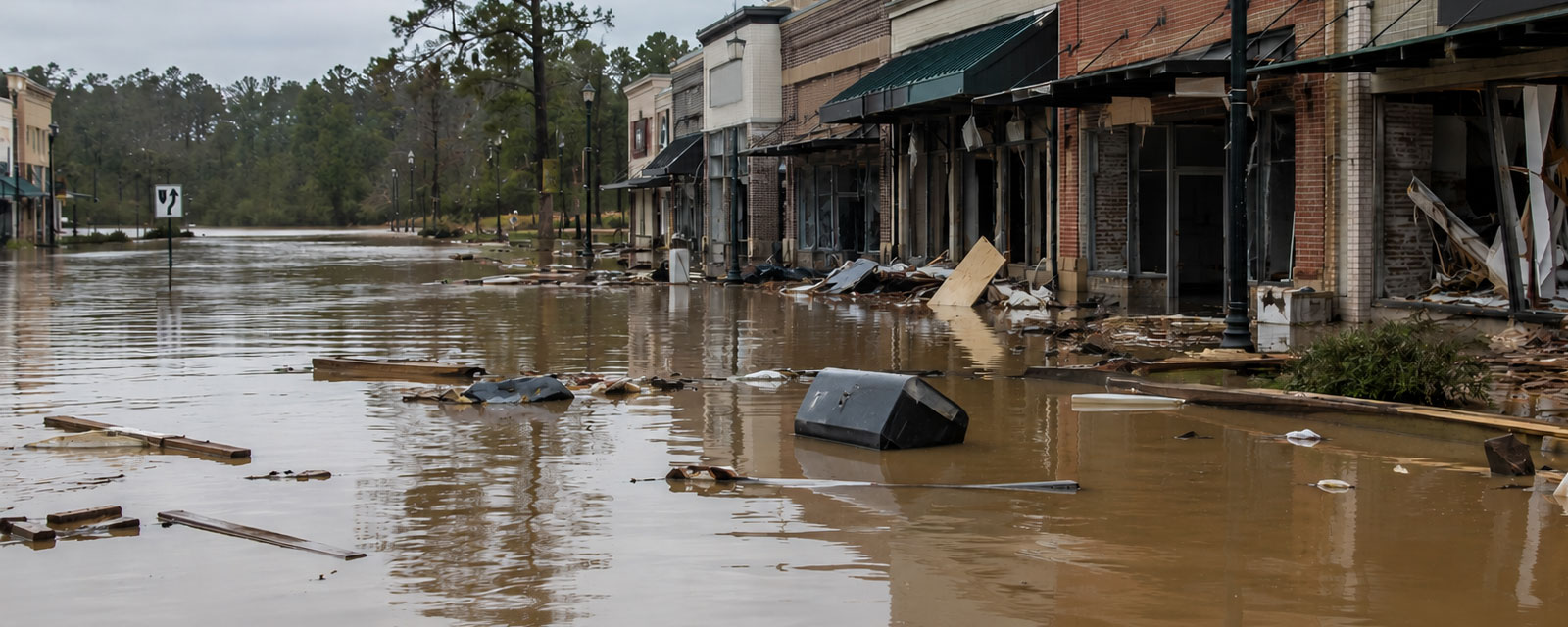
When floodwater finally recedes, the real work begins. As a business owner, you’re dealing with damaged buildings, equipment, inventory, and mounting paperwork, all while trying to keep your operations moving.
Unlike residential claims, commercial flood claims often involve larger losses, multiple types of property, and stricter documentation requirements. Missing a deadline or overlooking key evidence can delay the review of your claim, create coverage disputes, or make it harder to support the losses you report.
Whether your coverage comes through the National Flood Insurance Program (NFIP), FEMA-administered policies issued by participating insurers, or a private flood insurer, understanding the process can help you avoid costly mistakes and strengthen your claim. This guide explains each step so you know what to expect and how to protect your interests.
What Does Commercial Flood Insurance Cover?

Before you can file a flood insurance claim, it’s important to understand what your policy actually covers. Commercial flood insurance differs from standard commercial property insurance, and knowing the difference can help you set realistic expectations and avoid surprises after a flood.
What Is Commercial Flood Insurance?
Commercial flood insurance helps protect businesses against physical damage caused by flooding. It is designed for commercial properties and business assets that sustain direct flood damage. Because most standard commercial property insurance policies exclude flood damage, business owners typically need to purchase flood coverage as a separate policy.
Coverage may be available through the National Flood Insurance Program (NFIP), which FEMA administers and participating insurers issue, or through private insurance companies that offer commercial flood policies. The scope of coverage depends on the policy you purchase.
What Does Commercial Flood Insurance Typically Cover?
While every policy has its own terms and limits, commercial flood insurance generally covers direct physical damage to insured property. Depending on your policy, this may include:
- Commercial buildings and their structural components
- Equipment and business machinery damaged by floodwater
- Inventory and stock kept on the insured premises
- Office furniture and permanent fixtures
- Electrical systems, including wiring and panels
- Plumbing systems affected by flooding
- Heating, ventilation, and air conditioning (HVAC) systems
- Business personal property covered under the policy
Even when these items are covered, insurers may require detailed documentation to verify the extent of the damage. Reviewing your policy before a loss can help you understand any applicable limits or exclusions.
What Is Usually Excluded?
Commercial flood insurance does not cover every flood-related expense. Common exclusions often include:
- Business interruption or loss of income
- Lost profits resulting from suspended operations
- Commercial vehicles
- Outdoor property, such as signs, fences, and walkways
- Landscaping, including trees, shrubs, and lawns
- Money, securities, and valuable papers
- Temporary housing or relocation expenses
- Certain basement property, where policy limitations apply
Because exclusions vary, always review your policy language carefully to understand your specific coverage.
NFIP vs. Private Commercial Flood Insurance
Businesses can obtain flood insurance through the NFIP or a private insurer. The NFIP is a federal program administered by FEMA and often sold through participating Write Your Own (WYO) insurers. These private insurance companies issue and service NFIP policies while following FEMA’s rules and claim requirements.
Private commercial flood insurance may offer different coverage options, limits, or endorsements depending on the insurer. While many claim-handling steps are similar, documentation requirements, policy terms, and dispute procedures can vary. Understanding which type of policy you have is an important first step before beginning the claims process.
Knowing what your commercial flood insurance covers and excludes helps you prepare for the claims process with greater confidence. With your coverage in mind, the next step is understanding how the NFIP operates and what responsibilities come with it.
Understanding FEMA and the National Flood Insurance Program (NFIP)
Many businesses rely on the National Flood Insurance Program (NFIP) for flood coverage, especially in areas with a higher risk of flooding. Understanding how the program works can help you prepare for the claims process before disaster strikes.
FEMA administers the NFIP, which provides flood insurance to property owners, including businesses, in participating communities. Most NFIP policies are issued and serviced by Write Your Own (WYO) insurance companies, but they follow FEMA’s coverage rules and claims procedures. Businesses in high-risk flood areas with federally backed mortgages are generally required to have flood insurance as a condition of their loan.
While the NFIP provides valuable protection, business owners should understand its limitations before relying on it. For example:
- Building coverage and contents coverage are purchased separately, so having one does not automatically mean the other is insured.
- Coverage is subject to NFIP policy limits, which may not fully cover every commercial loss.
- Most new NFIP policies have a standard 30-day waiting period before coverage becomes effective, unless a limited exception applies.
- Policyholders must submit a signed and sworn Proof of Loss with supporting documentation within the applicable NFIP deadline. FEMA may extend this deadline after certain federally declared disasters.
Reviewing your policy before a flood occurs can help you understand your responsibilities and avoid unexpected issues during the claims process.
What to Do Immediately After Commercial Flood Damage
The first 24 to 48 hours after a flood can significantly affect your commercial flood claims. Taking the right steps helps protect your employees, limits additional damage where possible, and helps preserve critical evidence before cleanup begins.
Step 1: Ensure Safety First
Before entering the property, confirm that it is safe to do so. Prioritize employee safety, shut off utilities if it is safe, and follow instructions from local emergency officials. Do not allow anyone into the building until hazards such as electrical risks or structural instability have been addressed.
Step 2: Prevent Additional Damage
Take reasonable temporary measures to prevent further damage, such as covering exposed areas or moving undamaged property to a safer location when it can be done safely. Avoid permanent repairs until the damage has been documented, and keep receipts for any emergency mitigation expenses.
Step 3: Document Every Loss
Before cleaning or removing damaged items, create a thorough visual record of the damage.
- Take clear photographs and videos throughout the property.
- Record visible floodwater levels.
- Document exterior and interior damage.
- Photograph damaged equipment and machinery.
- Capture damaged inventory and business personal property.
- Record any visible structural damage.
Step 4: Create a Damaged Property Inventory
Prepare a detailed inventory of damaged business property as soon as possible. Include descriptions of each item, along with purchase invoices, receipts, depreciation records, maintenance records where available, and asset lists. Well-organized documentation makes it easier to support the losses reported under your policy.
Step-by-Step Guide to Filing a Commercial Flood Insurance Claim
Filing a commercial flood insurance claim involves more than reporting the damage. Each step helps establish the extent of your loss and supports your request for coverage. Staying organized throughout the process can reduce confusion and help you respond promptly to your insurer’s requests.
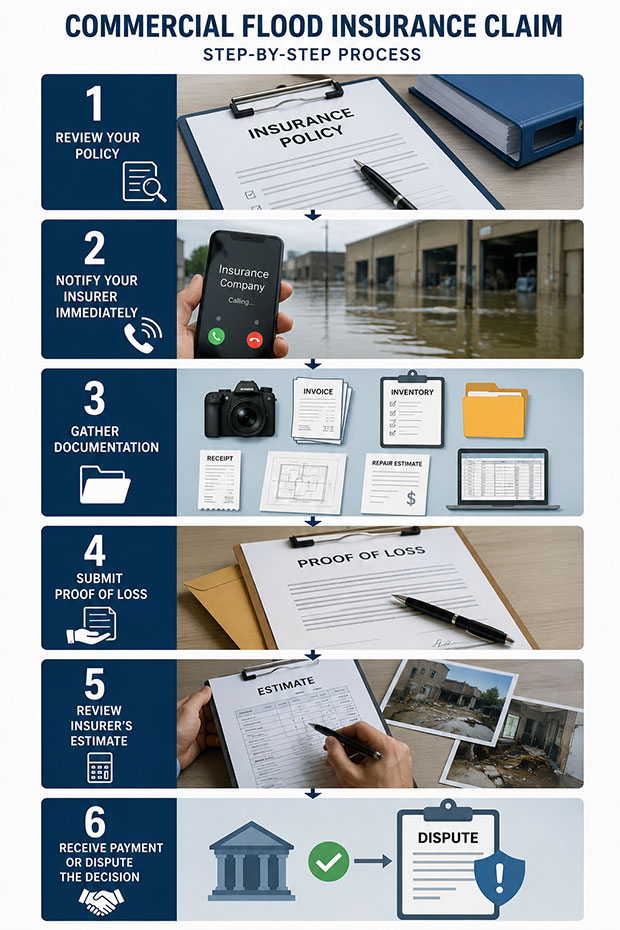
Step 1: Review Your Commercial Flood Insurance Policy
Before contacting your insurer, read your policy carefully. Confirm what property is covered, your deductible, coverage limits, and any exclusions that may affect your claim. Keep your policy number readily available, as you’ll need it when reporting the loss and during future communications.
Step 2: Notify Your Insurance Company Immediately
Report the flood damage as soon as it is safe to do so. Contact the insurance company or the agent listed on your policy and provide basic details about the loss, including the date of the flood, the property address, and a general description of the damage.
Once your claim is reported, you should receive a claim number. Keep a record of every phone call, email, letter, and document exchanged with your insurer, as these records may be helpful if questions arise later.
Step 3: Gather Documentation to Support Your Commercial Flood Claim
Strong documentation helps demonstrate the full extent of your losses. As you organize your records, gather documents such as:
- Your commercial flood insurance policy
- Proof of ownership for damaged property
- Photos and videos showing flood damage
- Inventory records for damaged business property
- Purchase invoices and other purchase records
- Receipts for temporary repairs or emergency mitigation
- Repair estimates
- Contractor reports
- Engineering reports, if there are structural concerns
- Maintenance records, where relevant
- Financial or tax records that help verify the value of certain business assets, when applicable
Well-organized documentation can make it easier to respond to requests for additional information throughout the claims process.
Step 4: Complete and Submit the Proof of Loss
A Proof of Loss is a signed and sworn statement describing the damage and the amount you are claiming under your policy. It should include supporting documentation that substantiates your reported losses. Review the information carefully before submitting it, as incomplete or inaccurate information can create unnecessary complications. NFIP policyholders must submit the Proof of Loss within the applicable deadline unless FEMA announces an extension after a federally declared disaster.
Step 5: Review the Insurance Company’s Estimate
After inspecting the property, the insurance company will prepare an estimate of the covered damage. Compare that estimate with your own documentation and identify any missing damage, overlooked items, or valuation concerns. If additional covered damage is discovered later, you may be able to submit a supplemental claim, depending on your policy.
Step 6: Receive Payment or Dispute the Decision
If your claim is approved, review the settlement carefully before accepting it. If you believe covered damage was undervalued, excluded incorrectly, or denied, you may have options such as requesting a reinspection, submitting additional documentation, pursuing an appeal where available, or taking legal action when appropriate. An experienced insurance claim attorney can review your policy, evaluate the insurer’s decision, and explain the available next steps.
Taking a methodical approach at every stage of the claims process helps create a clearer record of your losses and reduces the risk of avoidable issues. The more organized your documentation and communications are, the better prepared you’ll be if questions or disputes arise.
Common Mistakes That Can Reduce or Delay Your Commercial Flood Insurance Claim
Even valid commercial flood claims can become more difficult when important steps are overlooked. Avoiding a few common mistakes can help you preserve evidence, meet policy requirements, and respond more effectively throughout the claims process.
Some of the most common mistakes policyholders make include:
- Waiting too long to report the flood damage to your insurance company
- Cleaning up or removing damaged property before taking photos and videos
- Discarding damaged items before the insurer has an opportunity to inspect them, unless they pose a safety hazard
- Keeping incomplete or outdated inventory records for business property
- Missing the Proof of Loss deadline required under your policy
- Submitting incomplete documentation or failing to provide requested records
- Accepting the insurer’s initial estimate without reviewing it against your own documentation
- Failing to keep records of phone calls, emails, inspection reports, and other communications
- Making permanent repairs before the damage has been properly documented or approved by the insurer
Careful planning and thorough documentation can help minimize unnecessary disputes. If questions arise about your coverage or the handling of your claim, seeking legal guidance early may help you better understand your available options.
Flood Insurance Claim Deadlines Business Owners Should Know
Meeting important deadlines is an essential part of protecting your claim. While some requirements vary by policy, business owners should stay aware of the key milestones that commonly apply to commercial flood insurance claims.
| Action | Requirement | Why It Matters |
| Report the Claim | Notify your insurance company as soon as possible after the flood. | Early reporting allows the claim process to begin and helps preserve evidence. |
| Adjuster Inspection | Cooperate with the insurer’s inspection and provide access to the damaged property. | The inspection helps document the damage and supports the insurer’s evaluation. |
| Proof of Loss | Submit a signed and sworn Proof of Loss within the applicable NFIP deadline or the deadline stated in your policy. | Missing this requirement may affect your ability to recover under the policy. |
| Supplemental Claims | Submit additional documentation promptly if newly discovered covered damage is identified. | Timely updates help ensure all eligible losses are considered. |
| FEMA Extensions | Follow any deadline extensions announced by FEMA after certain federally declared disasters. | Extensions may provide additional time to meet specific NFIP claim requirements. |
Because deadlines may differ between NFIP and private flood insurance policies, always review your policy carefully and confirm any applicable requirements with your insurance company.
Commercial Flood Insurance Claim Considerations in Louisiana and Texas
Businesses in Louisiana and Texas face unique flood risks, particularly during hurricane season. Flood damage often results from hurricanes, tropical storms, river flooding, or coastal storm surge, and each event can present different insurance issues depending on the cause of the loss. While many commercial flood claims follow National Flood Insurance Program (NFIP) requirements, each state has laws, agencies, and recurring claim issues that business owners should understand.
Louisiana
Many Louisiana businesses carry flood insurance through the NFIP because of the state’s frequent hurricanes, river flooding, and coastal storm surge. Following a federally declared disaster, FEMA may issue temporary extensions for certain NFIP claim requirements, including the Proof of Loss deadline. Business owners should also monitor updates from the Louisiana Department of Insurance (LDI), which provides disaster recovery guidance and claims resources after major storms.
Louisiana law also establishes important requirements for insurers handling many property claims:
- Insurers generally must begin adjusting a property damage claim within 14 days after receiving notice of the loss.
- For catastrophic losses, that period may extend to 30 days, with additional extensions available in certain declared emergencies.
- If an insurer requires a proof of loss statement, it must provide the required form within 10 business days after receiving the claim and notify the policyholder within 10 business days after receiving the completed form whether it is complete or incomplete.
Commercial disputes in Louisiana commonly involve:
- Storm surge versus wind damage
- River flooding and surface water flooding
- Multiple causes of loss affecting the same property
- Allocation between wind and flood damage under separate insurance policies
These issues often require a careful review of commercial policy language, engineering findings, and supporting evidence to determine which policy applies to each portion of the loss.
Texas
Texas businesses, particularly along the Gulf Coast, often rely on coverage through the National Flood Insurance Program (NFIP), although private commercial flood insurance may also be available. When a hurricane or other severe storm causes both wind and flood damage, claims may involve multiple insurers because flood and wind losses are typically covered under separate policies. For eligible coastal properties, the Texas Windstorm Insurance Association (TWIA) may provide wind and hail coverage.
Following federally declared disasters, FEMA may extend certain NFIP claim deadlines or documentation requirements. Business owners can also obtain recovery information and insurance-related guidance through the Texas Department of Insurance.
For claims governed by Texas law, insurers generally:
- Must acknowledge the claim, begin an investigation, and request any additional information within 15 days after receiving notice.
- After receiving all required information, insurers generally must accept or reject the claim within 15 business days.
- If the claim is approved, payment is generally due within 5 business days after notice of acceptance.
- A broader 60-day extension period may apply in certain circumstances or declared catastrophic events as permitted by law.
These state timelines do not replace NFIP requirements, which continue to govern federally backed flood insurance policies.
Commercial disputes in Texas commonly involve:
- Wind versus flood causation and other multi-peril interactions
- Complex commercial property losses involving buildings, infrastructure, and structural valuation
- Coverage disagreements over direct physical flood damage and whether business interruption losses are covered under separate policies
Understanding both NFIP requirements and the laws that apply in Louisiana or Texas can help businesses respond more effectively after a flood. If your claim involves complex coverage questions, disputed damage, or an unexpected denial, seeking legal guidance early can help you better understand your coverage, evaluate your legal options, and address claim disputes more effectively.
What If Your Commercial Flood Insurance Claim Is Denied or Underpaid?
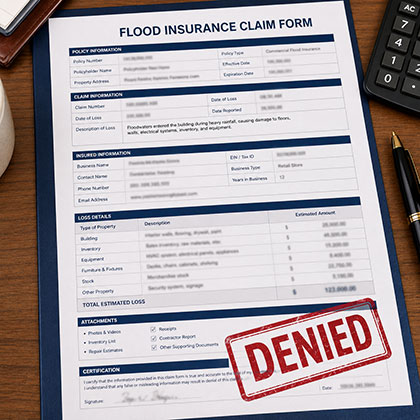
A denial or lower-than-expected settlement does not always mean the matter is resolved. Reviewing the insurance company’s decision carefully can help you determine whether additional action is appropriate.
Commercial flood insurance claims may be denied or underpaid for several reasons, including:
- Missing or incomplete documentation
- Disagreements over what the policy covers
- Policy exclusions that limit coverage for certain losses
- Missed reporting or Proof of Loss deadlines
- Estimates that do not fully account for the covered damage
Depending on your circumstances, you may have several options to pursue, including submitting additional evidence to support a supplemental claim, requesting reconsideration of the insurer’s decision, filing an appeal where available, or pursuing legal action if necessary.
If you believe your insurer overlooked covered damage or misinterpreted your policy, an experienced property damage attorney can review your claim, explain your rights, and help you evaluate the most appropriate next steps.
How a Flood Damage Lawyer Can Help
Commercial flood insurance disputes often involve detailed policy language and extensive documentation. A flood damage lawyer can help business owners understand their policy, identify potential coverage issues, and evaluate whether the insurance company’s decision accurately reflects the covered loss.
Legal guidance may also be valuable when challenging undervalued claims, appealing denials, addressing potential bad faith conduct where applicable, or representing a business during litigation if the dispute cannot be resolved through other means.
If your commercial flood insurance claim has been denied, underpaid, or delayed, or you are facing a complex coverage dispute, speaking with an experienced property damage attorney can help you better understand your legal options and determine the appropriate path forward.
Conclusion
Commercial flood damage can disrupt every part of your business, but a well-prepared claim can help you move forward with greater confidence. Understanding your policy, documenting every loss, meeting NFIP and FEMA requirements, and keeping thorough records can reduce avoidable setbacks during the claims process. Before accepting any settlement, take the time to review whether it accurately reflects the covered damage and complies with your policy terms.
If your claim is delayed, underpaid, denied, or involves a complex coverage dispute, the experienced property damage attorneys at Pandit Law can help evaluate your situation, explain your legal options, and help you protect your business’s interests.