
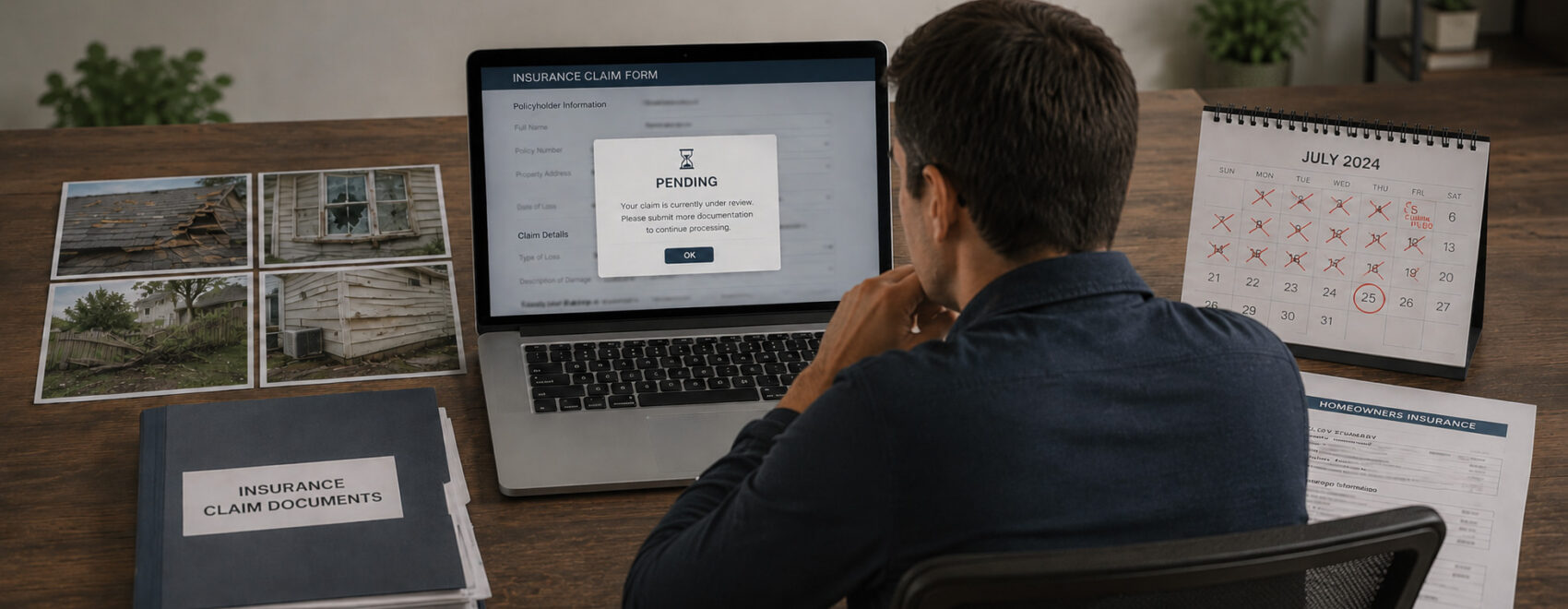
You filed a tornado insurance claim, but instead of payment or clear answers, you are stuck waiting. Maybe the insurer has stopped responding, keeps requesting information you already provided, or has not explained what is holding up your claim. It can be frustrating and confusing when you are unsure what to do next.
Louisiana and Texas both impose requirements on insurers when they must acknowledge, investigate, evaluate, and pay covered property damage claims. An unresolved delay can leave you dealing with additional property damage, financial pressure, and important legal deadlines. Understanding your rights and knowing when to seek legal help can clarify what to do next.
Signs Your Tornado Claim Is Being Deliberately Stalled
A tornado claim may take time to investigate, especially after a major storm. But certain patterns can suggest that a routine processing delay has become more concerning. If your insurer continues to postpone decisions or provide unclear answers, pay attention to signs such as:
- Repeated Requests for Information: The insurer keeps asking for documents, photos, or records you already submitted without clearly explaining why they are needed again.
- Unexplained Changes in the Damage Assessment: The insurer attributes damage to wear and tear, pre-existing conditions, or an excluded cause without clearly explaining the basis for its position.
- Disputes Over the Cause of Damage: The insurer questions whether wind, flooding, or interior water caused the damage without providing a clear explanation or supporting information.
- Little or No Communication: Calls and emails go unanswered, no adjuster appears to be actively handling the claim, or inspections occur without a clear explanation of what happens next.
- Unclear Payment Information: You receive verbal assurances that payment is coming but no written explanation of the claim’s status or what remains unresolved.
A delayed tornado damage claim deserves closer attention when these issues continue without clear answers. Louisiana and Texas both set requirements for insurers handling and paying claims, although the applicable deadlines differ by state and circumstances. If your claim appears to be falling behind those requirements, keep your records, request a clear written explanation, and review the situation against the deadlines that apply to your policy.
Next Steps for a Delayed Tornado Damage Claim
When an insurer delays a tornado claim, it can be difficult to tell whether the claim simply needs more information or whether the delay requires closer attention. Taking organized steps can help you protect the record, understand the insurer’s position, and determine whether legal action is appropriate.
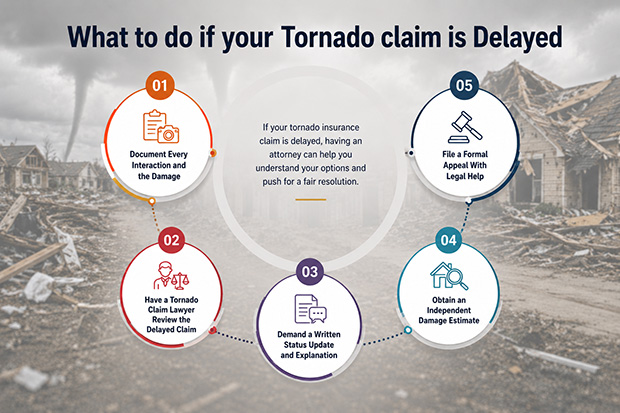
Step 1: Document Every Interaction and the Damage
Start by creating a clear record of everything related to the claim. Keep a claim log that includes:
- The date and time of each call, email, inspection, or other communication with the insurer
- The name and contact information of the representative or adjuster involved
- What the insurer requested, what you provided, and what the insurer said about the claim’s status
- Copies of emails, claim correspondence, estimates, proof of loss, photographs, and videos of the damage
- Receipts for reasonable mitigation work, such as tarping, board-up services, drying, or other measures taken to protect the property from further damage
These records can become important if you need to explain the delay to an attorney, respond to the insurer, file a regulatory complaint, or pursue an insurance dispute. Because claim-handling requirements vary by state, maintaining a detailed record can also help you support your position if the dispute escalates into a formal appeal, regulatory review, or legal action.
Step 2: Have a Tornado Claim Lawyer Review the Delayed Claim
You do not necessarily have to wait until the insurer denies your claim before seeking legal guidance. When a tornado claim has already been filed but payment remains unresolved, an early review can help identify potential problems before they become harder to address.
A property damage attorney can review the policy, claim correspondence, estimates, proof of loss, and insurer communications to help determine:
- Whether the insurer has provided a reasonable explanation for the delay
- Whether applicable claim-handling deadlines may have passed
- Whether the insurer’s position appears consistent with the policy and available evidence
- What documentation or evidence may be needed to challenge an incomplete or disputed assessment
The goal at this stage is to understand the situation and available options, not automatically move to litigation.
Step 3: Demand a Written Status Update and Explanation
If the insurer has not clearly explained what is delaying the claim, request an update in writing. Ask what remains outstanding, why the insurer has not resolved the claim, and what information it believes it still needs.
Verbal assurances can be difficult to evaluate later. A written response creates a clearer record of the insurer’s position and may help an attorney assess whether applicable deadlines and claim-handling requirements were followed. If you have retained a lawyer, the attorney can advise you about this communication or handle it on your behalf.
Step 4: Obtain an Independent Damage Estimate
An insurer’s estimate may not reflect the full scope of tornado damage. Roof damage, structural components, water intrusion, and other less visible problems can require closer evaluation.
An independent estimate can provide another assessment of the property’s condition and repair needs. If the insurer’s estimate leaves out damage or results in an underpayment, that documentation may help you challenge the scope of the claim and give your attorney additional evidence to evaluate.
Step 5: File a Formal Appeal With Legal Help
If the claim remains delayed, underpaid, or denied after you have documented the problem and requested an explanation, a formal appeal may be appropriate. An effective appeal involves more than sending the same documents again.
A lawyer can help organize the appeal by:
- Identifying relevant policy provisions and coverage issues
- Citing applicable statutory deadlines and documenting missed deadlines
- Addressing inadequate explanations or responses from the insurer
- Including independent estimates, photographs, reports, and other supporting evidence
- Evaluating whether applicable interest, penalties, attorney’s fees, or other remedies may be available under the law
You can pursue an appeal on your own, but legal guidance can help ensure that your response addresses the policy, applicable Louisiana or Texas law, supporting evidence, and the specific reasons the claim remains unresolved.
The key is to avoid letting a stalled claim continue without a clear record or explanation. Document the problem, understand the insurer’s position, and consider legal guidance when the delay raises questions about your rights or the insurer’s obligations.
Louisiana: Delayed Tornado Claim Deadlines and Rights
If a tornado damages your Louisiana home or business, state law sets specific requirements for how an insurer handles the resulting property damage claim.
Under La. R.s after receiving notice of the loss. For a catastrophic loss, that period becomes 30 days, with The insurer man additional extension of up to 30 days possible in certain declared emergencies S. 22:1892, an insurer generally must begin adjusting a property damage claim within 14 days of disasters.
The insurer must also make a written settlement offer within 30 days after receiving satisfactory proof of loss. For qualifying catastrophic losses, La. R.S. 22:1892.2 provides additional payment deadlines: 60 days for residential property and 90 days for other immovable property. Certain commercial policies covering multiple locations may receive an additional extension of up to 30 days.
If an insurer misses applicable requirements under these statutes and the legal standards for a violation are met, the policyholder may have remedies that include attorney’s fees and other relief. The law also limits an insurer’s ability to extend deadlines through requests for information already in its possession.
You can also request a copy of the field adjuster’s report, and the insurer generally must provide it within 15 days of the request. If your tornado claim remains unresolved beyond an applicable deadline, consider having a property damage attorney review the claim and the insurer’s handling of it.
Texas: Delayed Tornado Claim Deadlines and Rights
Texas’s Prompt Payment of Claims Act establishes deadlines that can apply when an insurer handles a tornado-related property damage claim.
Under Texas Insurance Code §§ 542.055–542.057, an insurer generally must acknowledge the claim, begin investigating, and request reasonably necessary information within 15 days after receiving notice. Once it receives the information needed to make a decision, the insurer generally has 15 business days to accept or reject the claim in writing. If it needs additional time, it may extend the decision period by up to 45 days after providing the required notice and explanation. Once the insurer agrees to pay, it generally must issue payment within 5 business days.
The Texas Department of Insurance can extend certain claim-handling deadlines by an additional 15 days following a weather-related catastrophe.
Chapter 542A may also apply to certain property damage actions, including claims involving an insurer or agent, and generally requires 61 days of pre-suit notice before filing an applicable lawsuit, subject to statutory exceptions. Chapter 541 addresses unfair or deceptive insurance practices, while § 542.060 provides for applicable remedies when prompt-payment requirements are violated. Depending on the circumstances, attorney’s fees and other relief may be available, and § 541.152 permits additional remedies for knowing violations.
If your tornado claim has exceeded an applicable deadline or the insurer has not provided a clear explanation, consider having a Texas property damage attorney review the claim promptly. The specific deadlines and remedies can depend on the policy, claim circumstances, and applicable law.
If the Tornado Claim Delay Continues: Legal Escalation Options
If your insurer continues to delay, underpay, or deny your tornado claim after you have documented the issue and requested an explanation, you may have several ways to escalate the dispute. The right option depends on the reason for the delay and the nature of the disagreement.
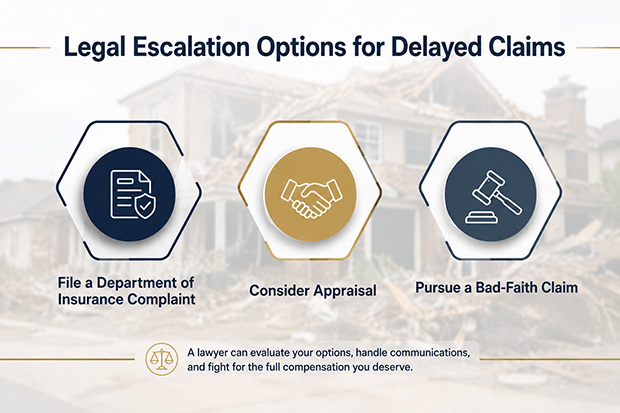
- File a Department of Insurance Complaint: A complaint with the applicable state Department of Insurance may prompt the insurer to respond to the concerns raised and provide information about the claim’s status or handling. A complaint does not replace other legal remedies, but it can create an additional record of the dispute.
- Consider Appraisal: Appraisal may help when you and the insurer disagree about the value or amount of covered damage. It generally does not resolve disputes about whether the policy covers the loss or what caused the damage. Consider having an attorney review the dispute before invoking appraisal.
- Pursue a Bad-Faith Claim: Depending on the circumstances and applicable state law, ignored communications, inadequate investigation, unexplained denials, or missed deadlines may warrant further legal review.
A property damage attorney can evaluate the claim and help determine which escalation path fits the circumstances rather than automatically recommending litigation.
Conclusion
A stalled tornado claim does not mean you have to accept an unexplained delay or an incomplete payment. If the insurer has not clearly explained its position, use the information already gathered to assess what remains disputed and whether the claim is moving within the applicable requirements. Louisiana and Texas both provide protections governing insurer conduct, but the deadlines and available remedies can differ based on the claim and circumstances.
If your claim remains delayed, underpaid, or unresolved, consider having a tornado or property damage attorney review the policy, claim record, and insurer communications. A timely review can help you understand your options before important deadlines or escalation opportunities become harder to address.