
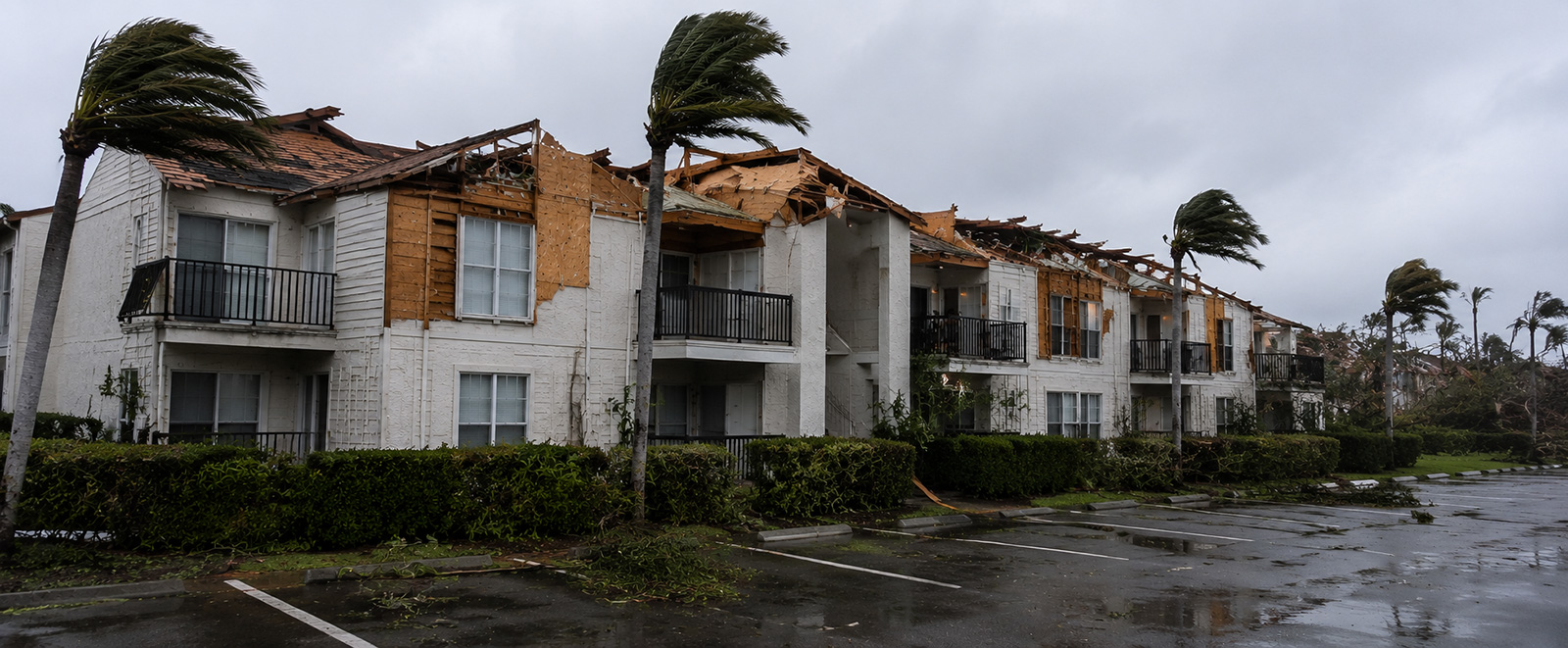
After a hurricane, your condo can feel like a maze of damaged walls, broken windows, soaked belongings, and questions about what happens next. You may be wondering who is responsible for the repairs and which insurance policy should cover the damage.
Condo losses often involve two policies: your HO-6 policy and the condominium association’s master policy. Which one applies can depend on the location and cause of the damage, as well as your condominium documents and policy terms. This guide explains how coverage may work, how to document and report hurricane damage, and what to do when insurers or the association disagree about responsibility.
Which Condo Insurance Policy Covers Hurricane Damage?
A condo hurricane loss can involve two different insurance policies: your HO-6 policy and the condominium association’s master policy. These policies do not automatically cover the same property. Which policy may apply can depend on the damage, policy language, and condominium governing documents.
HO-6 Policy: Your Unit and Personal Property
An HO-6 policy generally provides coverage for personal property and certain portions of the unit that you are responsible for under the condominium’s rules. Depending on the policy, it may also provide additional living expenses and other coverage for covered losses. For example, Texas Department of Insurance guidance confirms that condo policies can cover personal property and real property the unit owner is responsible for under association rules.
The exact coverage depends on your policy, including its exclusions, limits, deductibles, and endorsements. Do not assume that every damaged item inside your condo falls under your HO-6 policy.
Condo Association’s Master Policy: Building and Common Elements
The association’s master policy generally addresses the condominium building and common elements, but the precise scope varies. Your master policy and relevant condominium documents can help establish where the association’s responsibility ends and yours begins.
Request and review these documents instead of relying only on statements from the property manager or board. Master policies can differ significantly in how they treat property within individual units, so understanding the applicable documents is important when evaluating a hurricane insurance claim.
Wind Damage vs. Flood Damage: Why the Cause Matters
Hurricane damage is not always treated the same way under insurance policies. Wind damage and flood damage are generally distinct causes of loss, and the difference can affect which policy responds. Standard home policies generally do not cover flood damage, while wind coverage can also depend on the policy and location.
Consider how different events may affect a condo:
- Wind damages the roof, creating an opening through which rain enters
- Hurricane winds break a window, followed by rain entering through the opening
- Storm surge or rising water enters the building and damages the unit
Flood or rising-water damage is generally excluded from standard property policies and may require separate flood insurance, depending on the applicable policy and coverage.
Do not assume that wind-driven rain is automatically covered. Coverage can depend on the policy language and the sequence of events. Document what happened and in what order, especially when both wind and flooding contributed to the damage. That record can help insurers determine which coverage provisions apply.
How to File Condo Hurricane Insurance Claim
After a hurricane, acting methodically can help preserve important evidence and keep the claims process organized. The following steps can help you document the loss, notify the right parties, and keep your claim moving forward.
Step 1: Make Sure the Unit Is Safe
Do not enter areas with structural instability, standing water, exposed wiring, or other hazards until they are reasonably safe. If necessary, follow instructions from emergency personnel or building management.
Step 2: Document the Hurricane Damage
When it is safe, photograph and video damaged walls, ceilings, flooring, fixtures, windows, appliances, and personal belongings before cleaning up or making permanent repairs. Document storm damage before cleanup begins and keep damaged items when possible.
Step 3: Prevent Further Damage
Take reasonable temporary measures to limit additional damage, such as boarding a broken window or addressing active water intrusion. Keep receipts and records for these emergency expenses.
Step 4: Notify the HO-6 Insurer and Condo Association
Promptly notify your HO-6 insurer and the condominium board or property manager. The association may also have a separate claim under its master policy.
Step 5: Review the Master Policy and Condo Documents
Request the master policy, declaration, bylaws, and other relevant condominium documents. These can help clarify whether particular building components, fixtures, or improvements fall under the association’s policy or your HO-6 coverage.
Step 6: File the Appropriate Claim
The association’s master-policy claim does not replace your own claim. File your HO-6 claim with your insurer and provide the requested documentation. If storm surge or rising water caused damage and you have separate flood insurance, that claim should also be addressed with the applicable flood insurer.
Step 7: Consider Legal Guidance
If the HO-6 insurer and association’s insurer disagree about coverage or responsibility, consider consulting an insurance claim attorney who can review the applicable policies and condominium documents.
Step 8: Track the Claim and Address Disputes
Keep copies of communications, inspections, estimates, receipts, and insurer decisions. If the claim is disputed, denied, delayed, or underpaid, request the insurer’s position and explanation in writing before considering your next steps.
A well-organized record can make it easier to identify whether the dispute involves coverage, responsibility, or the extent of the damage.
What Happens When the Association Issues a Special Assessment?
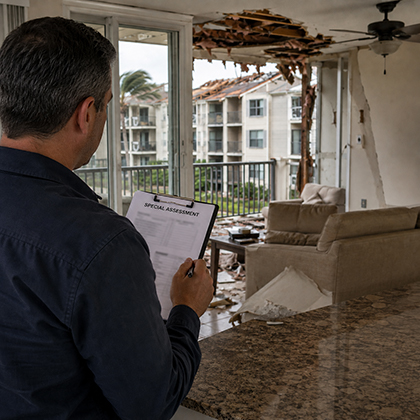
A major hurricane can damage a condominium’s roof, exterior, common areas, or other shared property. Even when the association has a master policy, the association may face a substantial deductible, an uncovered portion of the loss, or other expenses. Depending on the condominium’s governing documents and applicable law, the association may assess some of these costs to individual unit owners.
Your HO-6 policy may include Loss Assessment Coverage, which can potentially help with certain assessments arising from a covered cause of loss. However, this coverage is not automatic. Its availability can depend on the policy’s terms, limits, deductible, exclusions, and the cause of the underlying damage.
When Insurers Disagree or Deny a Condo Hurricane Claim
Condo hurricane claims can become complicated when two insurers have different views about who should cover a loss. For example, an HO-6 insurer may say that the association’s master policy applies, while the association’s insurer may take the opposite position. The insurers may also disagree about whether a damaged item is part of the building, a common element, or the unit owner’s responsibility.
Another issue can arise when an insurer makes a payment that does not account for all of the documented damage. Before assuming that an association-related assessment will be covered, review the Loss Assessment Coverage in your HO-6 policy and check its applicable terms, limits, deductibles, and cause-of-loss requirements.
If the claim is disputed, consider taking these steps:
- Get the Insurer’s Decision in Writing: Request the denial, coverage explanation, or payment breakdown from the applicable insurer.
- Identify the Dispute: Determine whether the disagreement concerns coverage, valuation, responsibility for the property, or more than one issue.
- Review the Policies and Condo Documents: Compare the HO-6 policy, master policy, declarations, and other governing documents with the insurer’s position.
- Document and Evaluate the Damage: For a valuation dispute, organize repair estimates, contractor assessments, photographs, and other supporting records.
- Seek Legal Guidance: An insurance claim attorney can review the dispute and explain potential options based on the policies, documents, and applicable law.
- Consider Further Resolution: Depending on the nature of the disagreement, an attorney can explain whether appraisal may be appropriate for a valuation dispute or whether other legal options may apply to a coverage dispute.
Once the insurer’s position is clear, the next step is to determine whether the evidence and applicable policy provisions support that position.
Hurricane Claim Deadlines and Mistakes to Avoid
Insurance claim deadlines can vary based on the state, policy language, type of claim, and circumstances surrounding a declared disaster. Policyholders should not assume that the same deadline applies to every hurricane claim.
Louisiana provides special protections for certain catastrophic-event losses. For covered losses arising from a declared catastrophic event, the time allowed to submit proof of loss must generally be at least 180 days. Applicable emergency rules or other extensions may also affect deadlines.
Texas has separate claim-handling requirements. Generally, insurers must acknowledge a claim within 15 days and, after receiving the information needed to evaluate it, provide a written decision within 15 business days, subject to applicable extensions. The Texas Department of Insurance may extend certain deadlines by 15 days following a weather-related catastrophe.
To avoid unnecessary complications and delays:
- Report the hurricane loss promptly
- Review your policy for notice and proof-of-loss requirements
- Confirm applicable Louisiana or Texas deadlines
- Submit requested documents within the applicable timeframe
- Keep copies of everything you send to the insurer or association
- Request coverage denials or limitations in writing
- Do not sign documents transferring insurance rights without understanding their effect
- Use licensed and insured contractors for permanent repairs
When a deadline is unclear, confirm the requirement with the applicable insurer, state regulator, or legal professional before relying on an assumed deadline.
When to Consider Legal Help With a Hurricane Condo Claim
A condo hurricane claim can become difficult when responsibility is divided between an HO-6 policy and an association’s master policy. An insurer may dispute coverage, the association may disagree about who should pay for a particular repair, or the owner may believe the insurer has not accounted for all covered damage. An association’s claim can also lead to a special assessment that affects the unit owner financially.
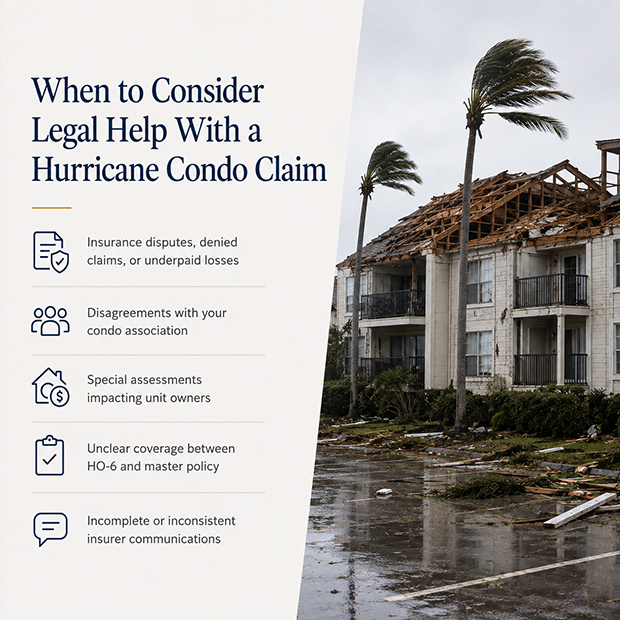
An insurance claim attorney can review the documents involved in the dispute, including:
- The HO-6 policy and applicable endorsements
- The association’s master policy and governing documents
- The insurer’s coverage position or denial
- Damage estimates, inspection findings, and supporting documentation
- Communications relevant to the disputed claim
This review can help identify whether the disagreement involves coverage, responsibility, or the evaluation of the damage. If an insurer denies or underpays a claim, or the competing policies create uncertainty about coverage, legal guidance can help a unit owner understand the available options and determine how to respond.
Conclusion
For condo owners, hurricane damage is not simply a matter of determining whether something was damaged. The more important question is which policy, provision, or party is responsible for that particular loss. Reviewing your HO-6 policy alongside the association’s master policy and governing documents can help clarify those responsibilities before a coverage dispute grows more complicated. If the insurer’s position does not appear consistent with the available documentation, consider getting an insurance claim attorney to review the matter.
If you are facing a disputed condo hurricane claim, contact Pandit Law for a case evaluation and guidance on your options.