
After a tornado, knowing what to document can feel just as challenging as dealing with the damage itself. In regions like Louisiana, Texas, and the Gulf Coast, where severe storms are a recurring threat, even small documentation gaps can make it harder to fully support an insurance claim.
Insurers generally place the burden of proving the extent of the loss on the policyholder, making thorough tornado damage documentation one of the most important parts of the claims process. This guide explains what to document, how to preserve evidence, and which records can strengthen your claim. It also explains where experienced legal guidance can help if questions or claim disputes arise along the way.
Before You Start: Safety and Timing
Your safety comes before tornado damage documentation. Begin documenting the damage only after local authorities say it is safe to return to your property. Rushing into a hazardous area can put you at risk and make it harder to complete a thorough inspection.
Before you start, take a few basic precautions:
- Stay away from unstable buildings, collapsed roofs, and damaged walls.
- Avoid downed power lines and report them to your utility provider.
- Leave the area immediately if you smell gas or suspect a leak.
- Wear thick-soled boots to protect against nails, broken glass, and other sharp debris.
- Wear a hard hat if one is available, especially when inspecting damaged structures.
Once it is safe, photograph and record all visible damage before removing debris, boarding up windows, or making temporary repairs. Capturing the property’s condition immediately after the tornado creates a clear record of the damage and helps strengthen your insurance claim with accurate evidence.
Step-by-Step Photo and Video Documentation
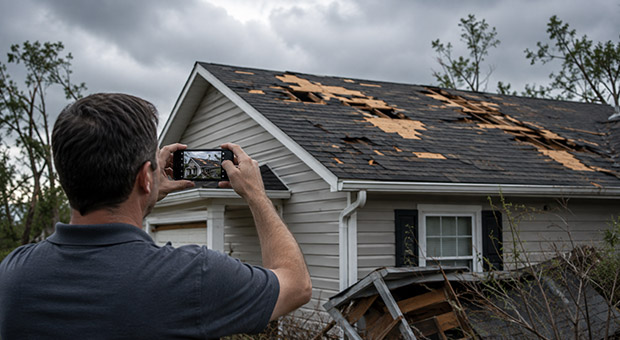
Clear, organized photos and videos provide some of the strongest evidence for tornado damage documentation. Start by documenting the entire property before moving on to individual areas of damage.
When documenting your property:
- Take wide and medium shots of all four sides of the home and every room.
- Capture close-up photos of damaged roofs, siding, windows, foundations, and other affected areas, using a ruler, tape measure, or coin for scale.
- Photograph each damaged area from multiple angles.
- Use overlapping photos for long walls, fencing, or roof sections to show the full extent of the damage.
- Record a slow video walkthrough, stating the room, date, time, and visible damage as you move through the property.
- Check concealed spaces such as attics, closets, cabinets, and crawlspaces for hidden damage.
- Keep images clear, factual, and well-lit rather than trying to dramatize the damage.
- Save copies of all photos and videos to cloud storage and an external drive to prevent accidental loss.
A systematic approach makes it easier to organize evidence later and present a complete record of the tornado’s impact on your property.
Documenting the Surrounding Property and Debris
Tornadoes often damage more than the main structure. Documenting the surrounding property helps establish the overall impact of the storm and provides important context for your insurance claim.
As you inspect the exterior, be sure to document:
- Fallen trees, damaged fences, sheds, garages, and other detached structures
- Damage to driveways, patios, retaining walls, landscaping, and outdoor equipment
- Wind-blown debris that struck your home, including its source (if known)
- The condition and location of debris before it is moved or removed
- Any signs showing how debris entered or damaged the property
Avoid guessing where debris came from or how specific damage occurred if you do not have supporting evidence. Instead, focus on recording observable facts through clear photographs, videos, and written notes. Accurate tornado damage documentation gives insurers a more complete picture of the storm’s effects and helps preserve important evidence during claim review.
Building a Personal Property (Contents) Inventory
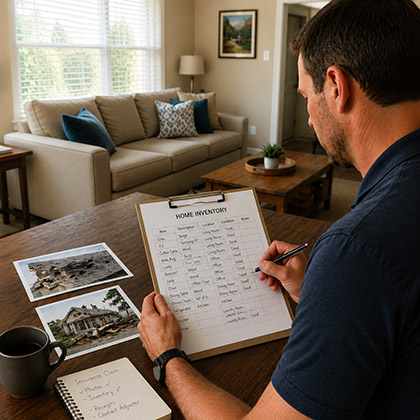
A detailed contents inventory can help show what was damaged and support the value of your claim. Instead of relying on memory, create a checklist as you move through each room and record as much information as possible.
Your inventory should include:
- Item description, brand, model, and approximate purchase date or age
- Serial numbers, along with clear photos of appliance and electronics labels
- Photos of damaged belongings from multiple angles
- Small samples of damaged materials, such as carpet, siding, or shingles, when it is safe and practical to preserve them as physical evidence
- Damaged items kept on-site until the insurance adjuster has an opportunity to inspect them, unless they pose a health or safety hazard
To stay organized, consider creating a simple spreadsheet with fields for the room, item description, brand or model, purchase date, estimated condition before the tornado, visible damage, serial number, and supporting photos or receipts. A well-organized inventory makes it easier to present consistent documentation when working with your insurer.
Structural and Construction Documentation
Photos alone may not tell the full story of your property’s condition before the tornado. Supporting records can help establish the property’s condition before the storm and distinguish tornado-related damage from pre-existing issues.
If available, gather documents such as:
- Construction drawings, blueprints, or floor plans
- Building permits and records of completed renovations or additions
- Previous home inspection reports
- Appraisal photos or property condition reports
- Maintenance records for the roof, foundation, HVAC system, and other major components
These records provide valuable pre-loss documentation and help establish a baseline condition for your home before the tornado occurred. If your property has undergone recent improvements, include invoices or completion records to document those updates.
Combining these records with photographs, videos, and other tornado damage documentation creates a more complete record of the property’s condition and supports a clearer assessment of the storm’s impact.
Eyewitness and Timeline Documentation
A clear timeline helps connect your documentation to the tornado event and can support other evidence gathered during the claims process. While photos and videos capture physical damage, eyewitness accounts may provide additional context about what happened before, during, and immediately after the storm.
Consider recording details such as:
- The approximate time the tornado occurred
- Weather conditions before and after the storm
- Statements from neighbors, family members, or others who witnessed the event
- Whether emergency responders or rescue efforts required moving debris or damaged property before documentation
- The date and time each photo, video, or inspection was completed
Later, compare your timeline with official National Weather Service (NWS) storm survey reports to confirm the reported tornado path and timing. Consistent records from multiple sources can help organize your evidence and provide additional context when questions arise during the insurance claim review.
Understanding the Enhanced Fujita (EF) Scale for Tornado Damage Documentation
The Enhanced Fujita (EF) Scale is the standard system used by the National Weather Service to estimate tornado wind speeds based on observed damage. Surveyors evaluate damage to different types of structures and vegetation to estimate the tornado’s intensity.
| EF Category | Estimated Wind Speed (mph) | Damage Level | General Description |
| EF0 | 65–85 | Light | Minor roof covering or siding damage, broken branches |
| EF1 | 86–110 | Moderate | Broken windows, damaged garages, roofs partially damaged, large tree limbs snapped |
| EF2 | 111–135 | Considerable | Roof sections removed, exterior walls damaged, large trees uprooted |
| EF3 | 136–165 | Severe | Significant structural damage, stories of well-built homes damaged |
| EF4 | 166–200 | Devastating | Well-built homes heavily damaged or destroyed, vehicles thrown |
| EF5 | Over 200 | Incredible | Reinforced structures severely damaged, widespread catastrophic destruction |
These ratings should always be considered alongside a building’s construction quality, age, and overall condition. Understanding the EF Scale and neighborhood damage classifications such as Scattered, Moderate, and Extensive damage can help homeowners describe the severity of damage more accurately during tornado damage documentation and provide additional context for insurers.
How the National Weather Service Verifies Tornado vs. Wind Damage
Not all storm damage is caused by a tornado. After major storms, the National Weather Service (NWS) conducts damage surveys to determine whether damage resulted from a tornado or straight-line winds by studying damage patterns rather than the amount of destruction.
During a survey, experts may evaluate:
- The direction fallen trees and debris point
- Large uprooted trees, which often provide the most reliable wind-direction evidence
- Whether debris patterns converge, a common sign of tornadoes
- Whether trees fall in a uniform, fan-shaped pattern, which is more typical of straight-line winds or microbursts that can exceed 100 mph
These surveys help improve future weather warnings and provide independent, third-party documentation that may help strengthen your documentation. If a tornado affected your area, consider obtaining the local NWS damage survey or NOAA Storm Prediction Center report and including it with your claim records alongside your other supporting documentation.
Financial and Administrative Documentation for the Claim
Your documentation should extend beyond property damage. Financial records and organized communication logs help document the expenses you incurred and create a complete record of your insurance claim.
Keep copies of:
- Receipts for tarps, plywood, board-up services, water extraction, debris removal, and other emergency measures
- Hotel bills, meals, fuel, and other eligible Additional Living Expenses (ALE), if you were temporarily displaced
- Itemized estimates from licensed contractors that clearly distinguish tornado-related damage from pre-existing conditions
- A communication log recording every conversation with your insurer, including the date, time, representative’s name, claim number, and a summary of what was discussed
Maintaining these records from the beginning of the claims process makes it easier to locate important information later and helps ensure your documentation remains organized, consistent, and supported by written evidence.
Organizing Everything Into a Claim File
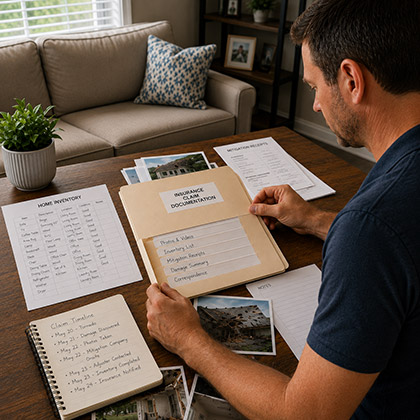
Keeping your documentation organized can save time and reduce confusion throughout the insurance claim process. Instead of searching through emails, photos, and receipts, create one physical folder and one digital folder that contain all supporting records in a single location.
Your claim file should include:
- Photos and videos of the damage
- Personal property inventory and supporting receipts
- National Weather Service (NWS) or NOAA storm survey reports, if available
- Contractor estimates and inspection reports
- Emergency repair and Additional Living Expenses (ALE) receipts
- Insurance correspondence and communication logs
To make documents easier to reference, date and label every photo, then link it to your inventory using a simple photo log. For example, include the photo number, location, item or damage shown, and the date it was taken. A well-organized claim file creates a clear timeline of events and makes it easier to locate supporting evidence if questions arise during the claims process.
Common Mistakes to Avoid While Documenting Tornado Damage
Even minor documentation mistakes can create gaps in the evidence supporting your position. Avoiding these common errors can help you present a more complete and organized record of the damage.
Common mistakes that can affect your tornado insurance claim include:
- Starting cleanup before documenting the property
- Discarding damaged belongings before they can be inspected
- Making permanent repairs before the damage is fully documented
- Overlooking hidden damage in attics, crawlspaces, cabinets, or behind walls
- Taking blurry, incomplete, or poorly organized photos and videos
- Skipping a detailed personal property inventory
- Failing to save receipts, estimates, and communication records
- Not obtaining independent documentation, such as an NWS storm survey when available
- Relying on memory instead of written records and photographs
- Accepting a settlement before fully understanding the documented scope of the damage
Taking the time to document the damage carefully from the beginning can help reduce questions later and provide stronger support for your insurance claim.
How a Lawyer Can Help with Tornado Damage Claims
Not every tornado damage claim proceeds smoothly. If your claim is delayed, underpaid, or denied, an experienced insurance claim attorney can help you understand your options and protect your rights under your insurance policy.
Depending on your situation, legal guidance may include:
- Reviewing your insurance policy and explaining available coverage
- Identifying missing documentation or additional supporting evidence
- Organizing records to strengthen your claim
- Communicating and negotiating with the insurance company on your behalf
- Challenging claim decisions that may not reflect the documented damage
- Pursuing legal action when appropriate to resolve a dispute
Every claim is different, and the right approach depends on the facts, policy language, and available evidence. If you have concerns about how your tornado damage claim is being handled, seeking legal guidance can help you better understand the claims process and the options available under your policy.
Conclusion
Thorough documentation does more than create a record of the damage. It helps you tell the complete story of what happened, what was affected, and how the tornado impacted your property. Taking time to organize photos, records, receipts, and other evidence can make the claims process more efficient and reduce the need to recreate important details later.
Consider preparing a tornado documentation kit before storm season with essentials such as a camera or smartphone, measuring tape, flashlight, notepad, waterproof storage, and digital backups of key property records. Being prepared before severe weather strikes can make documenting damage much easier when every minute counts.
If your tornado damage claim is delayed, underpaid, or denied despite thorough documentation, an experienced insurance claim attorney can review your situation, explain your options, and help protect your rights throughout the claims process.