
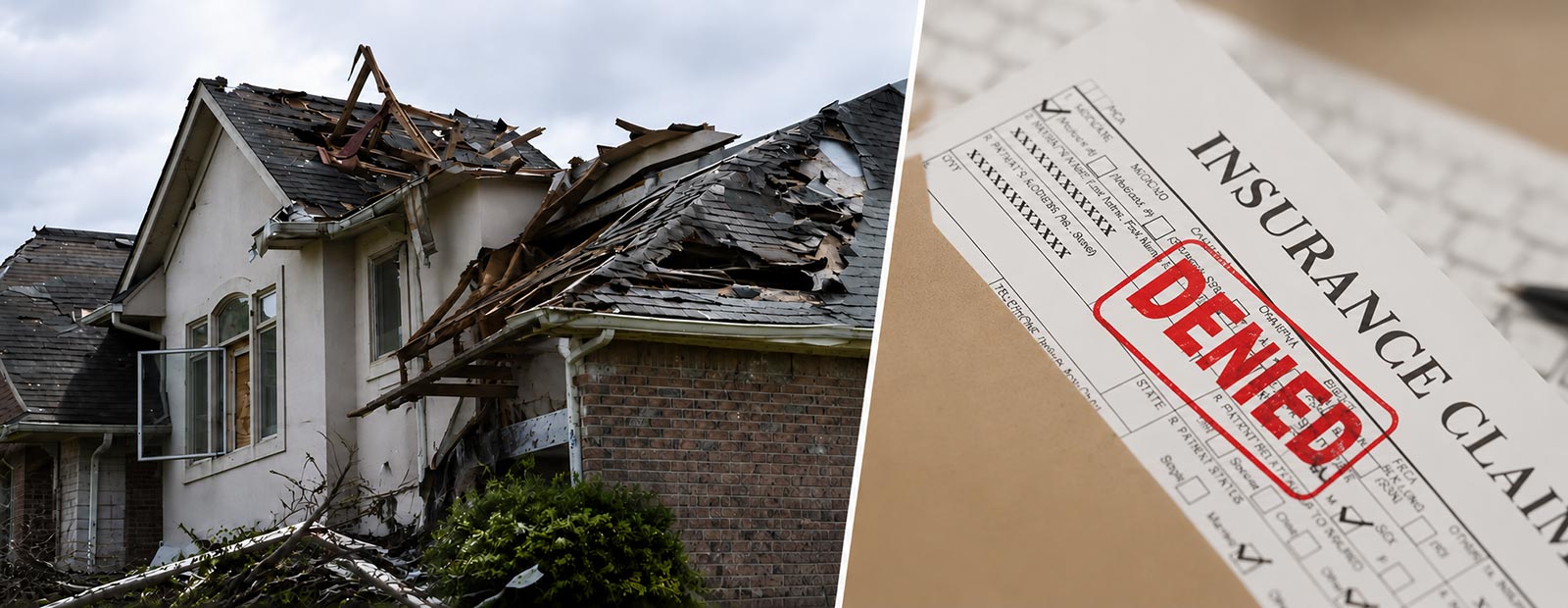
After a major storm, most homeowners expect their insurance to help restore what was damaged. Instead, many receive a denial letter that feels abrupt, confusing, and unfair. A denied storm damage insurance claim rarely comes down to whether a storm occurred. Homeowners often have photos, weather alerts, and visible damage. The dispute usually centers on how the insurer characterizes that damage, when it allegedly occurred, what caused it, and how policy language applies. Those distinctions are where many valid claims begin to unravel.
After hurricanes, hailstorms, and severe wind events across Louisiana and Texas, insurers process thousands of claims in compressed timeframes. In that environment, denials often rely on standardized conclusions, such as “pre-existing,” “cosmetic,” or “below threshold” damage. For homeowners, these explanations feel detached from what they can actually see on their roof or inside their home. But they carry real legal weight.
This guide explains why storm damage insurance claims are denied, how insurers support those decisions, and what steps homeowners can take to challenge a denial before it becomes final.
Common Reasons Storm Damage Claims Are Denied
After widespread storms, insurers rely on familiar reasoning to limit payouts. Understanding these patterns helps homeowners recognize when a denial may be disputed.
Insurers Claim the Damage Was Pre-Existing

One of the most common denial justifications is the assertion that the damage existed before the storm. Insurers may argue that shingles were already cracked, siding was already loose, or structural components showed prior deterioration. These conclusions may be based on general observations rather than proof that the damage predated the storm. When used, this reasoning shifts responsibility away from the storm event and onto the homeowner’s property history.
Storm Damage Is Labeled as Normal Wear and Tear
Closely related to pre-existing damage arguments, wear-and-tear denials frame storm impact as routine aging. Insurers may state that shingles failed due to age rather than wind or that flashing failed from long-term exposure. This approach ignores how severe weather can accelerate failure beyond normal deterioration.
Damage Is Called “Cosmetic” Instead of Structural
Another frequent tactic is minimizing storm damage as cosmetic. Hail dents, cracked shingles, lifted tabs, or surface fractures may be described as affecting appearance only. Insurers use this classification to avoid addressing how these conditions can compromise the protective function of roofing and exterior materials.
Wrong Cause of Loss (Storm vs. Flood vs. Rain)
Cause-of-loss disputes are common after hurricanes and severe rain events. Insurers may argue that damage resulted from flooding or rain intrusion rather than wind. Because coverage depends on damage classification, shifting the cause of loss can determine whether a denied storm damage insurance claim stands.
Damage Falls Below Deductible or Replacement Threshold
Sometimes insurers acknowledge storm damage but claim it does not meet coverage thresholds. By limiting the recognized scope of damage, they may conclude that repairs fall below the deductible or do not qualify for replacement, effectively closing the claim without addressing ongoing risks.
Late Reporting or Missing Documents
Timing and paperwork often become grounds for denial. Delays in reporting or incomplete documentation may be cited as reasons for denial. Even when homeowners act reasonably under post-storm conditions, insurers may argue that the delay compromised their ability to assess damage accurately.
Policy Limits, Lapsed Coverage, or Technical Policy Defenses
Administrative issues can also derail a claim. Allegations of missed payments, coverage gaps, or technical policy provisions may arise after damage occurs. These arguments require careful review of policy language and payment history to verify their accuracy.
Claim Delay, Lowballing, or Bad-Faith Tactics
In some cases, denial is part of a broader claim-handling pattern. Repeated inspections, shifting explanations, and undervalued estimates can pressure homeowners to accept less than the claim may warrant. While not every delay is improper, consistent minimization of damage may signal deeper claim-handling concerns.
What to Do If Insurance Denies Storm Damage Claims
When a storm damage insurance claim is denied, a structured response can improve the chances of reversing the decision.
Review the Denial Letter and Identify the Exact Reason
The denial letter is more than a notice; it outlines the insurer’s position. Reading it carefully helps identify which policy provisions, exclusions, or factual assertions support the denial.
Request Written Justification from Insurer
Homeowners have the right to understand why a claim was denied. Requesting a detailed written explanation forces the insurer to clearly state its reasoning and may reveal inconsistencies or unsupported conclusions.
Strengthen Proof of Storm Damage
Appeals are evidence-driven. Clear photos, videos, and contractor observations that show storm-specific damage can help counter generalized wear-and-tear arguments. Documentation tying damage to the timing and nature of the storm is especially valuable.
Gather Weather and Storm Event Records
Independent weather data can confirm that severe storm conditions occurred at your location. Reports from recognized meteorological sources help establish that damaging winds or hail were present when the loss occurred.
Organize a Claim Evidence File
A well-organized file strengthens credibility. Key items to include are:
- The insurance policy
- Denial correspondence
- Photos and videos
- Inspection and contractor reports
- Weather documentation
- Communication logs with the insurer
File an Appeal
Most policies allow for an appeal process, but deadlines matter. Filing promptly and according to policy requirements preserves your ability to challenge the denial effectively.
How to Appeal a Denied Storm Damage Insurance Claim: Step-by-Step
Appealing a denial is a formal escalation, not a casual request for reconsideration.
Call a Lawyer

If your storm damage insurance claim has been denied, consulting a property damage attorney early can help you understand your legal options before taking further action. A property damage attorney can review your policy, evaluate your insurer’s stated reasons for denial, identify potential claim-handling issues, and recommend the most effective strategy for challenging the decision. Early legal guidance can also help ensure that evidence, deadlines, and appeal requirements are handled correctly from the outset.
Draft a Strong Written Appeal
Once you understand the basis for challenging the denial, prepare a written appeal that directly addresses the insurer’s reason. Rather than making a general objection, respond to each denial reason with relevant policy language and supporting facts. A clear, point-by-point appeal encourages the insurer to evaluate each issue directly rather than restating its original decision.
Attach Contractor Estimates and Storm Evidence
Support your appeal with documentation that explains the cause and extent of the damage. Independent contractor estimates help explain what repairs are necessary and why the damage aligns with storm impact rather than age or maintenance issues. When supported by storm data, such as weather reports confirming wind or hail activity on the loss date, they strengthen the causal link between the event and the damage. Together, this evidence directly challenges attempts to minimize or reclassify the loss.
Request Re-Inspection or Independent Review
If the initial inspection was brief, surface-level, or incomplete, a re-inspection may be warranted. This step requires the insurer to revisit conclusions that may have been based on limited observations or assumptions. In some cases, an independent review helps correct damage findings that were overlooked or dismissed during the first inspection.
Track Communication and Insurer Deadlines
Document calls, emails, letters, and response times throughout the appeal. A detailed communication log helps identify delays, shifting explanations, or missed responses, which may become important if escalation becomes necessary. Clear records also prevent disputes over what was submitted or when.
Escalate Through Regulatory or Formal Complaint Channels
If an appeal is ignored, stalled, or repeatedly denied without a meaningful explanation, regulatory options may be available. Filing a complaint with the appropriate state insurance authority can trigger additional review and require the insurer to formally justify its claim handling. This step adds oversight when internal appeals fail to produce a substantive response.
How Louisiana and Texas Laws Help You Fight a Denied Storm Damage Claim
State-specific rules shape how storm claims are handled and challenged.
Louisiana
Louisiana homeowners face unique risks due to frequent hurricanes. Legal protections focus on accountability and fair claim handling, including:
- Deadlines for filing storm damage insurance claims
- Rights to challenge unfair storm claim denials
- Wind versus flood dispute protections after hurricanes
- Matching-law roof replacement rights after storms
- Rights to file complaints with the Louisiana Department of Insurance
- Legal remedies for delay, underpayment, or wrongful storm denial
Texas
Texas homeowners contend with hailstorms, hurricanes, and high claim volume. Key protections include:
- Texas Insurance Code response deadlines
- Penalties for delayed or unfair claim handling
- Appraisal rights for storm underpayments
- Texas Windstorm Insurance Association rules for coastal claims.
- Percentage-based storm deductible rules
- Protections against cosmetic roof denial tactics
- Options to escalate storm claim disputes legally
How a Lawyer Helps With a Denied Storm Damage Insurance Claim
Legal involvement can change the trajectory of a denied storm damage insurance claim by introducing structure, accountability, and enforceable pressure at key stages of the dispute. A lawyer can support you by:
- Maximizing Storm Claim Compensation through Legal Leverage: Legal involvement shifts risk back to the insurer. When insurers face documented evidence, legal scrutiny, and potential consequences for improper handling, they are more likely to reassess underpaid or wrongfully denied storm claims and move toward a more appropriate resolution.
- Interpreting Policy Language and Exclusions: Insurance policies contain layered definitions, exclusions, and conditions that insurers rely on when denying claims. A lawyer analyzes how these provisions apply to the reported loss, identifies misinterpretations or overly broad exclusions, and clarifies coverage obligations that may not be obvious from the insurer’s decision alone.
- Packaging Evidence to Address Denial Arguments: Rather than submitting evidence in isolation, a lawyer organizes documentation to directly counter the insurer’s stated reasons for denial. This includes aligning inspection reports, photographs, weather data, and repair assessments with specific policy provisions to create a cohesive narrative that challenges unsupported or selective conclusions.
- Applying Negotiation Pressure Grounded in Law: Insurers often reassess their position once communications are framed around legal duties rather than informal requests. A lawyer applies pressure by referencing claim-handling standards, policy compliance requirements, and documented inconsistencies in the insurer’s position, making continued denial harder to justify without further review.
- Filing Regulatory Complaints when Appropriate: When an insurer fails to respond, delays unreasonably, or refuses to engage meaningfully during the appeal process, a lawyer can escalate the matter through formal regulatory channels. These complaints require insurers to explain their actions under oversight and often prompt renewed attention to the claim.
- Pursuing Litigation if the Insurer Refuses to Act Fairly: If other avenues fail, litigation may be necessary to enforce policy rights. A lawyer evaluates whether the denial violates contractual obligations or claim-handling rules and, when warranted, initiates legal action to compel proper claim evaluation or resolution.
Conclusion
Storm damage insurance claim denials are often based on interpretation rather than the full reality of the damage. Understanding common denial reasons, strengthening evidence, and following a structured appeal process help homeowners challenge unfair decisions more effectively.
When disputes persist, legal review adds clarity and accountability. If your storm damage claim has been denied, get a FREE claim evaluation to understand your options and determine your next steps.
Frequently Asked Questions
Insurance may cover storm damage when it falls within policy terms and is properly documented. Coverage depends on factors such as the cause of damage, policy exclusions, and supporting evidence. Disputes often arise when insurers and homeowners interpret the cause or extent of coverage differently.
Yes. Homeowners can file complaints with their state insurance regulators if they believe a denial was improper or unsupported. Regulators review whether insurers followed claim-handling rules and may request explanations or documentation, which can prompt closer scrutiny of the denial decision.
Not every denied claim requires legal help. However, an attorney can be valuable when a denial persists despite strong evidence, when policy language is disputed, or when the insurer delays or refuses to reconsider. Legal guidance helps homeowners understand rights and determine whether escalation is appropriate.
Legal action may be possible if an insurer fails to honor policy obligations or engages in improper claim handling. Whether a lawsuit is appropriate depends on policy terms, evidence, and applicable state law. A legal review can clarify available remedies and whether filing suit makes sense.