
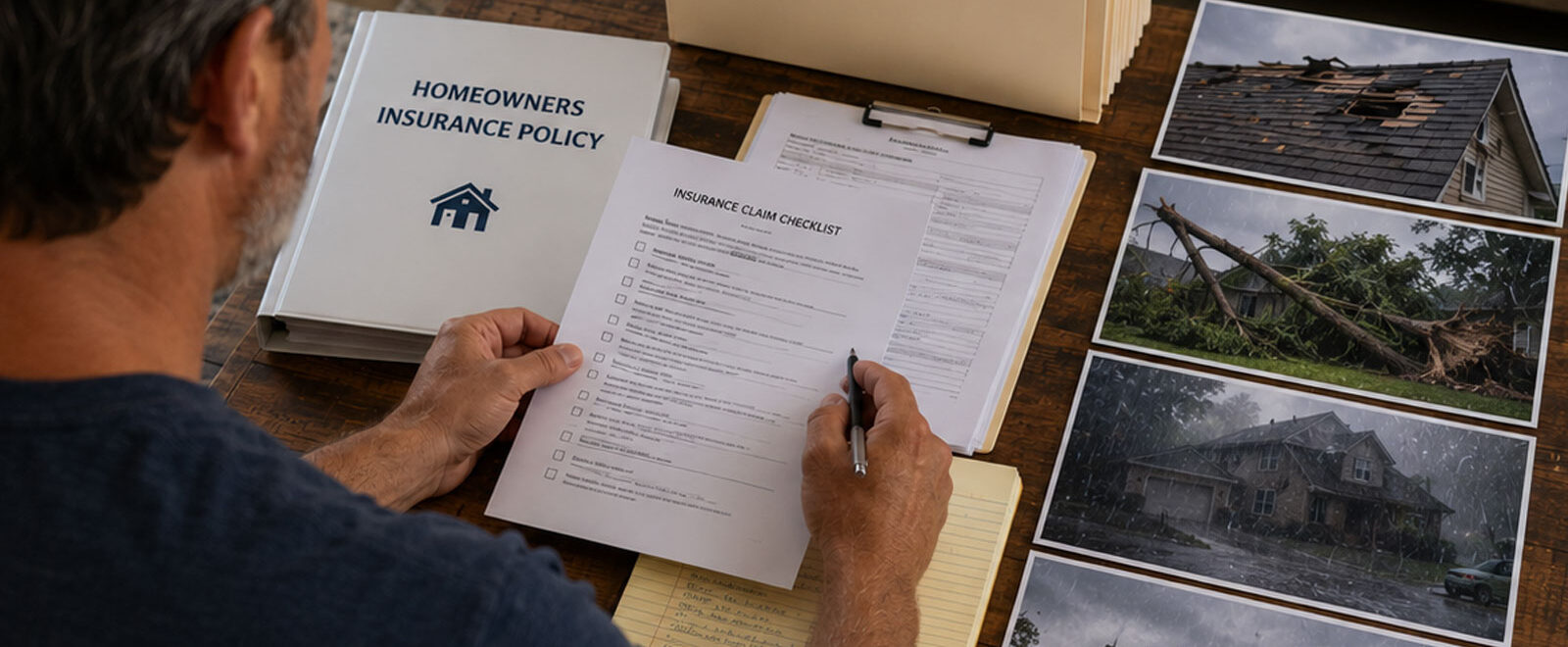
STOP: Document your storm damage before you clean up or repair anything.
Imagine waking up after a powerful storm in Louisiana or Texas. Part of your roof is missing, water has entered your home, and debris covers your yard. Like many property owners, your first instinct may be to start cleaning up. However, taking photos, videos, and preserving evidence before repairs can make a significant difference when dealing with insurance companies.
Many homeowners feel frustrated when they discover that visible damage alone may not be enough to support a claim. Insurance claims often depend on evidence, and policyholders generally bear the responsibility of showing when the damage occurred and how the storm affected their property. That is why thorough storm damage documentation is so important.
The stronger your documentation, the easier it is to demonstrate the full extent of your losses and address questions that arise during the storm damage insurance claim process If disputes develop, legal guidance can help property owners understand their options and protect their rights.
Understanding Louisiana and Texas Storm Risks Before You Start Documenting
The type of storm that damages your property often affects the kind of evidence you need to collect. Louisiana and Texas face a wide range of severe weather events throughout the year, from hurricanes and hailstorms to tornadoes and winter freezes. Understanding how these events damage property can help you focus your damage documentation efforts and preserve stronger evidence of damage from the beginning.
Hurricane and Tropical Storm Damage Along the Gulf Coast
Property owners across coastal Louisiana and Texas regularly face hurricanes and tropical storms that bring destructive winds, heavy rain, storm surge, and flooding. These storms often create multiple sources of damage, which can lead to questions about whether losses resulted from wind, floodwaters, or both.
When documenting hurricane-related losses, pay close attention to roof damage, broken windows, structural impacts, water intrusion, and debris patterns. Photographs that show conditions immediately after the storm can help establish how the damage occurred and support a later damage assessment.
Hail Damage Across Texas and Northern Louisiana
Texas consistently experiences some of the highest levels of hail activity in the country, while northern Louisiana also sees damaging hailstorms throughout the year. Hail damage claims sometimes become disputed because signs of impact can be difficult to identify without clear photographic evidence.
Property owners should document roof surfaces, gutters, siding, windows, outdoor equipment, and vehicles as soon as it is safe to do so. Close-up photographs can help capture impact marks, dents, and other indicators of storm-related damage.
Tornado and Severe Wind Damage
Tornadoes and severe straight-line winds can cause widespread structural damage in both states. In addition to documenting damage to buildings, property owners should photograph fallen trees, displaced materials, fencing damage, and debris fields. These details may help establish the force and direction of the storm.
Winter Storm and Ice Damage
Recent winter freezes across Texas and Louisiana have demonstrated how quickly cold weather can damage homes and businesses. Frozen pipes, water leaks, roof damage, and fallen tree limbs often create extensive losses long after the storm ends.
Photographs, videos, and repair records collected immediately after a freeze can help document damage before changing conditions affect the property.
Why Strong Documentation Makes Legal Claims Stronger
No matter what type of storm causes the damage, thorough storm damage documentation often becomes one of the most important tools available when questions arise during the claims process.
Insurance companies often rely on documentation when evaluating the cause, extent, and value of property damage. When disputes arise, the quality of your records can significantly affect your ability to demonstrate what happened and when it occurred.
Several types of documentation can help strengthen a claim:
- Photographs can provide clear visual evidence of property conditions immediately after the storm.
- Videos can capture the overall condition of the property and provide context that photographs may miss.
- Receipts can help verify emergency mitigation expenses and damaged property values.
- Weather reports can connect property damage to a specific storm event.
- Inspection reports can support a professional damage assessment.
- Written timelines can establish when damage occurred and document important claim-related events.
Strong documentation does more than support an insurance claim. It can also help address disagreements involving causation, pre-existing damage allegations, or disputes over the scope of repairs. The more complete and organized your records are, the easier it may be to present a clear picture of the losses you experienced.
Before the Storm: Documentation That Protects Your Future Claim
Many property owners focus on documenting damage after a storm. However, some of the most valuable evidence can be gathered long before severe weather arrives. Creating records before hurricane season, hail season, or winter storms can make it easier to show your property’s condition and identify new damage after an event occurs.
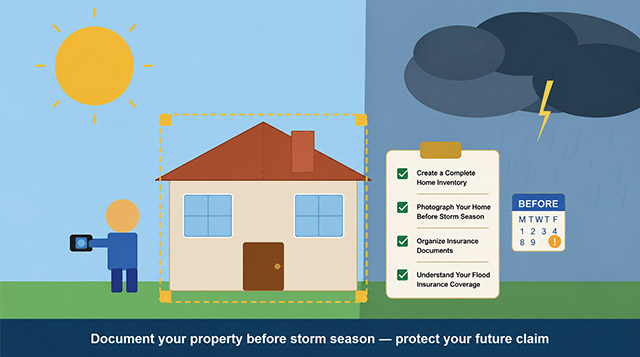
Create a Complete Home Inventory
A detailed home inventory can help establish what property existed before a loss and provide support for damaged contents claims.
Document:
- Appliances and major household systems
- Electronics and computers
- Furniture and home furnishings
- Jewelry, collectibles, and other valuables
- Tools, equipment, and recreational items
Video walkthroughs, purchase receipts, serial numbers, and product photographs can make inventory records more useful. Store copies digitally so you can access them even if your property suffers significant damage.
Photograph Your Home Before Storm Season
Pre-storm photographs create a valuable baseline for future comparisons. They can help demonstrate that damage appeared after a storm rather than before it.
Focus on photographing:
- The roof from safe vantage points
- Exterior walls and siding
- Windows and doors
- Driveways and fences
- Landscaping and outdoor structures
Date-stamped records can make future damage documentation more effective and easier to organize.
Organize Insurance Documents Before Disaster Strikes
Important insurance records can become difficult to locate during an emergency. Keeping documents organized ahead of time can reduce stress and speed up communication after a storm.
Maintain copies of:
- Insurance policy declarations pages
- Policy contact information
- Claim reporting instructions
- Deductible information
- Emergency contact numbers
Store digital backups in a secure cloud account whenever possible.
Understand Your Flood Insurance Coverage
Many homeowners are surprised to learn that standard homeowners policies generally do not cover flood damage. Separate flood coverage may be available through the National Flood Insurance Program (NFIP) or private flood insurance policies.
Reviewing your storm damage insurance coverage before storm season can help you understand which types of water damage may be covered and which policies apply in different situations. Knowing this information before a disaster occurs can help avoid confusion during the claims process.
Preparing before a storm takes far less time than trying to recreate records afterward. By organizing documents, preserving property records, and maintaining a thorough inventory, property owners can place themselves in a stronger position if severe weather causes future damage.
Storm Damage Documentation Checklist: Step-by-Step Guide
The hours and days after a storm can feel overwhelming. However, taking a systematic approach to storm damage documentation can help preserve critical evidence and create a clearer record of what happened. The goal is not just to photograph damage but to build a complete file that accurately documents the event and its impact on your property.
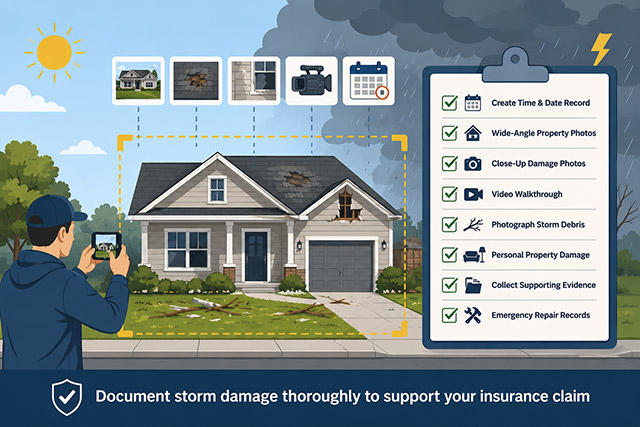
Step 1: Create a Time-and-Date Record
Start by establishing a timeline as soon as it is safe to assess the property. A clear timeline can help connect the damage to a specific storm event and provide valuable context during the claims process.
Gather:
- Photos and videos with automatic timestamps enabled
- Notes documenting when you first discovered the damage
- Local weather reports showing the date and time of the storm
- Records of emergency alerts or evacuation notices
Keep all information together in a dedicated file. Consistent records can strengthen your damage documentation and help verify when the loss occurred.
Step 2: Take Wide-Angle Photos of the Entire Property
Before focusing on individual damage points, capture the overall condition of the property. Wide-angle photographs provide context and show how damage is distributed across the site.
Photograph:
- The front, rear, and sides of the property
- The roof from safe ground-level locations
- Fences, driveways, and detached structures
- Trees and landscaping affected by the storm
These images help create a visual overview of the damage and support a more complete damage assessment.
Step 3: Capture Close-Up Damage Photos
Once you have documented the property as a whole, move closer to specific areas of damage. Detailed photographs can highlight conditions that may not be visible in wider shots.
Focus on:
- Missing or damaged roofing materials
- Broken windows and doors
- Water intrusion areas
- Structural cracks
- Hail impacts and wind-related damage
Take multiple photographs from different angles whenever possible. Clear close-ups of specific damage can provide important visual evidence of the extent of the loss.
Step 4: Record a Complete Video Walkthrough
A video walkthrough can help tie all of your documentation together. Unlike photographs, videos allow you to show how different areas of the property relate to one another.
As you record:
- Walk through the property slowly.
- Describe what you observe.
- Include both exterior and interior areas whenever it is safe to do so.
A complete video record can help document storm damage that may be difficult to capture fully in still photographs and provide additional context for future reviews.
Step 5: Photograph All Storm Debris Before Removal
Many property owners begin cleanup immediately after a storm. Before removing debris, take time to document it thoroughly.
Examples of storm debris may include:
- Fallen trees and branches
- Damaged fencing materials
- Roofing materials found on the ground
- Exterior building components displaced by wind
Storm debris can help demonstrate the severity, direction, and impact of the storm on the property. Once debris is removed, that evidence may no longer be available.
Step 6: Document Personal Property Damage
Storms often damage more than the structure itself. Furniture, electronics, appliances, and other belongings can also suffer significant losses.
When documenting damaged items:
- Photograph each item individually.
- Record model and serial numbers when available.
- Keep purchase receipts and ownership records.
- Create a written inventory of affected property.
Thorough records can help support claims involving personal property losses and storm-related vehicle damage.
Step 7: Collect Supporting Evidence
Photographs and videos are important, but additional documentation can further strengthen your claim file.
Consider collecting:
- National Weather Service reports
- Local news coverage of the storm
- Community-wide photographs showing similar damage
- Date-stamped photographs showing damage progression over time
- Contractor inspection reports
- Written statements from neighbors who witnessed the event
Supporting evidence can help establish that the damage resulted from a specific storm and provide additional support for your claim.
Step 8: Document Temporary Emergency Repairs
Property owners often need to take immediate steps to prevent further damage after a storm. These temporary measures should be documented carefully.
Before and after completing emergency work, photograph the affected areas and keep records of all expenses. Examples include:
- Roof tarping
- Board-up services
- Water removal efforts
- Temporary protective coverings
Save receipts, invoices, and contractor records related to these measures. This documentation can help establish the property’s condition immediately after the storm and record the measures taken to prevent additional damage.
Do not discard damaged materials or make permanent repairs until the appropriate inspections have occurred and you have preserved adequate documentation. Maintaining complete storm damage documentation from the beginning can help create a stronger record of the losses you experienced.
Strong documentation begins with the first photograph and should continue throughout the recovery process. By following these steps, property owners can create a more organized record of the event and preserve evidence that may become important if questions or disputes arise later.
How to Document Interior Storm Damage Room by Room
Exterior damage often receives the most attention after a storm, but interior damage can be just as important. A room-by-room approach helps ensure you do not overlook hidden problems and creates more thorough damage documentation for your claim.
Ceiling and Attic Water Damage
Water intrusion often appears first in ceilings and attics after roof damage. Begin documenting these areas as soon as it is safe to enter them.
Look for:
- Water stains or discoloration on ceilings
- Sagging drywall or ceiling materials
- Wet insulation in the attic
- Moisture around roof penetrations and vents
- Visible drips or standing water
Take both wide-angle and close-up photographs to show the location and severity of the damage. If conditions worsen over time, continue taking updated photos to create a clear record.
Wall, Flooring, and Structural Damage
Storms can affect a home’s structural components long after the weather passes. Carefully inspect each room and document any changes you observe.
Pay particular attention to:
- Cracks in walls or ceilings
- Warped, buckled, or separated flooring
- Shifting door or window frames
- Gaps around trim or baseboards
- Visible structural movement
Photograph damage from multiple angles and include wider shots that show where the damage appears within the room.
Window and Water Intrusion Damage
Damaged windows and exterior openings can allow wind-driven rain to enter the property. Document any signs of water intrusion before cleanup begins.
Photograph broken glass, damaged frames, failed seals, water stains beneath windows, and any visible pathways where water entered the home. These details can help establish how the storm affected the property.
Personal Property and Contents Damage
As you move through the home, document damaged belongings room by room rather than creating one general inventory.
Photograph:
- Furniture and mattresses
- Electronics and appliances
- Clothing and household goods
- Home office equipment
- Decorative and valuable items
Whenever possible, keep receipts, serial numbers, and ownership records with your photographs. This organized approach can help create stronger support for your claim and make it easier to account for all affected property.
Thorough interior documentation helps complete the overall picture of storm-related damage. Combined with exterior photographs, videos, and repair records, it can provide valuable evidence of damage throughout the claims process.
How to Document Roof Storm Damage for Insurance Claims
Roof damage often becomes a central point of dispute because it can be difficult to identify, document, and evaluate after a storm. Thorough documentation helps create a clearer record of roof conditions before temporary repairs and weather exposure affect the evidence. When documenting storm damage for roof claims, focus on capturing both the overall condition of the roof and specific signs of damage.
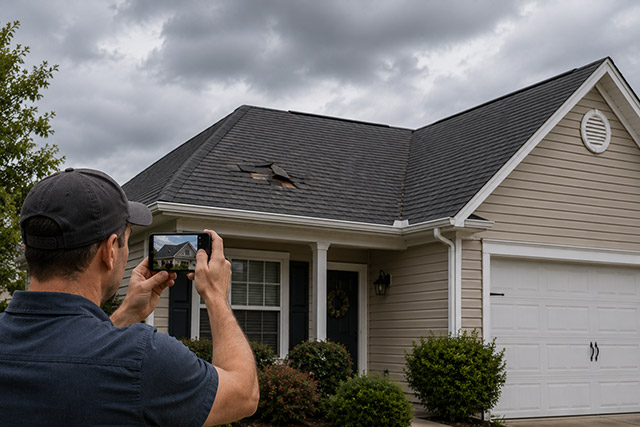
Safely Photograph Roof Damage Without Climbing
Safety should always come first after a storm. Damaged roofs can be unstable, slippery, or weakened by water intrusion.
Instead of climbing onto the roof, consider documenting damage from safe locations such as:
- Ground-level vantage points around the property
- Second-story windows overlooking the roof
- Balconies or elevated outdoor areas
- Nearby locations that provide a clear view of the roofline
Take wide-angle photographs of all visible roof sections and follow up with zoomed-in images where damage appears visible. Safe and thorough photography is often the first step in documenting storm damage with photos for roofing claims.
Missing, Lifted, and Damaged Shingles
Wind damage frequently affects roofing materials before other signs of storm damage become apparent. Missing or displaced shingles can expose underlying roofing components to additional water intrusion.
Look for:
- Missing shingles
- Lifted or curled shingles
- Cracked roofing materials
- Torn shingle tabs
- Exposed underlayment
Photograph damaged areas from multiple angles whenever possible. Consistent photo records can help show the scope of the damage and support a later professional assessment.
Hail Damage Indicators Insurance Companies Look For
Hail can leave behind damage that is not always obvious from a distance. Detailed photographs often play an important role when documenting hail-related roofing losses.
Common indicators include:
- Circular impact marks
- Granule loss on shingles
- Dents on the roof vents and flashing
- Damage to gutters and downspouts
- Impacts on outdoor metal surfaces
When documenting storm damage for roofing claims, capture both the damaged roofing materials and nearby components that show evidence of the same hail event. This can help create a more complete record of the storm’s effects.
Flashing, Valleys, Ridge Caps, and Gutters
Some of the most vulnerable roofing components are not the shingles themselves but the areas designed to direct water away from the structure.
Pay close attention to:
- Bent or displaced flashing
- Damaged roof valleys
- Cracked ridge caps
- Detached gutters
- Damaged downspouts
Photographs should show both close-up damage and the surrounding roof area. This context can help demonstrate how storm conditions affected the roofing system as a whole.
Roof Vents, Skylights, Chimneys, and Solar Panels
Storms can also damage roof penetrations and attached systems. These areas often create pathways for water intrusion if damage goes unnoticed.
Inspect and document:
- Roof vents and vent covers
- Skylight frames and glazing
- Chimney flashing and masonry
- Solar panel mounting systems
- Visible cracks, dents, or displacement
Take photographs from multiple angles and document any related interior water damage that appears beneath these components.
What Documents Prove Roof Storm Damage?
Photographs are only one part of effective roof damage documentation. Supporting records can help strengthen the connection between the storm event and the resulting damage.
Useful documentation may include:
- Before-and-after roof photographs
- National Weather Service storm reports
- Professional roof inspection records
- Emergency repair invoices
- Roof maintenance records
- Community-wide photographs showing similar damage
Combining photographs with supporting records can help establish when the damage occurred, how widespread it was, and whether neighboring properties experienced similar storm impacts. The more complete your records are, the easier it may be to demonstrate the existence and extent of roof-related storm damage.
Roof damage can become more difficult to document as temporary repairs, weather exposure, and cleanup efforts alter the property’s condition. Documenting roof damage immediately after a storm can help preserve important evidence and provide stronger support throughout the claims process.
Organizing Your Evidence Before Filing the Claim
Before contacting your insurance company, use your storm preparedness checklist to organize all documentation into a single, structured claim file. A well-organized record can make it easier to present evidence and track important information throughout the process.
Your claim package should bring all previously collected documentation into a single, organized file. This may include photographs, videos, inspection records, weather reports, receipts, and a timeline of key events. You should also have key information readily available, including your policy number, property address, date of loss, and a factual summary of the damage.
In addition, keep a communication log that records:
- Claim numbers
- Dates of calls and emails
- Names of representatives
- Notes from conversations
FEMA assistance may become available after certain federally declared disasters, but it generally does not replace available insurance coverage. Property owners should still notify their insurer and follow applicable claim requirements.
Maintaining organized records from the start can help support a smoother claims process and preserve important evidence if questions arise later.
When Should You Contact a Storm Damage Lawyer?
Not every storm damage claim requires legal involvement. However, certain situations may indicate that additional guidance could help protect your interests.
Signs Your Insurance Claim May Need Legal Help
Property owners often seek legal assistance when they encounter issues such as:
- Claim denial
- Unexplained claim delays
- Underpayment of documented damage
- Incorrect deductible application
- Allegations that damage existed before the storm
These issues can create uncertainty and make it more difficult to resolve a claim efficiently.
How a Storm Damage Lawyer Protects Homeowners
A storm damage lawyer can help homeowners better understand their rights and obligations under their insurance policy. Legal guidance may also help when disputes arise regarding coverage, causation, or the scope of repairs.
Depending on the circumstances, a lawyer may assist with policy interpretation, claim-related negotiations, reviewing insurer communications, and evaluating options when disagreements develop. Early legal guidance can often help property owners make informed decisions and avoid common mistakes during a disputed claim.
Whether you need a Louisiana insurance claim lawyer or a Texas insurance claim attorney, seeking legal guidance early can help protect your rights and strengthen your insurance claim.
Common Storm Damage Documentation Mistakes Homeowners Make
Even when property owners act quickly after a storm, small mistakes can weaken otherwise strong storm damage documentation. Avoiding these common errors can help preserve valuable evidence and create a more complete claim file:
- Cleaning up debris or making permanent repairs before documenting the damage can eliminate important evidence.
- Ignoring minor damage may allow hidden problems to worsen and complicate the claim later.
- Taking only close-up photos and failing to enable timestamps can make it harder to show the full extent and timing of the damage.
- Overlooking interior damage, including ceilings, walls, floors, and personal property, can result in an incomplete claim record.
- Waiting too long to begin documentation or failing to back up files can lead to lost evidence.
- Skipping official weather reports and other supporting records may weaken the connection between the damage and the storm event.
- Contacting the insurer before gathering key evidence can make it more difficult to present a complete picture of the loss.
- Relying on verbal conversations without maintaining written records and a communication log can create unnecessary disputes.
- Signing releases too quickly or assuming the first claim offer is final may limit your ability to address unresolved issues.
- Seeking FEMA assistance without fully understanding available insurance benefits can create confusion during the recovery process.
Strong documentation often depends on consistency and attention to detail. Taking a few extra steps immediately after a storm can help preserve critical evidence and reduce avoidable complications during the claims process.
Conclusion
Storm damage can leave property owners dealing with far more than broken shingles, water intrusion, or fallen trees. In many cases, the outcome of an insurance claim depends on the quality of the evidence collected in the days immediately following the storm. The first 24 to 72 hours often provide the best opportunity to preserve conditions as they existed before cleanup, temporary repairs, and weather exposure begin to change the scene.
Thorough storm damage documentation can help address common claim questions involving causation, scope of damage, and the condition of the property immediately after the storm. Photographs, videos, weather records, inspection reports, and written timelines can all play an important role if questions arise during the claims process.
If your claim has been denied, delayed, underpaid, or challenged by allegations of pre-existing damage, legal guidance can help you better understand your options. The team at Pandit Law can review any claim-related concerns, evaluate documentation issues, and help you understand available options when storm damage claims become disputed.