
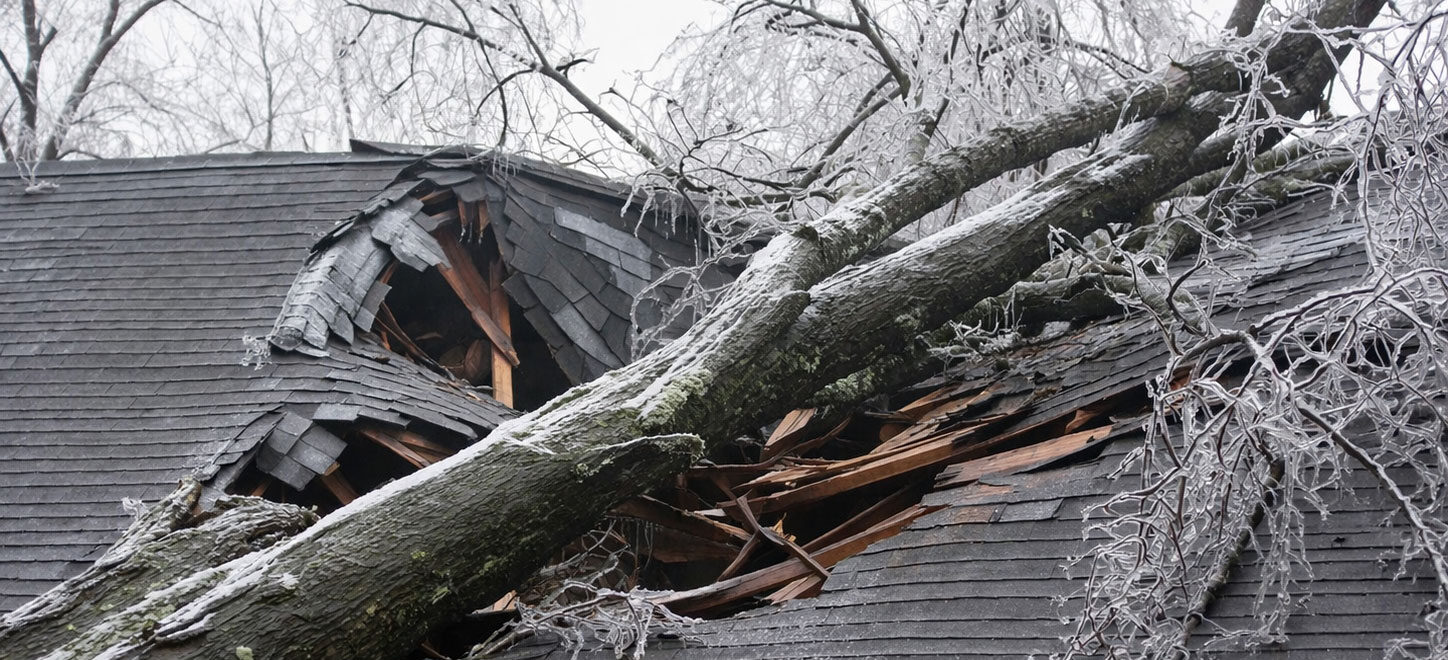
Ice storms are not something most homeowners in Texas or Louisiana expect to deal with often. But when they do hit, the damage can be sudden, severe, and overwhelming. What starts as a quiet layer of freezing rain can quickly turn into thousands of pounds of ice weighing down trees across your property.
That weight is where the real risk begins. Branches snap without warning. Entire trees can uproot or collapse. And when they fall, they often crash into roofs, garages, fences, and vehicles, causing serious structural damage.
This makes ice storm tree damage more than just a cleanup issue. It becomes a property damage and insurance claim situation that needs careful handling. In these situations, what matters most is not the fallen tree itself, but what it damages and how clearly that damage can be tied back to the storm. This guide explains what happens in ice storm tree damage claims, what your coverage may look like, and how to approach an ice storm tree damage claim with clarity.
How Ice Storms Cause Damage to Trees and Property
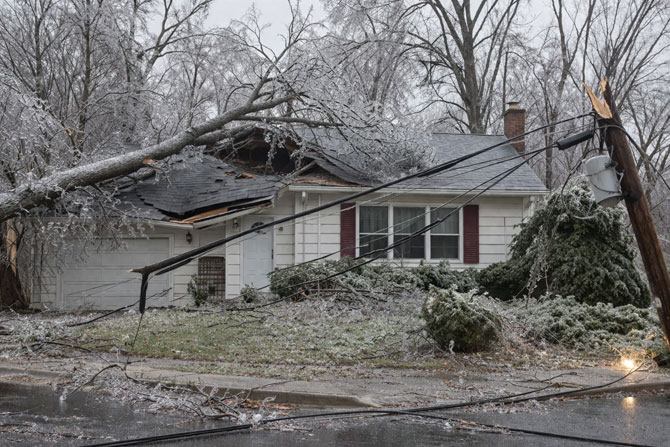
Ice storms damage trees differently than wind or rain. Instead of sudden force, the damage builds gradually, which makes it harder to predict and more dangerous.
When freezing rain coats tree branches, the ice adds significant weight. Even a thin layer can double or triple the load a branch is carrying. As more ice accumulates, stress spreads from smaller limbs to larger branches and eventually to the trunk. At a certain point, the tree can no longer support that weight.
Branches begin to crack and snap. In more severe cases, entire trees may split or uproot, especially if the ground is already saturated. Unlike wind damage, which often follows a direction, ice-related damage is unpredictable. Trees can fall in any direction depending on how the weight is distributed.
This directly leads to property damage. A falling branch doesn’t need to be large to puncture shingles or damage gutters. A full tree collapse can crush sections of a roof, damage load-bearing areas, or impact nearby structures like garages and sheds.
Understanding this chain of events is important. Insurance claims often depend on showing that the damage resulted from ice accumulation leading to tree failure, not from unrelated conditions.
What Types of Property Damage Are Caused by Falling Trees During Ice Storms
When a tree falls during an ice storm, the impact often triggers a chain reaction, affecting multiple parts of your property at once. The most common types of property damage homeowners experience include:
- Structural Damage: A direct hit to the roof can cause punctures, partial collapse, or compromised structural integrity. Detached structures like garages or sheds may also take the hit, especially if they sit closer to tree lines.
- Exterior Damage: Even when the main structure remains intact, exterior elements often suffer damage. Gutters can tear away, siding can crack or loosen, and fences or decks may collapse under the force of impact.
- Interior Damage: Once the exterior is breached, water intrusion becomes a serious concern. This can lead to ceiling stains, insulation damage, and flooring issues. The key factor is the cause-and-effect sequence: tree impact followed by water entry.
- Secondary Losses: Falling trees may bring down power lines, block access to the property, or create safety hazards. In some cases, homeowners may need to leave the property temporarily during repairs.
- Damage to Vehicles or Garages: Vehicles parked in driveways or inside garages are highly vulnerable. A falling tree can crush or severely damage them, adding complexity to the overall claim.
What Homeowners Insurance Covers for Ice Storm Tree Damage

In these situations, coverage is not based on the storm itself, but on what the tree actually damages.
What Is Covered
In most cases, homeowners insurance provides coverage when a fallen tree damages a covered structure. This typically includes your home, attached structures, and in some cases, detached structures like garages.
For example, if a tree crashes through your roof or damages your garage, that impact usually triggers coverage, not just the presence of the tree on your property.
What Is Not Covered
There are important limitations that homeowners often overlook:
- Tree removal may not be covered if the tree does not damage a structure.
- Fallen trees that land in open areas and do not cause property damage may not qualify for coverage.
- Damage linked to neglect or pre-existing tree conditions may be questioned or excluded.
Policies are condition-based. The focus is on the outcome of the event, not just the event itself.
Key Limitations
Even when coverage applies, certain constraints can affect your claim:
- Debris removal may be subject to specific limits.
- Deductibles apply, which can impact how much you recover.
- Policy wording matters. Some claims hinge on whether the damage is categorized as an ice-related event or a falling object.
Because of this, two claims that appear similar can be handled very differently depending on policy language.
How to File a Claim for Ice Storm Tree Damage
Filing an ice storm tree damage claim requires clear documentation and a well-supported account of what happened. Here’s how to approach it step by step:
- Document All Damage With Photos and Videos: Capture the scene as soon as it is safe. Include wide shots, close-ups, and angles that clearly show how the tree impacted the structure.
- Take Immediate Steps to Prevent Further Damage: Use temporary measures like covering exposed areas or removing immediate hazards. This helps limit additional damage and shows you acted responsibly.
- Notify the Insurance Company Promptly: Early notice starts the claims process and creates a clear record of when the damage was reported.
- Schedule Inspection and Obtain Repair Estimates: Professional inspections help confirm the extent of damage and support your claim with documented findings.
- Maintain Records of All Expenses: Keep receipts and documentation for temporary repairs and any costs related to the damage.
- Review Settlement Offer Carefully: Do not rush this step. Compare the offer against the full scope of damage and your supporting documentation.
- Speak with an Ice Storm Claim Expert or Property Damage Attorney: If the claim becomes disputed, delayed, or undervalued, legal guidance can help you better understand your options and next steps.
Common Issues Homeowners Face with Ice Storm Tree Damage Claims
Even when the damage seems obvious, an ice storm tree damage claim can become complicated. Common challenges homeowners face include:
- Claim Denials Due to Policy Exclusions: If the damage does not meet specific policy conditions, insurers may deny the claim.
- Disputes Over the Cause of Damage: Insurers may question whether the damage resulted from ice accumulation or categorize it differently, such as a general falling object.
- Underpayment of Repair Costs: Initial estimates may not account for structural or hidden damage, leading to lower settlement offers.
- Delays in Claim Processing: High claim volumes after a storm can slow down inspections, reviews, and final decisions.
Why Ice Storm Tree Damage Is a Risk in Louisiana and Texas
Ice storms are relatively rare in Louisiana and Texas, but that’s exactly what makes them more disruptive. In regions where freezing conditions are uncommon, infrastructure and landscaping are not designed to handle the weight of ice. Trees adapted to heat and humidity may not be structurally prepared for ice accumulation, making them more likely to fail under stress.
Homeowners in these areas are also less likely to anticipate or prepare for this type of event. Trees may not be maintained with ice-related risks in mind, and properties may not be reinforced to withstand this kind of impact.
As a result, the damage is often more severe and widespread when ice storms do occur. This can also create confusion during the claims process, especially when policyholders are unfamiliar with how these claims are evaluated.
How an Attorney Can Help with Ice Storm Tree Damage Claims

When a claim becomes complicated, legal guidance can directly impact how your claim is evaluated and resolved. A property damage attorney can assist with:
- Policy Interpretation: Understanding what your policy covers and how it applies to your situation is not always straightforward.
- Challenging Denied or Underpaid Claims: If your claim is rejected or undervalued, an attorney can assess whether the insurer’s position aligns with the policy terms.
- Handling Insurer Negotiations: Insurance discussions often involve technical language and coverage positions that can be difficult to navigate alone.
- Proving the Cause of Damage: Establishing that the damage resulted from ice-related tree failure, rather than unrelated factors, is often critical to the claim.
- Representation in Bad-Faith Situations: If the claim is delayed, denied without proper basis, or underpaid, legal action may be necessary to address the issue.
The goal is to ensure your claim is evaluated fairly based on the actual damage and terms of your policy.
Conclusion
When dealing with ice storm tree damage, insurance coverage depends on what was damaged, how it happened, and whether the damage can be clearly tied to the storm. Even then, claims can become difficult due to policy language, causation disputes, and evaluation challenges.
If you’re facing delays, denials, or uncertainty about your claim, getting the right guidance early can make a meaningful difference.
Get a free claim evaluation today and understand your options.
Frequently Asked Questions
In most cases, your own homeowners insurance covers the damage to your property, regardless of where the tree came from. Responsibility may shift only if there is clear evidence that the neighbor failed to address a known tree hazard.
Fence damage is typically covered if a fallen tree directly impacts it. Coverage depends on policy terms and the cause of damage, but insurers generally treat fences as part of the covered property.
In most cases, tree removal is not covered if no structure was damaged. Coverage typically applies only when a fallen tree hits a covered structure. Some policies may allow limited removal for access or safety reasons.