
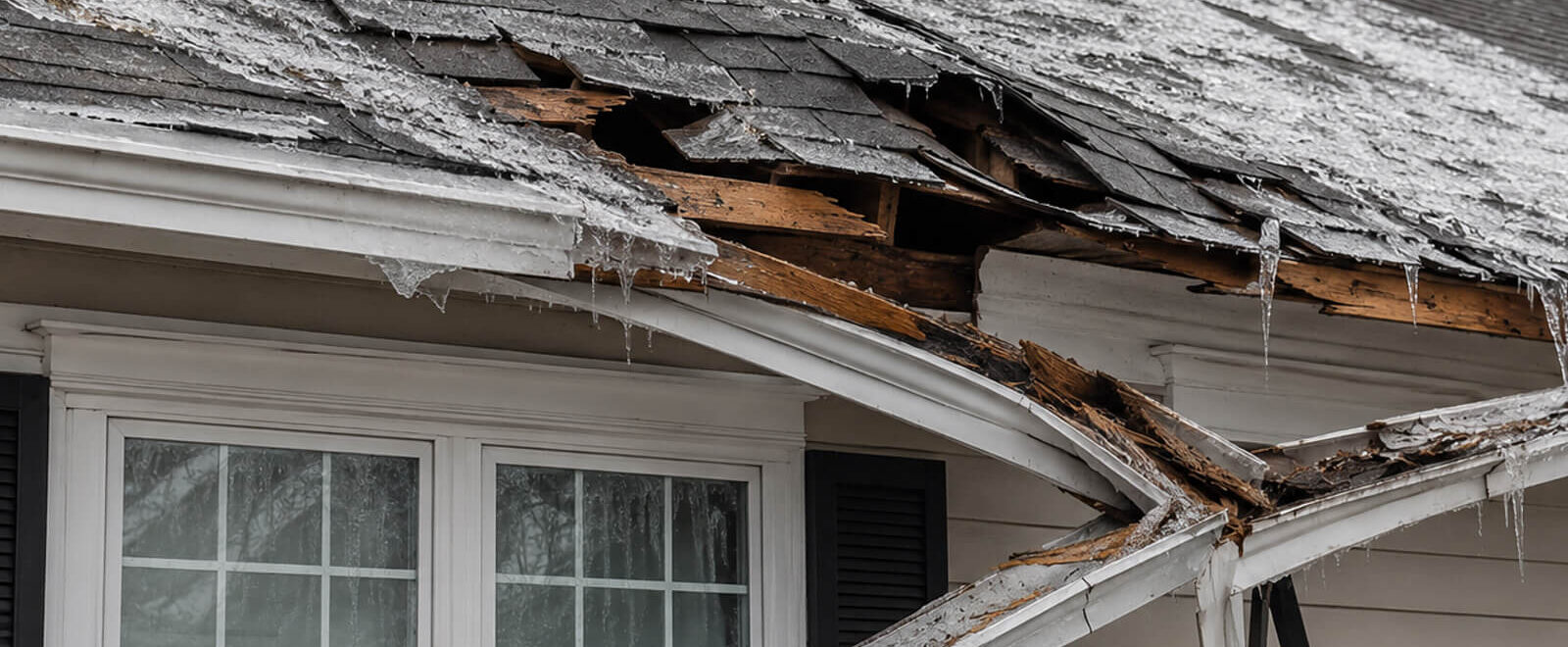
When freezing rain coats homes in thick layers of ice, roofs are often the first part of the structure to take the impact. What begins as a quiet winter storm can quickly turn into a serious structural issue when ice accumulates across shingles, gutters, and flashing.
Unlike ordinary rainstorms, ice storms place unusual stress on roofing systems. Ice clings tightly to surfaces, adds weight, blocks drainage paths, and creates conditions that allow water to push beneath roofing materials. The result can be ice storm roof damage that leads to leaks, structural strain, and interior property damage if not addressed quickly.
For homeowners and commercial property owners, the financial consequences can be significant. Roof repairs often involve structural components, insulation, drywall, and other interior materials that become damaged once water begins entering the building. Understanding how roof damage occurs and how insurance claims work after a winter storm is critical for protecting your property rights under your homeowners insurance policy.
How Ice Storms Cause Roof Damage
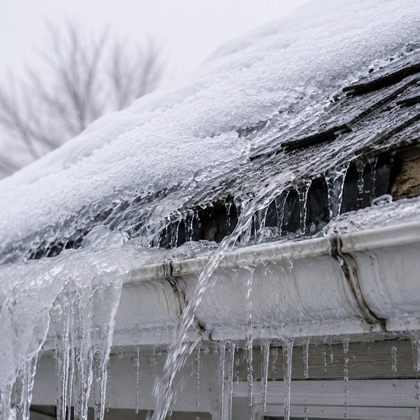
Ice storms develop under specific atmospheric conditions. They occur when snow melts into rain while falling through a warm layer of air, then freezes instantly when it reaches colder surfaces near the ground. When that freezing rain lands on roofs, gutters, and structures, it forms a dense layer of ice that adheres tightly to surfaces.
Because ice bonds to roofing materials and does not slide off easily, even a relatively thin layer can cause significant stress. Over time, this accumulation can damage both visible roofing materials and the structural components beneath them.
Freezing Rain and Ice Accumulation
Freezing rain creates one of the most dangerous types of winter precipitation for roofs. Unlike snow, which can sometimes slide off sloped roofs, ice attaches firmly to shingles and flashing. As additional rain freezes on contact, the ice layer grows thicker and heavier.
This accumulation can coat large portions of the roof surface, gutters, and vents and can create substantial ice buildup capable of damaging structures. Because the ice adheres so tightly, it often remains in place long after the storm passes, continuing to place pressure on the roofing system.
Excessive Weight and Structural Stress
Roof structures are designed to handle typical environmental loads, but heavy ice accumulation can exceed those expectations. Ice is dense and significantly heavier than snow when layered across large surfaces.
As the weight builds, roof decking and rafters begin to experience strain. In some cases, homeowners may notice subtle changes such as sagging rooflines or shifting gutters. In more severe situations, the added stress can weaken structural components and create openings where water can enter the building.
Even when structural collapse does not occur, prolonged stress from ice can loosen roofing materials and expose vulnerable areas.
The Freeze-Thaw Cycle
Winter storms rarely remain frozen continuously. As temperatures rise during the day and drop again overnight, roofs experience repeated freezing and thawing cycles.
During warmer periods, melting ice can seep into small gaps between shingles, flashing joints, or nail penetrations. When temperatures fall again, that trapped water refreezes and expands. This repeated expansion gradually widens cracks and gaps in roofing materials.
Over time, those openings allow water to penetrate deeper into the roof assembly and eventually reach the attic or interior ceilings.
Ice Dams and Drainage Blockage
One of the most common causes of roof leaks during winter storms is the formation of ice dams. These develop when melting snow or ice flows down the roof but refreezes along colder edges near the eaves.
Once a ridge of ice forms at the roof edge, water can no longer drain normally through the gutter system. Instead, it pools behind the ice barrier.
As the trapped water accumulates, it begins pushing underneath shingles and roofing layers. This process can allow water to enter the attic or wall cavities, resulting in interior leaks and insulation damage.
Shingle and Flashing Damage
Roofing materials can also become brittle in extremely cold temperatures. Shingles that are normally flexible may crack or curl when exposed to freezing conditions combined with heavy ice pressure.
Flashing components around vents, skylights, chimneys, and roof valleys can also shift when ice forms around them. If these metal seals lift or separate from the roof surface, they create entry points for water during thaw cycles.
Even small gaps in flashing can allow moisture to reach underlying roof structures, making early inspection after a winter storm important.
Signs of Ice Storm Roof Damage
Ice damage is not always immediately obvious. Some signs appear on the exterior surfaces and roof, while others become visible inside the home days or weeks later as trapped moisture begins to spread.
Recognizing these warning signs early can help homeowners document potential ice storm damage to roof structures before the situation worsens.
Exterior Warning Signs
- Thick Ice Buildup along Eaves: Heavy ice accumulation at roof edges may indicate blocked drainage and developing ice dams.
- Large Icicles along Gutters: Oversized icicles can signal that melting water is refreezing instead of draining properly.
- Missing, Cracked, or Curled Shingles: Shingles exposed to ice pressure or freeze-thaw expansion may loosen or fracture.
- Sagging Roof Lines: Subtle dips or uneven sections along the roofline can suggest structural strain from ice weight.
- Detached or Bent Gutters: Gutters pulled away from the roofline may be carrying excessive ice loads.
Interior Warning Signs
- Water Stains on Ceilings or Walls: Discoloration often appears when moisture from roof leaks begins soaking into drywall.
- Bubbling Paint or Drywall: Trapped moisture can cause surface materials to expand and blister.
- Dripping Water during Thaw: Water entering through small roof openings may only become visible as temperatures rise.
- Wet Attic Insulation: Damp insulation is a common early indicator that water has penetrated the roof structure.
- Musty Odor: Persistent moisture in attic spaces can produce noticeable odors even before visible stains appear.
What Roof Damage Is Covered Under Homeowner Insurance?
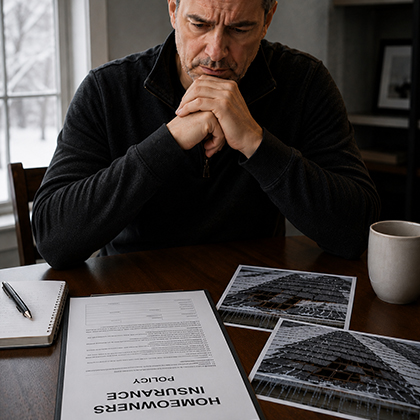
Homeowners insurance policies often cover certain types of sudden roof damage caused by severe weather events, including winter storms. Coverage typically depends on whether the damage results from a sudden external event rather than gradual deterioration.
Coverage details vary by policy, but winter storm events that cause sudden roof damage are often treated as covered perils under standard homeowners insurance policies.
Damage That Is Often Covered
- Sudden roof leaks caused by ice buildup during a winter storm
- Structural roof damage from heavy ice accumulation
- Shingle or flashing damage resulting directly from freezing rain impact
- Interior water damage caused by a storm-related roof breach
Damage That Is Commonly Disputed or Excluded
- Roof issues attributed to long-term deterioration or maintenance concerns
- Pre-existing structural weaknesses unrelated to the storm
- Damage occurring before the reported storm event
Because policy language and exclusions vary, insurers may review roof conditions closely before approving a claim after an ice storm.
Steps After Discovering Ice Storm Roof Damage
When ice storm roof damage is discovered, the actions taken immediately afterward can play an important role in how an insurance claim develops. Proper documentation and timely communication with the insurer help establish a clear record of the storm’s impact.
1. Ensure Roof Safety and Prevent Further Damage
Icy roofs can be extremely dangerous. Avoid climbing onto the roof while surfaces remain frozen or unstable.
If safe to do so, temporary protective measures such as tarping may help limit additional water intrusion. Keeping receipts for emergency mitigation work can also demonstrate that reasonable steps were taken to prevent further damage.
2. Document All Roof Damage Thoroughly
Take clear photos and videos of all visible roof issues, including shingles, flashing, gutters, and areas where ice accumulation occurred.
Interior issues such as ceiling stains, attic moisture, and insulation damage should also be documented. Timestamped photos and videos often become important evidence when filing an insurance claim.
3. Review Your Homeowner Policy
Before communicating further with the insurer, review the policy sections related to roof coverage, exclusions, and deductibles.
Understanding how the policy describes winter storm damage can help homeowners identify potential coverage issues early in the process.
4. Notify Your Insurance Company Promptly
When reporting the claim, clearly explain that the damage resulted from an ice storm.
Request a claim number and the contact information of the assigned adjuster. Prompt reporting helps establish a clear timeline and allows the insurer to begin investigating the loss.
5. Submit All Roof Damage Evidence
Organize all documentation, including photographs, repair estimates, and receipts for temporary repairs.
Submitting complete documentation early in the process can prevent misunderstandings about the extent and cause of the damage.
6. Obtain a Licensed Roofing Contractor Estimate
A licensed roofing contractor can provide a detailed written estimate outlining the scope of repairs needed after roof damage from an ice storm event.
This independent evaluation allows homeowners to compare the contractor’s findings with the insurer’s assessment.
7. Review the Settlement Offer Carefully
Once the insurer provides a claim determination, compare the proposed settlement with the contractor’s repair estimate.
If certain repairs or structural components appear excluded, request written clarification explaining the insurer’s reasoning.
8. Contact an Ice Storm Roof Damage Lawyer
If a claim becomes delayed, denied, or significantly underpaid, homeowners may consider speaking with a lawyer experienced in storm-related property insurance disputes, particularly when major roof repairs are involved.
Ice Storm Roof Damage Claims in Texas and Louisiana
Winter storms in southern states can create widespread property damage. Both Texas and Louisiana have regulatory frameworks that require insurers to investigate and resolve claims within defined timeframes.
Understanding these legal deadlines is important when roof damage claims are delayed or disputed.
Texas
Texas insurers must follow prompt payment requirements under the Texas Insurance Code (Chapter 542) when handling property damage claims.
Key deadlines include:
- Within the first 15 days, the insurer should acknowledge your claim, start investigating it, and let you know if any additional information is needed.
- Once you’ve provided the requested information, the insurer generally has 15 business days to decide whether to approve or deny the claim.
- If the claim is approved, payment is typically issued within 5 business days after the approval notice.
If an insurer violates these deadlines, Texas law may allow policyholders to recover statutory interest on the claim amount, along with attorney’s fees in certain cases.
Louisiana
Louisiana law also imposes strict deadlines on insurers when handling property damage claims.
Under Louisiana Revised Statutes §§ 22:1892, insurers must:
- Pay undisputed claims within 30-60 days after receiving satisfactory proof of loss.
- Handle claims fairly and promptly without misrepresentation or unreasonable delay.
If an insurer fails to comply, Louisiana law may allow policyholders to pursue bad faith penalties, which can include additional damages and attorney’s fees.
Because large winter storms often generate thousands of claims, insurers may closely scrutinize roof damage claims. Maintaining thorough documentation can help homeowners support their claim if coverage disputes arise.
Why Roof Damage Claims During Winters Are Denied or Underpaid
Disputes over winter storm roof damage often arise from a few recurring issues, including:
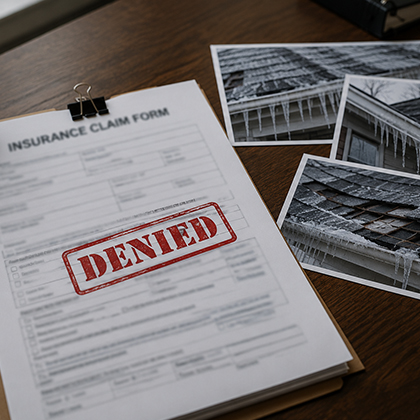
- Insurers attributing damage to long-term wear and tear rather than the ice storm
- Claims that roof issues existed before the storm event
- Disagreements about the scope of structural repairs required
- Limited documentation showing the extent of ice accumulation and resulting damage
When these issues arise, property owners may need additional evidence or professional guidance to challenge the insurer’s conclusions.
How a Lawyer Helps with Ice Storm Roof Damage Claims
A property damage attorney can assist homeowners when insurance disputes develop after a winter storm by:
- Communicating directly with the insurance company during dispute resolution
- Reviewing the policy language and identifying available coverage rights
- Challenging wrongful claim denials related to storm damage
- Addressing settlement offers that do not reflect the full repair scope
- Enforcing Texas and Louisiana claim handling requirements
Conclusion
Ice storms may be less common in southern states, but when they occur, they can place significant stress on roofing systems. For homeowners and business owners in Texas and Louisiana, careful documentation, prompt communication with the insurer, and a clear understanding of policy coverage can all influence how a roof damage claim is handled.
If a roof damage claim becomes delayed, denied, or undervalued, understanding your rights under your insurance policy is essential. Pandit Law offers FREE Claim Evaluations for property owners seeking guidance on storm-related insurance disputes.
Frequently Asked Questions
If a roof has sustained structural damage from a winter storm, filing a claim allows the insurer to evaluate whether the loss falls within the policy’s coverage provisions. Prompt documentation helps ensure the damage is properly reviewed during the claim process.
The timeframe for reporting property damage depends on the policy language and applicable state insurance regulations. Many policies require homeowners to notify the insurer within a reasonable period after discovering storm-related damage.
If an insurer denies the claim or offers a settlement that does not reflect the full scope of repairs, homeowners may review the decision carefully and seek professional guidance to determine whether the policy terms support a dispute.