
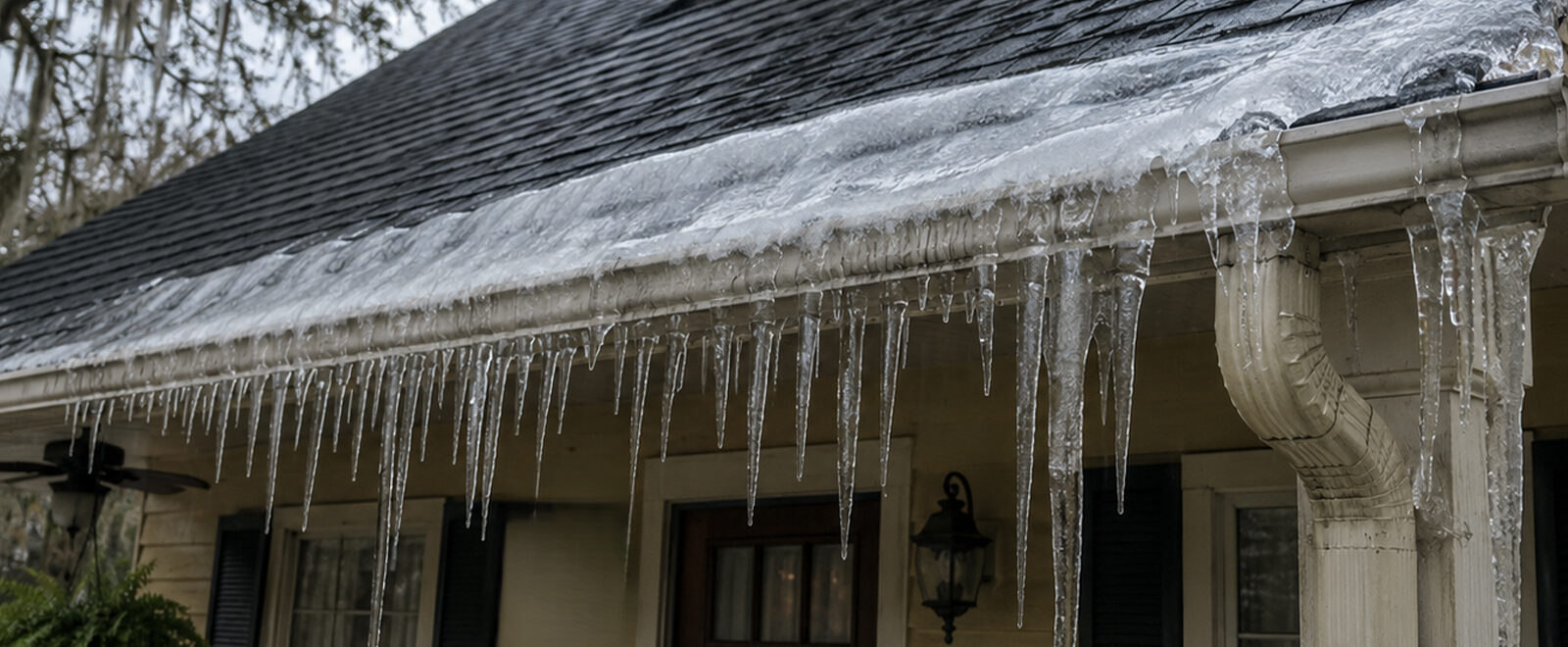
Winter weather can do more than freeze roads. When snow melts and refreezes along roof edges, it can create ice dams that trap water and force it beneath shingles and into ceilings or walls.
Severe winter weather isn’t unheard of in the Gulf Coast. After the February 2021 freeze, Texas insurers reported over 456,000 property claims tied to storm damage. Louisiana recently faced widespread ice and freezing conditions during a major winter storm that contributed to millions in property losses across the state and wider region.
Filing an ice damming insurance claim may help recover repair costs, but coverage depends on policy language and the cause of loss. Reviewing your policy before filing helps you set realistic expectations and document the damage accurately.
This guide explains how ice dams affect roofs, what insurance may cover, and what steps homeowners can take to protect their claim rights.
What Is Ice Damming?
Ice damming occurs when ice builds up along the edge of a roof and blocks melting snow from draining properly. Heat escaping from the attic melts snow higher on the roof. The water runs downward and refreezes at colder edges, forming a ridge that traps additional runoff.
Damage caused by roof ice dams often includes:
- Water seeping beneath shingles and underlayment
- Saturation of the roof decking or insulation
- Interior ceiling stains caused by roof intrusion
- Loosened shingles or flashing
- Stress on gutters from trapped ice
Because the problem starts at the roofline, early detection is critical to limit structural and interior damage.
Does Homeowners Insurance Cover Ice Damming?
Most homeowners insurance policies cover roof damage from ice when the loss is sudden and accidental, such as water entering after an ice buildup forces its way beneath shingles. However, coverage is not automatic. Insurers evaluate the cause of damage, policy exclusions, and maintenance history before approving an ice-related claim.
Common reasons coverage may be limited or denied include:
- Damage tied to long-term wear or poor maintenance
- Gradual seepage rather than a sudden incident
- Pre-existing roof deterioration
Because policies vary widely, homeowners should review their specific coverage terms carefully to determine whether an ice-related roof loss may qualify for benefits.
How Ice Dams Damage Roof Systems
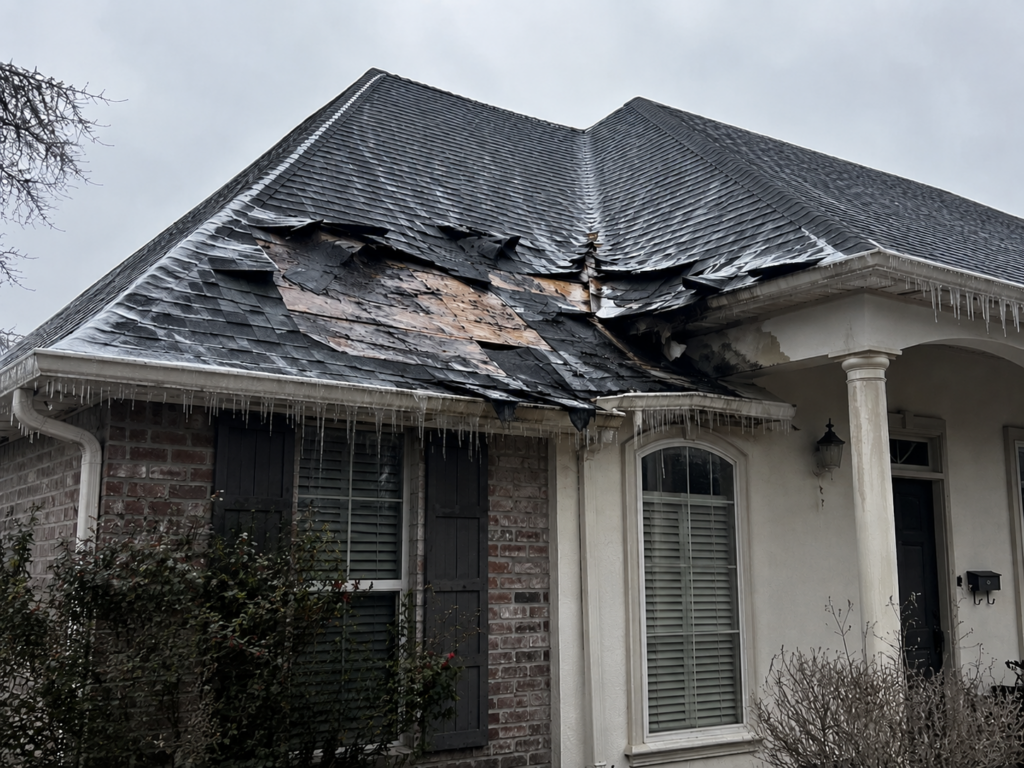
Ice dams form when melting snow refreezes along the roof edge, creating a barrier that traps water behind it. That trapped water does not simply sit in place. It often works its way beneath roofing materials and into the structure below. Understanding how this process unfolds helps homeowners recognize roof damage from ice dams early and respond appropriately.
- Shingle Lifting or Displacement: As water backs up behind an ice ridge, it can loosen shingles and break their seal. Wind and shifting ice may lift or displace them, exposing the underlayment to further moisture intrusion.
- Water Backing Up Under Shingles: Ice blocks proper drainage. Instead of flowing off the roof, melting snow moves upward beneath shingles, where it can penetrate protective layers and reach the roof deck.
- Roof Decking Saturation: When water seeps through underlayment, it can saturate the decking below. Over time, this weakens the roof system and increases the scope of repairs necessary.
- Flashing Damage: Ice expansion around roof penetrations and valleys can bend or separate flashing. Once flashing fails, water may enter more easily around chimneys, vents, and joints.
- Gutter Stress or Separation: Heavy ice accumulation adds weight to gutters. This stress can pull gutters away from the fascia, creating additional entry points for water.
- Interior Ceiling or Wall Staining Caused by Roof Intrusion: Trapped water eventually finds a path inside. Stains, bubbling paint, and ceiling discoloration often signal deeper roof system compromise.
These issues frequently become central in ice dams on roofs insurance claims, especially when insurers question whether the damage resulted from a sudden event or long-term conditions.
What to Do Before Filing an Ice Damming Insurance Claim
Preparation can significantly affect how an insurance claim for ice dam damage unfolds. Before contacting your insurer, take deliberate steps to document and protect your property.
Step 1: Document Every Sign of Damage
Thorough documentation creates a clear record that the damage resulted from roof ice buildup. When documenting the extent of ice dam damage:
- Photograph roof edges, visible ice formations, and displaced shingles.
- Take interior photos of ceiling stains, peeling paint, or damp areas.
- Record active leaks and note the date they appeared.
- Preserve safely removable damaged materials if possible.
- Keep written notes connecting visible damage specifically to ice buildup.
Accurate documentation strengthens credibility and reduces confusion about the cause of loss.
Step 2: Take Temporary Steps to Prevent Further Loss
Homeowners have a duty to limit additional damage. Take steps like:
- Make temporary repairs to stabilize the area.
- Use tarping if sections of the roof become exposed.
- Remove standing water promptly.
- Save receipts for any emergency materials or services.
Avoid permanent repairs until the insurer inspects the property, unless immediate action is necessary for safety.
Step 3: Review Your Policy and Deductible Carefully
Before filing an ice dam insurance claim, homeowners should closely examine policy details and:
- Confirm your deductible amount.
- Review dwelling coverage limits.
- Identify exclusions related to maintenance or gradual seepage.
- Determine whether your policy pays Actual Cash Value or Replacement Cost.
- Review freezing and water damage provisions carefully.
Knowing these terms helps you understand how the insurer may evaluate your claim.
Step 4: Understand Local Insurance Laws Before Filing
Insurance handling requirements differ between states.
- In Texas, prompt payment laws set deadlines for insurer acknowledgment, investigation, and payment decisions under the Texas Insurance Code.
- Louisiana law imposes penalties when insurers act arbitrarily or capriciously in denying or underpaying covered claims.
Understanding these protections before formally filing or escalating an ice-damming insurance claim can shape how you approach communication and documentation.
Step 5: Be Cautious with Recorded Statements
Insurers often request recorded statements early in the process. Stick to documented facts. Avoid guessing about how long the damage existed or speculating about contributing factors. Clear, consistent answers grounded in your records help prevent misunderstandings that could complicate the claim later.
How to File an Ice Damming Insurance Claim
Filing an insurance claim for ice dam damage requires careful documentation, timely communication, and a clear understanding of your rights. Following a structured approach can help you present a complete claim and avoid preventable delays.
Step 1: Report the Claim Promptly
Notify your insurer as soon as you discover damage. Delayed reporting can raise questions about when the loss occurred or whether additional damage developed afterward.
Texas law requires insurers to.
- Acknowledge, investigate, and request needed information within 15 days
- After receiving notice of a claim, the insurer must:
- acknowledge receipt of the claim,
- begin investigating, and
- request from the claimant all items, statements, and forms reasonably needed.
2. Accept or deny the claim within 15 business days after receiving all requested information
- Once the insurer has all necessary information, it generally must notify the claimant in writing whether the claim is accepted or denied.
3. Pay the claim within 5 business days after notifying the claimant that the claim will be paid
- If the insurer accepts the claim, payment must generally be issued within 5 business days.
Louisiana also requires insurers to handle claims fairly and in good faith. Delays or unreasonable denials can trigger penalties under state law.
Knowing these timelines helps homeowners recognize when a claim is moving appropriately.
Step 2: Submit Supporting Documents and ALE Records
Provide complete documentation to support your claim, including:
- Photographs of roof edges, shingles, and interior damage
- Written contractor estimates
- Repair invoices or mitigation receipts
- Records showing additional living expenses if the home becomes temporarily uninhabitable
Additional Living Expense (ALE) coverage may apply when covered damage makes the property unsafe to live in. Organized documentation makes it easier for adjusters to evaluate the loss accurately.
Step 3: Get an Independent Roof Inspection
An independent roofing professional can evaluate damage objectively and identify issues that may not appear in an insurer’s initial inspection. Independent assessments can also help homeowners compare repair scopes and determine whether estimates reflect the full extent of roof damage.
Step 4: Review the Insurance Estimate Line by Line
Carefully examine the insurer’s written estimate. Look for:
- Missing roof components or materials
- Repair costs that appear understated
- Depreciation calculations that affect payment amounts
- Interior repairs not included in the scope
A detailed review helps you identify discrepancies early and request clarification before repairs begin.
Step 5: Seek Legal Guidance if Needed
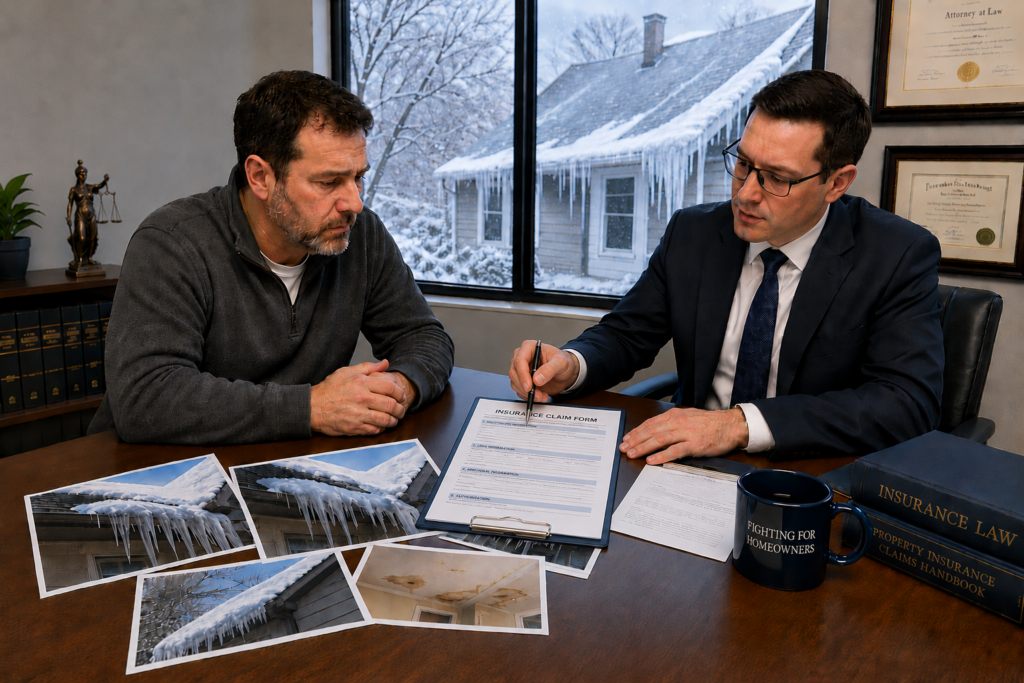
Legal guidance may be appropriate if your claim is denied, delayed, or underpaid. A property damage attorney can review policy language, explain your rights under Texas or Louisiana insurance laws, and help you understand available options. Early legal insight often helps homeowners respond strategically rather than reactively when claim disputes arise.
Common Problems Homeowners Face with Ice Dam Claims
Even when roof damage appears clear, ice-related claims can become complicated. Homeowners often encounter issues such as:
- Partial payments, where insurers approve only a portion of the claimed damage, which may leave homeowners responsible for additional repair expenses.
- Underpayment for roof damage when repair scopes omit necessary materials, labor, or related interior work.
- Delays in processing that slow inspections, payment decisions, or follow-up communication.
- Denial based on maintenance arguments, with insurers asserting the damage resulted from wear, age, or poor upkeep rather than a covered event.
- Non-renewal concerns after filing a claim, which may create uncertainty about future coverage.
Recognizing these challenges early helps homeowners respond strategically and protect their rights.
How a Lawyer Can Help Protect Your Ice Damming Insurance Claim
When disputes arise, legal guidance can provide clarity and direction. A property damage attorney may assist by:
- Reviewing policy language to determine whether roof damage should fall within covered perils.
- Explaining exclusions, deductibles, and valuation methods in clear, practical terms.
- Evaluating whether a denial or underpayment aligns with policy provisions.
- Assisting with disputes through structured communication and evidence presentation.
- Explaining homeowner rights under Texas and Louisiana insurance laws.
- Helping pursue fair compensation when disputes arise regarding policy obligations.
Legal support does not guarantee an outcome, but it can help level the playing field when claim disagreements develop.
Conclusion
Ice damming can compromise roofing systems and lead to interior water damage that disrupts daily life. Because policies vary and exclusions apply, preparation before filing a claim is critical. Careful documentation, policy review, and understanding your rights under Texas or Louisiana law can make a meaningful difference.
If coverage questions, delays, or disputes arise, speaking with a property damage attorney may help clarify your options. Contact Pandit Law for a free claim evaluation and guidance tailored to your situation.
Frequently Asked Questions
If you notice an ice dam, focus on limiting further damage. Document visible ice buildup and any interior water signs with photos, safely remove excess snow if possible, and take temporary protective steps like tarping. Avoid permanent repairs until your insurer inspects the damage so you do not affect a potential claim.
Insurance may cover roof replacement if damage from an ice dam qualifies as a covered loss under your policy. Coverage usually depends on whether the damage qualifies as a covered, unexpected loss rather than resulting from wear, age, or maintenance issues. Always review policy language carefully before assuming replacement will be approved.
Homeowners insurance often covers interior water damage from an ice dam if the water intrusion results from a covered event, such as ice forcing its way beneath shingles. Coverage can be limited or denied if the insurer determines the issue developed gradually or resulted from maintenance concerns rather than a sudden incident.