
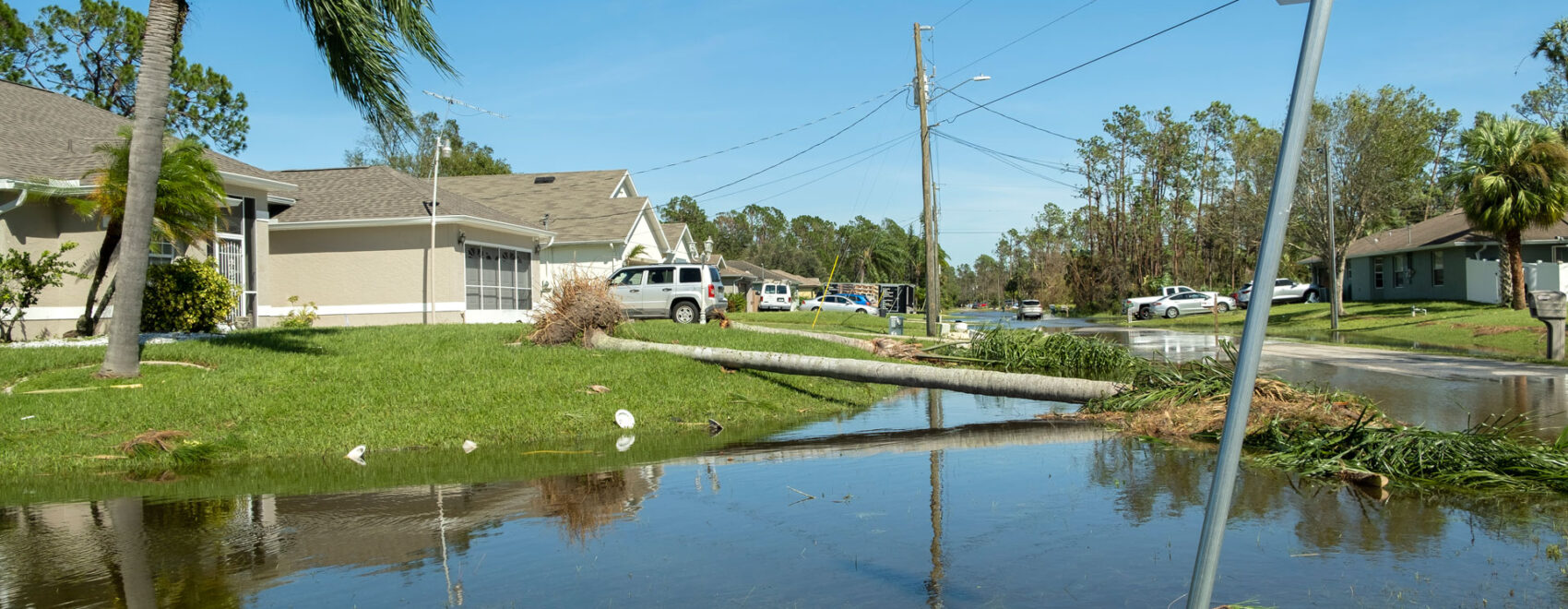
When a hurricane passes through, the damage it leaves behind isn’t just physical. Homeowners are suddenly forced to make fast decisions in a situation that feels confusing, urgent, and unfamiliar. Beyond the emotional stress and property damage, they are left walking through soaked floors, damaged roofs, and uncertainty once the storm clears. And when it’s time to file an insurance claim, homeowners often face another challenge: getting the insurance company to pay fairly. A common, and most frustrating, issue arises when insurance companies argue over whether the damage was caused by flood or wind.
This distinction matters. In the U.S., hurricanes cause billions of dollars in property losses each year, and the majority of claim disputes come down to how the damage is categorized. If damage is labeled as wind-related, the homeowners’ policy may cover it. If labeled as flood-related, coverage may be denied unless the homeowner has a separate flood insurance policy.
In this article, we’ll discuss flood vs wind damage, explain why and how the difference can affect your claim, walk through common gray areas, and discuss how legal support can help protect your rights.
Understanding the Critical Difference: Flood Damage vs Wind Damage

Distinguishing between flood damage and wind damage is essential because insurance policies treat them very differently. Most standard homeowners’ insurance policies include wind damage coverage, but exclude flood damage, which requires a separate policy, typically through the National Flood Insurance Program (NFIP) or a private insurer.
Because of this split in coverage, insurance companies often try to categorize damage in a way that limits their responsibility. This is one of the primary reasons hurricane-related claims are frequently delayed, minimized, or denied.
It’s also important to note that only about 4% of U.S. homeowners carry flood insurance, even though 25% of NFIP claims come from areas considered low-risk. This leaves many families unexpectedly uncovered after a major storm.
What Legally Qualifies as Flood Damage?
For insurance purposes, flood damage is defined as water that rises from the ground up, whether from storm surge, heavy rainfall pooling, river overflow, or coastal surges. The key element is that the water starts outside the home and moves in or accumulates.
Common examples of flood damage include:
- Water entering the home after rising over the foundation.
- Storm surge pushing water inland from the coast.
- Overflowing lakes, rivers, canals, or drainage systems.
- Saturated ground causing pooling and seepage into the structure.
Flood damage can be extensive and expensive because rising water often affects foundations, drywall, insulation, electrical systems, and flooring, not just surface-level materials. When seawater or contaminated water is involved, the damage can be even more severe.
What Legally Qualifies as Wind Damage?
Wind damage, on the other hand, occurs when strong hurricane winds physically impact the structure. This may involve tearing off shingles, breaking windows, pulling off siding, or collapsing parts of the roof. When wind damage creates an opening that allows rain to enter the home, that interior water damage is usually considered wind-driven, not flood-related.
Examples of wind damage include:
- Missing shingles or roof sections.
- Broken or blown-out windows.
- Fallen trees damaging the roof or walls.
- Rain entering through wind-created openings.
Wind damage is typically covered under standard homeowners’ insurance. However, hurricane-specific deductibles may apply and may be higher than standard deductibles.
Gray Areas: When Flood and Wind Damage Overlap
The most challenging hurricane claims are the ones where both wind and water contributed to the damage. This overlap is where insurance disputes almost always arise, because determining what caused the damage affects which policy pays or whether the loss is covered at all.
Common Overlap Situations
1. Wind creates an opening, and rain causes interior damage
If hurricane winds rip shingles or roofing materials off and rain enters through that opening, the resulting interior damage is typically considered wind-driven, even though water caused the visible destruction. This often applies to wet insulation, stained ceilings, warped flooring, or collapsed sheetrock.
It is usually covered under a homeowners’ or wind policy. However, insurers sometimes argue that the water “originated from outside”, hoping to reclassify it as flood damage. Clear documentation and photos of the wind-created entry point are critical.
2. Wind and flood hit at nearly the same time
When both forces hit within minutes of each other, it becomes difficult to tell which caused which part of the damage. For example, a roof may begin to fail as the hurricane approaches, and flooding begins minutes later. The order of events matters, and insurers often try to argue that floodwaters were the primary cause because flood policies typically pay less (or may not exist at all).
When the timeline of damage is unclear, insurers frequently use that ambiguity to justify reducing or denying payouts. This is where photos, videos, and witness accounts are crucial.
3. Separate parts of the home are damaged by different causes
In more severe storms, wind and flood overlap and cause independent damage to different parts of the structure. A storm surge may collapse or saturate the lower level of the home, and at the same time, high winds may simultaneously rip shingles, siding, or entire roof sections from the upper structure. Here, it’s about multiple damage events happening within the same storm.
These claims require careful, room-by-room damage attribution documented by specialists (contractors, engineers, or independent adjusters) and not just the insurance company’s inspector. Without a detailed evaluation, insurers may try to label all of the damage as flood-related to reduce payout responsibility.
Why These Overlap Cases Become Disputes
Insurance companies often assign the cause of damage based on whichever interpretation results in the lowest payout. If labeling something as “flood damage” means they don’t have to pay, homeowners should expect pushback.
Insurers may:
- Claim the water damage would have occurred regardless of the wind.
- Attribute all interior damage to “rising water” without proving the source.
- Use inspectors who document quickly, selectively, or without full access.
- Delay decisions, hoping the homeowner accepts a reduced settlement.
How Can Homeowners Protect Themselves in Overlap Situations
To strengthen a hurricane claim involving both wind and water damage:
- Take photos and videos before cleanup begins, especially of roof damage, broken windows, and siding loss.
- Document the timeline (e.g., “wind hit first, water rose later”).
- Keep damaged materials where possible for inspection.
- Request the adjuster’s documentation in writing. Don’t rely on verbal explanations.
- Do not allow the insurer to generalize the damage as “flood” without explanation or proof.
Flood Insurance vs Wind Insurance: Coverage Comparison

Most homeowners’ insurance policies cover wind damage, though often with a separate hurricane deductible. However, flood insurance must be purchased separately, most commonly through the NFIP.
This difference is why so many homeowners are caught off guard after a storm. Many assume “hurricane damage” is one category, when legally and financially, wind and flood are treated as two different types of losses, each with its own rules, limits, and coverage requirements.
What Does Flood Insurance Cover?
Flood insurance typically covers:
- Structural damage to the building.
- Foundation repairs.
- Electrical and plumbing systems.
- HVAC systems.
- Loss of flooring, walls, and built-in cabinetry.
Under NFIP policies, residential building coverage is typically capped at $250,000, and contents coverage is capped at $100,000. Private flood policies may offer higher limits.
Heavily damaged homes may also trigger the 50% rule, which requires properties that sustain damage equal to or greater than 50% of their market value to be rebuilt to current code standards before funds can be released. This can significantly impact reconstruction plans.
What Does Wind Insurance Cover?
Wind coverage, whether included in your homeowners’ policy or purchased separately, typically includes:
- Roof and siding replacement.
- Repair of broken windows and exterior damage.
- Water damage caused by wind-created openings.
- Structural damage from fallen trees or debris.
In coastal regions, insurers often apply hurricane deductibles, which are usually 1% to 5% of a home’s insured value – much higher than standard deductibles.
Coverage Gaps and Limitations You Need to Know
Even if you have both flood and wind coverage, gaps may still exist due to:
| Factor | Flood Damage | Flood Insurance |
| Deductible Type | Hurricane deductible may apply | 30-day waiting period applies |
| Basement Coverage | Usually covered | Usually not covered |
| Contents Coverage | Often optional or limited | Separate limit required |
| Cause of Damage | Must be wind-created entry | Must be rising external water |
These gaps are often where many homeowners face unexpected out-of-pocket costs, especially when insurers dispute the cause of damage.
Why Insurance Companies Dispute Hurricane Claims
Insurance carriers are financially motivated to minimize payouts. After major hurricanes, they often dispute the cause of damage because it determines which policy pays or whether coverage applies at all. Common tactics used by insurers include:
- Attribute water damage to flood when the wind created the entry point.
- Claim damage was pre-existing or unrelated to the storm.
- Request excessive documentation to delay processing.
- Conduct rushed inspections or rely on third-party assessors.
- Offer low settlement amounts, hoping homeowners are overwhelmed.
These disputes commonly fall into wind vs flood claim disagreements, and many homeowners don’t realize they have the right to challenge the insurer’s classification.
Key Differences: Flood vs Wind Damage
| Coverage Area | Wind Insurance | Wind Damage |
| Cause | Rising water from ground level | Wind force damaging the structure |
| Coverage Source | Separate flood policy required | Typically covered under homeowners’ insurance |
| Common Disputes | Whether water flowed in from outside first | Whether water damage was wind-driven |
| Documentation Needed | Water levels and source | Physical entry points and debris patterns |
How an Attorney Can Help with Hurricane Insurance Claims
A hurricane damage lawyer can help move your claim toward fair resolution by:
- Reviewing your insurance policies and coverage limits.
- Challenging wrongful claim denials or underpayments.
- Gathering expert assessments to establish the cause of damage.
- Negotiating with insurance companies on your behalf.
- Filing lawsuits when insurers act in bad faith.
Pandit Law works to ensure homeowners are treated fairly, especially when insurers try to shift responsibility or delay payment.
Conclusion
Understanding the nuances and differences between flood and wind damage is essential when filing a hurricane insurance claim. These distinctions directly affect how your loss is categorized, what your policy covers, and how much compensation you may receive. When disputes arise, you don’t have to take on the insurance company alone.
Pandit Law helps homeowners and businesses pursue fair compensation and challenge unfair claim handling.
Frequently Asked Questions
No. Flood and wind damage are covered under separate policies.
Using the word “flood” when filing a claim after a hurricane should be avoided because this may trigger automatic exclusions under your homeowners’ policy and allow the insurer to deny coverage based on policy language.
Use clear descriptions like “wind-driven rain through the roof opening” or “water intrusion from wind damage” to reflect what actually happened.
Flooding is defined as water that rises from ground level outside the home and enters the structure, including storm surge, overflowing drainage systems, or pooling surface water.
Both cause major damage. Wind typically begins the destruction by damaging the structure, while flooding often causes the most widespread structural losses.