

Homeowners often describe any unexpected water loss the same way: “We had water damage.” Insurance companies don’t. For insurers, the difference between flood damage and water damage is not semantic; it is contractual.
While both losses involve water, insurance coverage depends on how the water originated and how it entered the property, not how severe the damage appears. Water rising from the ground is treated fundamentally differently from water released from a failed pipe, appliance, or roof system, even if both leave identical damage behind.
Misunderstanding that divide is one of the most common reasons legitimate claims are underpaid or rejected. Homeowners often report the damage accurately from their perspective, only to see insurers reclassify the loss during investigation. Once the damage is categorized as excluded flooding rather than covered water damage, coverage can disappear, even when the home was insured, and the loss was real.
Identifying the source of damage correctly before filing a claim is essential for protecting coverage rights. This is especially true in states like Louisiana and Texas, where hurricanes, intense rainfall, and mixed-loss events are routine. In these situations, the flood vs water classification shapes every stage of the claims process, from adjuster inspection to final payment.
What Is Flood Damage?

Flood damage refers to water that originates outside the home and enters the structure due to accumulation on the ground. Insurance policies define flooding narrowly and apply that definition strictly. Even a few inches of water can qualify as flood damage if it meets the definition.
Common sources of flood damage include:
- Overflowing rivers, bayous, lakes, or coastal waters breaching their banks and spreading across the land.
- Storm surge from hurricanes or tropical storms pushing seawater inland.
- Flash flooding caused by intense rainfall, where water overwhelms drainage systems.
- Surface water pooling on the ground and entering through doors, foundations, or vents.
- Overflow of storm drains or municipal drainage systems, forcing water back onto properties.
- Rising groundwater after prolonged rainfall entering through slabs or basement walls.
- Levee or dam failures, releasing large volumes of water.
- Tidal flooding during unusually high tides, even without storms.
- Snowmelt runoff, where rapid thawing overwhelms drainage systems and enters homes.
Flood damage typically advances horizontally and upward from ground level, saturating structural materials that are designed to remain dry. As water accumulates around a structure, hydrostatic pressure forces moisture through foundations and wall systems, compromises electrical systems, and accelerates structural instability. Contamination often expands the scope and cost of required remediation.
Common types of flood damage property owners often encounter include:
- Structural and foundation damage
- Flooring and base cabinetry saturation
- Electrical system damage at ground-level connection points
- Damage to appliances located at or below floor level
- Soil erosion beneath slabs and footings
- Contamination from debris, chemicals, or sewage
Standard homeowners insurance does not cover flood damage. Coverage usually requires a separate flood insurance policy, either through the National Flood Insurance Program (NFIP) or a private insurer. In states like Louisiana and Texas, where coastal exposure, low-lying terrain, and heavy rainfall are common, flood risk extends well beyond officially designated flood zones.
What Is Water Damage?
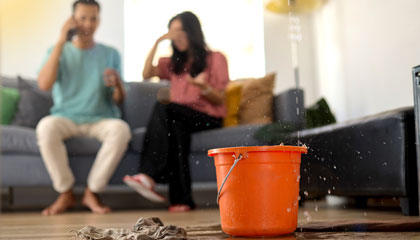
Water damage generally refers to water that originates inside the home or enters through the structure due to a covered failure. Unlike flooding, water damage is often tied to a specific, identifiable incident.
Common causes of water damage include:
- Burst or leaking pipes caused by pressure changes, freezing, or material failure.
- Appliance failures, such as ruptured hoses or internal malfunctions.
- Roof leaks caused by wind or hail damage creating openings.
- HVAC system malfunctions, including clogged condensate lines or failed drain pans.
- Overflowing toilets, tubs, or sinks due to sudden plumbing failures.
- Sewer or drain backups, often excluded unless covered by specific endorsements.
- Sump pump failures, often disputed as groundwater intrusion.
- Ice dams allowing melting snow to seep beneath roofing materials.
- Foundation seepage or groundwater intrusion, a frequent basis for denial.
- Firefighting water damage caused by suppression efforts during a fire.
- Condensation-related moisture buildup in poorly ventilated areas.
- Window and door seal failures allowing wind-driven rain to enter through compromised flashing or aging seals.
Water damage follows gravity and spreads through building cavities and porous materials. When moisture remains trapped, it accelerates corrosion and wood deterioration.
Common types of water damage include:
- Drywall and ceiling damage
- Flooring warping and subfloor saturation
- Insulation moisture retention
- Electrical system exposure through outlets and wall chases
- Wood rot and structural deterioration
Unlike flood damage, water damage may be covered under a standard homeowners insurance policy. However, coverage usually depends on whether the loss resulted from a sudden, accidental internal source and whether the homeowner acts promptly to mitigate further damage. Gradual leaks, poor maintenance, or long-term seepage are often excluded. This distinction is where many claims run into trouble, especially when insurers argue that water damage occurred over time rather than as a single event.
How Insurance Coverage Differs between Flood Damage and Water Damage

Insurance coverage does not depend on how much water entered your home. It depends on where the water came from and how it arrived. This is the core distinction insurers rely on when separating flood damage from water damage, and it drives nearly every coverage decision that follows.
Flood damage is defined by water that originates outside the home and moves across the ground before entering the structure. Because this type of loss often affects entire neighborhoods at once, insurers classify it as a widespread, high-severity risk. For that reason, flood damage is excluded from standard homeowners insurance and requires a separate flood insurance policy.
Water damage, by contrast, typically originates inside the home or enters from above, such as plumbing failures, appliance leaks, or roof breaches. These losses are considered isolated and more predictable, which is why they may be covered under a homeowners policy, but only when the cause is sudden, accidental, and not related to surface flooding or groundwater intrusion.
In practical terms:
- Flood damage is tied to external water rising or flowing into the structure from ground level.
- Water damage involves internal systems or structural openings allowing water to escape where it shouldn’t.
Insurers do not assess coverage based on visible damage alone. They reconstruct the loss event, tracking the path, direction, and source of the water. Two homes can suffer identical damage, yet one claim is paid and the other denied solely because one involved surface water and the other resulted from a broken pipe.
Complicating matters further, many policies contain anti-concurrent causation clauses. These allow insurers to deny coverage when a flood contributes to the loss, even if a covered water event occurred at the same time. During hurricanes, heavy storms, and prolonged rainfall, insurers often rely on this provision to shift otherwise covered water damage into a flood exclusion. This is why mixed-loss claims are among the most contested insurance disputes.
What Does Flood Insurance Typically Cover?
Flood insurance generally covers:
- Structural components such as foundation walls, load-bearing elements, electrical wiring, and plumbing systems damaged by rising surface water.
- Major systems, including HVAC equipment, water heaters, electrical panels, and certain built-in appliances.
- Select contents and fixtures, depending on the policy, often with strict limits and exclusions, particularly for items located below ground level.
- Debris removal directly related to covered flood damage, though cleanup and restoration costs may be capped or excluded.
However, flood insurance also has significant limitations. Contents coverage is capped, basement coverage is restricted, and many personal belongings may not be covered at all. Waiting periods often apply before coverage begins, leaving homeowners exposed if policies are purchased too late.
The NFIP provides standardized coverage, while private flood insurance may offer broader limits or fewer restrictions. The differences matter when evaluating recovery options after a major loss.
What Does Homeowners Insurance Cover for Water Damage?
Homeowners insurance commonly covers:
- Sudden Pipe Bursts: Damage caused by an unexpected pipe failure is typically covered because it is considered abrupt, accidental, and not the result of long-term neglect.
- Accidental Appliance Leaks: Water escaping from appliances like dishwashers or washing machines is often covered when the malfunction occurs suddenly and was not foreseeable.
- Water Damage Caused by Firefighting Efforts: Damage from water used to extinguish a fire is generally covered, even if the fire itself caused limited structural harm.
At the same time, policies typically exclude:
- Flood-Related Water: Water that originates from rising ground levels, storm surge, or surface flooding is excluded and requires separate flood insurance coverage.
- Groundwater Seepage: Slow intrusion of water through foundations or basement walls is often excluded because insurers classify it as a maintenance or drainage issue.
- Mold beyond Limited Sub-Limits: While initial water damage may be covered, mold remediation is frequently capped or excluded if growth occurs over time or remediation is delayed.
A common issue arises when insurers reclassify a water damage claim as flood damage after inspection. This shift can eliminate coverage entirely, even when the homeowner initially reported a covered event and acted in good faith.
Key Factors Insurers Use to Determine Coverage and Claims
When evaluating claims, insurers conduct detailed investigations that go beyond visible damage. Their focus is not on how extensive the loss appears, but on how the water entered the home and what caused it. They analyze:
- The source of the water
- The point of entry into the home
- The direction and movement of water
- The duration of exposure
- Weather data and flood reports
The source of water, not the severity of damage, is the deciding factor. Even extensive damage may be excluded if insurers determine the water originated from an excluded source. Delays in reporting can further complicate claims, especially when mold or secondary damage develops. In flood vs water damage disputes, evidence and timing often determine the outcome.
Flood Damage vs. Water Damage: Side-by-Side Comparison
Here is a high-level comparison illustrating how insurers typically distinguish between flood damage and water damage:
| Factor | Flood Damage | Water Damage |
| Source | External water accumulation | Internal or structural failure |
| Common Causes | Storm surge, surface flooding, or heavy rainfall | Pipes, appliances, or roof leaks |
| Insurance Coverage | Flood insurance | Homeowners insurance |
| Typical Exclusions | Contents limits and basement restrictions | Maintenance-related damage |
| Claim Urgency | Extremely high | High |
| Long-Term Risks | Foundation damage and contamination | Mold growth and rot |
| Claim Complexity | High | Moderate |
| Common Denials | No flood policy in place | Gradual or maintenance-related damage |
| Key Evidence | Flood maps and weather data | Plumbing reports and repair records |
This distinction explains why similar-looking losses can lead to very different coverage outcomes.
Common Scenarios Where Flood and Water Damage Are Confused
Confusion often arises during complex or overlapping loss events, including:
- Hurricane Rain Entering Through a Damaged Roof: When wind damages the roof first, and rain enters afterward, insurers may classify the loss as covered water damage rather than flooding, but only if the sequence of events is clearly documented.
- Sewer Backups during Heavy Storms: Sewer or drain backups can blur coverage lines because insurers assess whether the water originated from municipal systems or rising groundwater, often triggering exclusions unless specific endorsements apply.
- Sump Pump Failures: Damage from a failed sump pump is frequently disputed, as insurers assess whether the failure was mechanical, power-related, or overwhelmed by flood conditions, each leading to different coverage outcomes.
- Water Used by Firefighters: Water damage caused by firefighting efforts is typically covered under homeowners insurance, but disputes arise when insurers attempt to link resulting moisture damage to excluded flooding instead.
- Mixed-Loss Events Involving Both Internal and External Sources: When flooding and internal water damage occur at the same time, insurers may invoke anti-concurrent causation clauses, allowing them to deny coverage if any excluded flood component contributed to the loss.
These scenarios regularly lead to disputes over classification, making accurate documentation essential. Even small wording choices in claim reports can influence how insurers categorize the loss.
Why Flood and Water Damage Claims Get Denied
Flood and water damage claims are often denied for reasons that are not immediately obvious to homeowners. Common reasons for claim denial include:
- Misclassification of the damage source, where insurers categorize covered water damage as excluded flood damage.
- Insufficient documentation, including a lack of photographs, repair records, or timelines showing how the loss occurred.
- Policy exclusions that homeowners didn’t realize applied, particularly those involving surface water or groundwater.
- Disputes over groundwater versus internal water, a distinction insurers rely on heavily during inspections.
- Late reporting or failure to mitigate damage, which insurers may argue allowed mold or secondary damage to develop.
In flood water damage cases, insurers scrutinize every detail. Small inconsistencies between reports, photographs, and adjuster notes can become grounds for denial.
How Lawyers Help with Flood and Water Damage Insurance Claims

Attorneys help homeowners challenge denied, delayed, or underpaid insurance claims by addressing misclassification disputes, enforcing policy language, and pushing back against bad-faith tactics. Legal representation is particularly important when insurers rely on exclusions, anti-concurrent causation clauses, or shifting explanations for denial.
In Louisiana and Texas, where hurricanes, severe storms, and mixed-loss events are common, flood and water damage claims are especially complex. In these cases, legal guidance can be the difference between potential recovery and significant financial loss.
Conclusion
Flood damage, water damage, and sewer or drain backups are treated very differently under insurance policies. Coverage depends on the source of the water, not on how severe or widespread the damage appears. Misunderstanding this distinction is one of the fastest ways to lose coverage.
If your claim is disputed, delayed, or denied, taking action early matters. A free claim evaluation can help clarify your options, identify classification errors, and protect your right to a fair recovery.
Frequently Asked Questions
Yes, when stormwater accumulates on the ground and enters a home, insurers usually classify it as flood damage. This typically requires separate flood insurance coverage, even if the water came from heavy rain rather than a river or coastal source.
Often, yes. Many flood claims come from low- or moderate-risk areas outside designated flood zones. Heavy rainfall, poor drainage, and overwhelmed infrastructure can cause flooding almost anywhere, making flood insurance important even when it is not required by a lender.
Using the term “flood” can trigger automatic exclusions during claim review. Claims should describe facts, such as where the water came from and how it entered the home, rather than applying labels that insurers may use against coverage.
Water damage typically involves internal sources like pipes, appliance failures, or roof leaks caused by covered events. Coverage usually depends on whether the damage was sudden, accidental, and promptly reported.
Flood damage involves external water accumulation entering the home. Even shallow surface water can qualify as flood damage under insurance definitions.
Not always. Water intrusion can be covered or excluded depending on its source and path into the home. Insurers focus on whether the water came from internal systems, above-ground openings, or ground-level accumulation when determining coverage.