

Hailstorms can leave homeowners dealing with sudden roof damage, cracked windows, and costly repairs, often with little warning. But does homeowners insurance cover hail damage? In most cases, yes. However, coverage depends on your specific policy terms, including deductibles, exclusions, and the condition of your property.
Across the US, hailstorms account for $10 to $15 billion in insured losses each year. In states like Texas and Louisiana, severe storms are a regular concern. Texas frequently leads the nation in hail-related losses, with 902 recorded hail events in 2025. And while Louisiana is better known for hurricanes, hail is still a recurring risk, particularly in the northern parts of the state. Understanding what your policy actually covers can make a significant difference after a storm. This guide breaks down hail damage coverage under homeowners insurance, including what is typically included, what may be excluded, how hail deductibles work, and what homeowners in Texas and Louisiana should know before taking the next step.
What Does Homeowners Insurance Typically Cover for Hail Damage?
In most cases, coverage falls under different parts of your policy:
- Dwelling coverage (Coverage A) protects the main structure of your home.
- Other structures coverage (Coverage B) applies to detached structures.
- Personal property coverage may include damaged belongings.
- Loss of use (Coverage D) helps if your home becomes temporarily unlivable.
Let’s break down how this applies to specific parts of your property.
Does Homeowners Insurance Cover Hail Damage to the Roof?
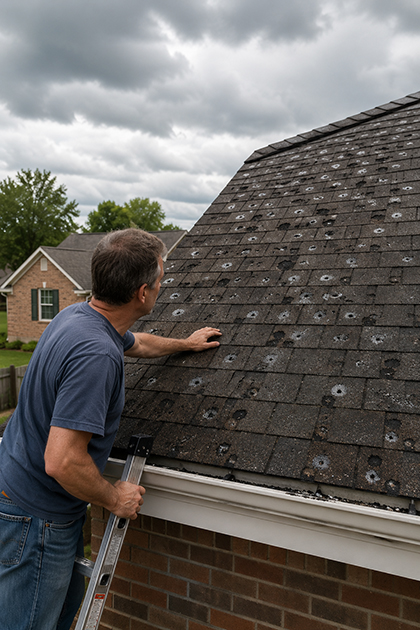
The roof is often the most impacted area during a hailstorm, and it is typically covered under dwelling coverage. So, in many cases, homeowners insurance does cover hail damage to roof structures, especially when the damage affects the roof’s ability to protect your home.
Covered roof components may include:
- Shingles that are cracked, bruised, or missing
- Flashing around chimneys and vents
- Roof vents and ventilation systems
- Underlayment that prevents water intrusion
Insurers typically assess whether the damage affects the roof’s ability to prevent leaks or structural issues.
- Full replacement may be approved if the damage is widespread or compromises the roof’s integrity.
- Partial repairs may be offered if damage is limited to certain areas.
The outcome often depends on how the damage is evaluated during the claims review process.
Does Homeowners Insurance Cover Hail Damage to Siding?
Hail can also damage your home’s exterior walls, which are generally covered under dwelling protection. This may include common issues such as:
- Visible dents, cracks, or chips
- Loosened panels that expose the structure underneath
- Increased risk of water intrusion over time
While different materials like vinyl siding, wood panels, and brick or stucco exteriors are covered, one common challenge homeowners face involves matching. If only part of the siding is damaged, insurers may approve replacement for that section, but not the entire exterior. This can lead to noticeable color or material differences, which sometimes become a point of dispute.
Does Homeowners Insurance Cover Hail Damage to Windows?
Windows are another vulnerable area during hailstorms, and damage is typically covered when it affects the structure or safety of the home. Coverage may include:
- Broken or shattered glass panes
- Cracks that weaken the window
- Damage to window frames or seals
However, it’s important to distinguish between structural damage, which is usually covered and minor cosmetic issues, which may not always qualify.
Because damaged windows can quickly lead to water intrusion or security concerns, prompt repairs are often necessary to prevent further issues.
Does Homeowners Insurance Cover Hail Damage to Screen Rooms and Enclosures?
Structures like patios, lanais, and screen enclosures are usually covered under other structures coverage (Coverage B). This can include:
- Detached or attached screen enclosures
- Covered patios or outdoor living spaces
- Pool cages or similar structures
However, because these structures are more exposed, insurers may assess damage more carefully, and coverage may be subject to:
- Lower policy limits compared to your main dwelling
- Specific exclusions for certain materials (such as thin screens)
- Deductibles that apply separately for wind or hail damage
What Other Property Damage From Hail Is Covered?
Beyond the main structure, hail can impact several other parts of your property. Depending on the specific terms of your policy, many of these are also covered, including:
- Gutters and downspouts
- HVAC units and outdoor equipment
- Skylights and roof fixtures
- Fences and detached garages
If the damage is severe enough to make your home temporarily uninhabitable, loss of use (Coverage D) may help cover additional living expenses while repairs are underway.
In short, homeowners insurance can cover a wide range of hail-related damage. However, coverage can vary significantly based on how the damage is assessed and the structure affected.
What Types of Hail Damage Are NOT Covered by Homeowners Insurance?
While many forms of hail damage are covered, there are important limitations. Understanding these exclusions helps answer a critical question: Does homeowners insurance cover hail damage in every situation? The answer is no. Certain types of damage are commonly excluded or restricted.
Does Insurance Cover Cosmetic Damage From Hail to the Roof?
In some cases, insurers may deny claims if the damage is considered purely cosmetic, especially in states like Texas.
Here’s how insurers typically differentiate:
- Functional damage affects the roof’s ability to protect the home and is more likely to be covered.
- Cosmetic damage includes surface dents or marks that do not impact performance.
Policies may include specific cosmetic damage exclusions, which means repairs may not be approved if the roof still functions properly. In these cases, claims may be denied even if the damage is visible. This distinction often becomes a key factor during inspections and claim evaluations.
Is Wear and Tear or Old Roof Damage Covered?
Homeowners insurance is designed to cover sudden storm-related damage, not long-term deterioration. Claims may be denied if damage is linked to:
- Normal wear and tear over time
- Aging materials or an older roof
- Lack of routine maintenance
Additionally, depreciation may reduce how much is paid for older structures. Insurers often assess the condition of the roof before the storm to determine whether the damage qualifies.
What if the Damage Existed Before the Hailstorm?
Pre-existing damage is another common reason for claim denials. Insurance companies may reject claims if:
- The damage occurred before the reported storm
- There is evidence of prior unrepaired issues
- Inspection records show existing problems
This is why having clear inspection records and dated evidence is critical.
Are There Any Policy Limits and Endorsements Restricting Coverage?
Even when hail damage is covered, certain policy provisions can limit how much protection you actually have. These may include:
- ACV (Actual Cash Value) endorsements, which reduce payouts by factoring in depreciation
- Coverage caps on specific parts of the property, such as roofs or detached structures
- Exclusions or limitations tied to specific materials or older installations
These provisions can significantly affect how claims are evaluated and paid. Understanding what is not covered is just as important as knowing what is. By reviewing your policy carefully, you can better prepare for potential gaps in coverage and avoid surprises after a hailstorm.
How Do Hail Deductibles Work in Homeowners Insurance?
Hail damage coverage often comes with a deductible that directly affects how much you pay out of pocket before insurance applies. Unlike standard deductibles, hail or wind damage deductibles are often separate and calculated differently.

Most policies use one of the following:
- Flat Deductibles: A fixed dollar amount (for example, $1,000) that applies to a claim.
- Percentage-Based Deductibles: A percentage of your dwelling coverage (Coverage A), often ranging from 1%–5%.
For example, if your home is insured for $300,000 and your hail deductible is 2%, you would be responsible for $6,000 before insurance contributes.
Here’s how the claim payout process typically works:
- The insurer assesses the total covered damage.
- Your deductible is subtracted from the approved amount.
- The remaining balance is what the insurer may pay, subject to policy terms.
This means your financial responsibility before coverage applies can be substantial, especially with percentage-based deductibles. Understanding your deductible structure is essential when evaluating how much protection your policy actually provides.
Why Are Hail Deductibles Higher in Certain States?
Deductibles for hail damage are often higher in regions where storms are more frequent and severe. Insurers adjust these terms to account for increased risk exposure.
In hail-prone areas like Texas (part of what is often called “Hail Alley”), storms occur more frequently, leading to higher claim volumes. As a result:
- Insurers commonly apply percentage-based deductibles instead of flat amounts.
- Policies may include separate wind and hail deductibles.
- Deductible percentages may be higher compared to less risk-prone states.
This structure helps insurers manage risk, but it also means homeowners need to be more aware of their financial responsibility after a storm.
ACV vs RCV: How Will Your Hail Damage Claim Be Paid?
Beyond deductibles, the way your claim is valued plays a major role in how much you receive. Most homeowners policies use either Replacement Cost Value (RCV) or Actual Cash Value (ACV) to calculate payouts.
Understanding the difference is key to setting realistic expectations after hail damage.
What is Replacement Cost Value (RCV)?
Replacement cost value refers to the cost of repairing or replacing damaged property at current market prices, without factoring in depreciation.
Under an RCV policy:
- You may receive payment based on the full cost of new materials and labor.
- Initial payments may be issued, with additional amounts released after repairs are completed.
The goal of RCV is to restore your property to its pre-loss condition. This type of coverage generally offers stronger financial protection, especially for major repairs like roof replacement.
What is Actual Cash Value (ACV)?
Actual cash value takes depreciation into account when determining your payout. This means the insurer calculates the value of your property based on its age, condition, and expected lifespan.
Under an ACV policy:
- Older roofs or materials may result in significantly reduced payouts.
- Depreciation is deducted before the claim is paid.
The final amount ACV pays may not fully cover replacement costs. This can create a noticeable gap between what is needed for repairs and what is paid.
Why Do Insurers Switch Roofs to ACV Policies?
In recent years, many insurers have moved toward ACV-based roof coverage, particularly in high-risk regions. This shift is often driven by:
- Increased storm frequency and claim volume
- Rising repair and material costs
- Efforts to limit large payouts on aging roofs
As a result, older roofs are more likely to be subject to ACV terms, and homeowners may receive lower claim amounts for roof damage. That’s why it is important to review endorsements carefully to understand coverage limits.
How Does Hail Coverage Work in Texas and Louisiana?
Navigating a hail claim in the Gulf Coast region involves more than just getting a repair estimate. It also requires understanding how insurers are required to handle your claim. While both Texas and Louisiana face extreme weather, the legal “clocks” and consumer protections available to you differ significantly by state line.
Texas Hail Damage Coverage
Texas leads the nation in hail risk, with the state experiencing more hail events (902 in 2025) than any other. The “Texas Triangle”, comprising Dallas-Fort Worth, Houston, San Antonio-Austin, represents a massive concentration of property value, contributing to approximately $10.5 billion in annual insured multi-peril homeowner losses within the state.
Because of this consistent exposure, insurers have moved toward more restrictive policies to manage their loss ratios. It is now common for Texas policies to include:
- Percentage-Based Deductibles: Often 1%–2% of the home’s dwelling limit, rather than a flat dollar amount.
- Cosmetic Damage Exclusions: Clauses that allow insurers to deny claims if the hail damage is deemed aesthetic (dents) rather than functional (leaks).
Homeowners should also be aware of the strict legal timelines that protect them during the claims process:
- The “15-Day Rule”: Under the Texas Prompt Payment of Claims Act, insurers must acknowledge your claim and begin an investigation within 15 business days.
- Statutory Penalties: If a carrier delays payment beyond 60 days without a valid legal reason, they may be liable for penalties.
Louisiana Hail Damage Coverage
In Louisiana, hail risk is concentrated in northern hubs like Shreveport and Monroe, though it frequently overlaps with tropical systems in Baton Rouge and Lafayette. This “compounding damage” often leads to complex disputes over whether a roof failed due to wind, hail, or cumulative age.
Homeowners in the Pelican State face unique challenges when filing, often dealing with hurdles like:
- Multiple Cause Disputes: Difficulty in distinguishing between wind and hail damage, which may carry different deductible triggers.
- Bad Faith Practices: Issues such as “arbitrary or capricious” delays or unexplained lowball estimates.
To counter these challenges, Louisiana law provides statutory protections to keep adjusters and insurers accountable:
- Response Deadlines: Per La. R.S. § 22:1892, insurers must initiate loss adjustment within 14 days of notification (extended to 30 days during declared catastrophes).
- Payment Standards: Once you provide “satisfactory proof of loss,” the insurer has 30 days to pay. If they fail to do so in bad faith, they can be forced to pay a penalty of 50% of the total damage amount plus attorney fees.
Beyond navigating state laws, you must also guard against “storm chasers”, unlicensed contractors who flood affected areas to solicit quick signatures. Always verify credentials and ensure you meet your legal duty to mitigate damage by making temporary, documented repairs.
Whether you are dealing with a “Hail Alley” storm in Texas or a convective system in Louisiana, the burden of proof rests on the homeowner. By understanding your state’s specific deadlines, maintaining detailed, time-stamped records of damage, and avoiding rushed decisions with contractors, you can move your claim from a “pending” file to a completed repair.
Next Step After Hail Damage: File Your Claim

After a hailstorm, taking the right steps early can help protect your property and strengthen your claim. Acting quickly and documenting damage thoroughly can make a meaningful difference in how your claim is evaluated.
Here’s a step-by-step approach homeowners can follow:
- Step 1: Inspect Your Property Safely After the Storm: Check for visible damage from the ground first. Avoid climbing onto the roof unless it is safe or handled by a professional.
- Step 2: Document All Hail Damage (Photos/Videos): Take clear photos and videos of affected areas, including the roof, siding, windows, and outdoor structures.
- Step 3: Make Temporary Repairs to Prevent Further Damage: Use tarps or temporary fixes to stop water intrusion or additional deterioration.
- Step 4: Review Your Homeowners Insurance Policy: Understand your coverage, deductibles, and any exclusions that may apply.
- Step 5: Contact Your Insurance Company to File a Claim: Report the damage promptly and follow the insurer’s claim process.
- Step 6: Get an Independent Contractor Estimate: A professional estimate can help you understand the true scope of repairs.
- Step 7: Review the Settlement Offer Carefully: Compare the insurer’s estimate with your contractor’s findings.
- Step 8: Dispute Underpaid or Denied Claims If Needed: If the offer does not reflect the damage, you may challenge the decision.
- Step 9: Contact a Hail Damage Claim Lawyer: Legal guidance can help you better understand your options if issues arise.
Taking such a structured approach can help you stay organized and better prepared throughout the claims process.
How a Lawyer Helps with Hail Damage Claims
Hail damage claims can become complex, especially when coverage disputes or delays occur. A property damage attorney can help clarify your rights and guide you through the process.
A lawyer can help you:
- Examine Your Insurance Policy in Detail: A lawyer can review policy language, endorsements, and exclusions to determine what coverage applies.
- Collect and Document Strong Supporting Evidence: Your lawyer can collect and organize documentation, including inspections, estimates, and damage reports, to strengthen your claim.
- Communicate and Negotiate Effectively With the Insurer: Legal representation helps ensure your claim is presented clearly and addressed appropriately.
- Consider Legal Action if the Claim Is Unresolved: If disputes continue, a lawyer may explore further steps based on the circumstances.
- Address Potential Bad Faith Practices by the Insurer: Legal guidance helps identify and address insurance bad faith, including delayed responses, inadequate investigations, or unjustified denials.
- Safeguard Your Rights Throughout the Claims Process: Legal support can help you avoid missteps and better understand your position.
With the right support, homeowners can approach the claims process with greater clarity and confidence.
Conclusion
Hail damage can create immediate stress and long-term financial concerns, especially when coverage details are unclear. While homeowners insurance often provides protection, whether your claim is approved, underpaid, or denied depends heavily on your policy terms, deductibles, and exclusions.
Taking time to review your policy before a storm, understanding how your deductible works, and recognizing potential coverage gaps can help you make more informed decisions when it matters most. Legal guidance can also help you understand your situation and explore your next steps.
If you are facing challenges with a hail damage claim or need clarity on your coverage, contact Pandit Law for a free case review and move forward with confidence.
Frequently Asked Questions
No, hail damage is not always covered by homeowners insurance. Most policies cover sudden and accidental damage, but exclusions may apply. Claims can be denied for cosmetic damage, wear and tear, or pre-existing issues. Coverage ultimately depends on your specific policy terms and conditions.
It depends on the extent of the damage. Insurance may cover a full roof replacement if the damage affects the roof’s structural integrity. However, if the damage is limited to certain areas, the insurer may only approve partial repairs based on their inspection.
Yes, insurance companies can deny claims under certain conditions. Common reasons include cosmetic-only damage, lack of maintenance, pre-existing issues, or policy exclusions. Insurers may also deny claims if the reported damage cannot be clearly linked to a covered hail event.
The timeframe depends on your policy and state laws. Many policies require prompt notice, and delays can affect your claim. It is generally advisable to report hail damage as soon as possible after the storm to avoid complications, delays, or potential denial.
Hail damage on a roof may appear as dents, bruised or missing shingles, granule loss, or soft spots. You may also notice damage to flashing, vents, or gutters. Some signs are not visible from the ground, so a professional inspection is often helpful.
Filing a claim may impact your premium, but it depends on several factors, including your insurer and claim history. Since hail is considered a natural event, increases are not always tied to a single claim but may reflect broader risk in your area.