
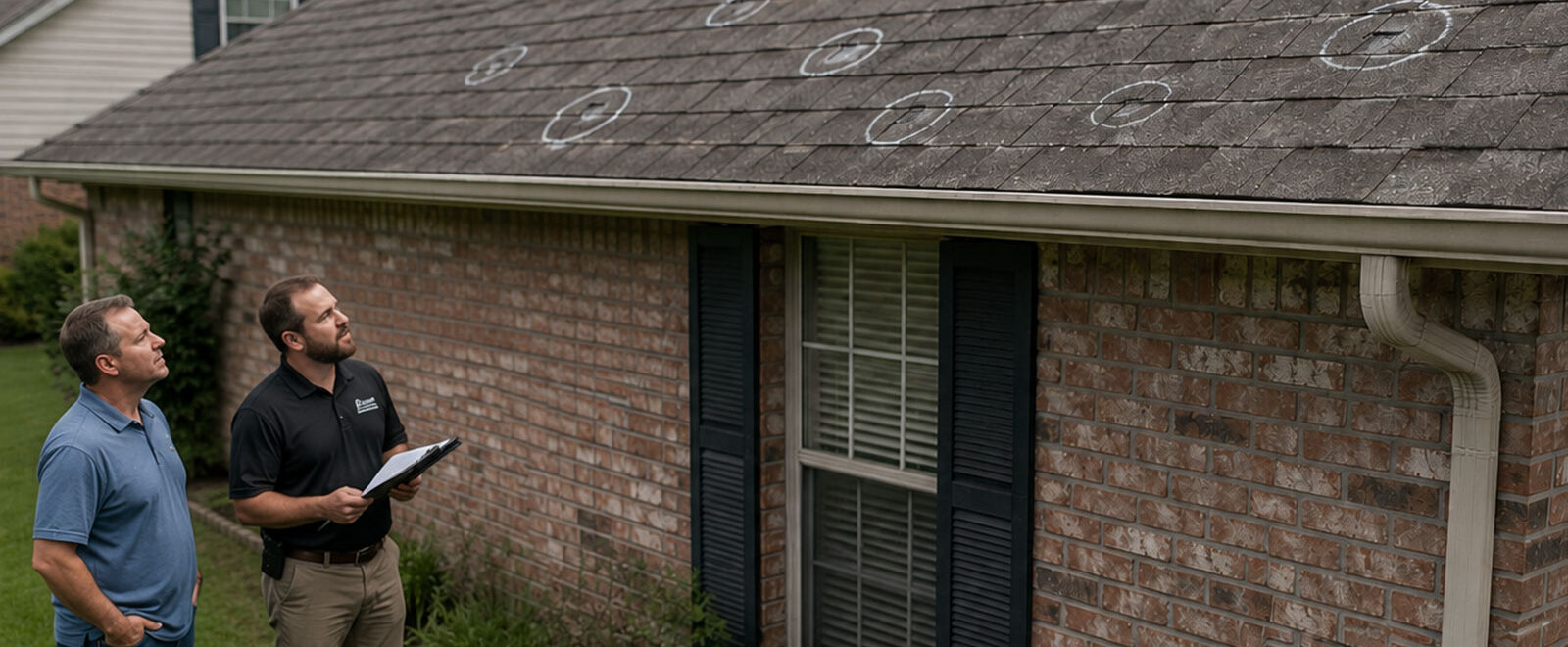
After a hailstorm, homeowners are often left dealing with far more than cracked shingles or dented gutters. Once the insurance adjuster becomes involved, the claims process often turns stressful, confusing, and frustrating. Many property owners expect the adjuster to fully account for every sign of property damage and help maximize the claim. In reality, the insurance adjuster works for the insurance company and evaluates the claim from the insurer’s perspective. That can lead to disputes over the cause of the damage, repair scope, or whether the roof qualifies for replacement under the insurance policy.
That is why dealing with an insurance adjuster after hail damage requires preparation, documentation, and a clear understanding of your coverage. Missed damage, low repair estimates, and disputes over roof replacement can quickly affect the value of a hail damage claim. Knowing how the claims process works and what steps to take during the inspection can help homeowners avoid costly mistakes. This guide explains what homeowners should know before, during, and after the inspection process, and when legal guidance may help protect their interests.
Before the Hail Insurance Adjuster Arrives
Many homeowners focus on the visible damage after a hailstorm and overlook how important the early stages of the claims process can be. What you do before the insurance adjuster arrives may directly affect how the insurance company evaluates your hail damage claim. Early preparation can help reduce inspection disputes, incomplete repair scopes, and claim delays.
Understand the Insurance Adjuster’s Role

One of the biggest misconceptions homeowners have is that the insurance adjuster works on their behalf. In reality, the adjuster represents the insurance company and evaluates the claim based on the insurer’s guidelines, policy terms, and inspection findings.
Several types of adjusters may become involved in a hail damage claim, including:
- Staff adjusters employed directly by the insurance company
- Independent adjusters hired by insurers during large storm events
- Catastrophe adjusters assigned after widespread hailstorms or severe weather
While adjusters inspect the property and prepare damage estimates, homeowners should remember that the adjuster’s findings may not always capture the full extent of the damage from hail. Some hail-related roofing damage may appear minor during an initial inspection but lead to leaks or material deterioration over time.
That is why homeowners should avoid relying solely on the first inspection. A rushed inspection or incomplete scope of damage can lead to an undervalued claim, especially when roof damage, soft metal impacts, or underlayment issues are overlooked.
Review Your Insurance Policy Before the Inspection
Before meeting with a hail damage insurance adjuster, homeowners should carefully review their insurance policy. Understanding the policy terms can help prevent confusion during the inspection and claims process.
Pay close attention to:
- Wind and hail deductibles
- Cosmetic damage exclusions
- Roof depreciation schedules
- Coverage limits for older roofing systems
- Claim reporting deadlines
- Payment limitations tied to policy endorsements
Many Louisiana homeowners have also seen policy changes involving roof schedules and actual cash value provisions in recent years. Some policies may reduce coverage for older roofs or limit how much the insurer pays for certain roofing materials.
It is also important to understand the difference between:
- Replacement cost value (RCV), which may cover the cost to replace damaged property
- Actual cash value (ACV), which factors depreciation into the payment calculation
These distinctions can significantly affect the insurance estimate after a hailstorm.
Document Every Sign of Hail Damage
Strong documentation can make a major difference when dealing with the insurance adjuster on hail damage. Homeowners should begin gathering evidence as soon as it is safe to inspect the property.
Photograph all visible property damage, including:
- Roof shingles
- Gutters and downspouts
- Siding and exterior walls
- Windows and screens
- HVAC units
- Fences and outdoor structures
Take both close-up photos and wide-angle images to show the extent and location of the damage. Interior issues should also be documented, especially ceiling stains, attic leaks, or water intrusion that may have developed after the hailstorm.
Whenever possible, homeowners should also:
- Save weather reports and storm dates
- Use timestamps on photos and videos
- Keep notes about when the damage first appeared
Maintaining a complete claim file can help homeowners respond more effectively if the insurer disputes the scope, cause, or value of the property damage.
Get a Professional Roof Inspection Before the Adjuster Visit
Hail damage is not always obvious from the ground. Some roofing problems may involve bruised shingles, granule loss, cracked sealants, or hidden structural issues that basic inspections can miss. Having a roofer or contractor inspect the property before the insurance adjuster arrives can help homeowners better understand the scope of the damage.
Contractors often identify issues that insurers initially overlook, particularly after large hailstorms when adjusters handle high claim volumes. A professional inspection can help document:
- Roof slope damage patterns
- Soft metal impacts
- Damaged flashing
- Underlayment concerns
- Vent and ridge cap damage
Independent inspection findings can become especially important if the insurance company later disputes whether the roof requires repairs or full replacement.
Create a Claim File and Communication Record
Organization becomes critical once the claims process begins. Homeowners should create a dedicated claim file to keep all hail damage documents in one place. The file should include:
- Photos and videos
- Inspection reports
- Repair estimates
- Emails and letters
- Claim numbers
- Notes from conversations with the insurer
It is also important to document every interaction with the insurance company, including dates, names, and summaries of phone calls. Written communication often becomes valuable during claim delays, supplemental disputes, or disagreements over the insurance estimate.
Good recordkeeping can help homeowners respond quickly if the insurer requests additional information or challenges part of the claim.
Preparing before the inspection can help homeowners avoid unnecessary setbacks later in the process. Once the insurance adjuster arrives, staying involved and paying close attention to the inspection becomes just as important.
Dealing With Insurance Adjusters on Hail Damage During the Inspection
The inspection stage is where many hail damage disputes begin. What the insurance adjuster documents during the visit often shapes the insurer’s estimate, repair recommendations, and claim decision. Homeowners who stay informed and actively involved during the inspection may have a better chance of identifying overlooked damage and avoiding undervalued estimates.
Never Assume the Adjuster Will Find All Damage
When dealing with an insurance adjuster after hail damage, homeowners should never assume every damaged area will automatically appear in the inspection report.
Hail damage can be difficult to detect, especially when it affects multiple roof sections or hidden exterior components. Commonly overlooked areas include:
- Soft metals such as vents, flashing, and gutters
- Shingle bruising or granule loss
- Window trim and siding
- HVAC units and exterior equipment
- Detached structures and fencing
Some adjusters spend limited time on the roof, particularly after major hailstorms when insurers manage large claim volumes. As a result, important damage may not appear in the initial estimate.
Staying engaged throughout the inspection can help property owners identify skipped areas or incomplete findings before the insurer finalizes the estimate.
Be Present During the Inspection
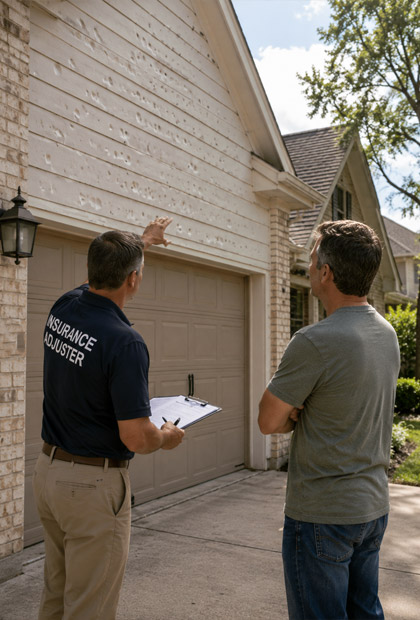
Property owners should make every effort to attend the inspection in person. Being present allows homeowners to better understand how the insurance adjuster evaluates the property and whether any areas appear skipped or rushed.
During the inspection, homeowners should:
- Observe which roof slopes the adjuster inspects
- Ask questions about damaged sections
- Request clarification about markings or measurements
- Take their own notes and photos during the visit
This does not mean arguing with the adjuster or interfering with the inspection. Instead, homeowners should remain professional and focused on understanding the scope of the damage being documented.
Staying involved during the inspection may also help prevent misunderstandings later in the claims process.
Have Your Contractor Present During the Inspection
Many homeowners choose to have a roofer or contractor present during the inspection. This can be especially helpful when dealing with an insurance adjuster after hail damage involving roof replacement disputes or hidden structural issues.
Contractors often identify problems insurers may initially overlook, including:
- Lifted or fractured shingles
- Matching issues with discontinued roofing materials
- Code-related repair requirements
- Underlayment or decking concerns
Their input may also help address disagreements about whether the roof qualifies for repairs or full replacement. Independent professional observations can provide support if the insurer later undervalues the damage or limits repairs to isolated areas.
Be Careful What You Say to the Adjuster
Homeowners should answer questions honestly but carefully during the inspection. Guessing about the cause of the damage or minimizing problems may unintentionally affect how the insurer evaluates the claim.
For example, homeowners should avoid statements such as:
- “The roof was already old anyway”
- “The leak is probably minor”
- “I am not sure when the damage happened”
Instead, stick to facts, documentation, and known storm information. When dealing with the insurance adjuster, clear and consistent communication can help avoid unnecessary disputes later. If a question requires technical evaluation, it is often better to rely on inspection findings rather than speculation.
Ask for Detailed Inspection Notes and Scope of Damage
After the inspection, homeowners should request detailed documentation showing what the adjuster included in the estimate.
Important records may include:
- Damage summaries
- Roof measurements
- Inspection photos
- Line-item repair estimates
- Notes about excluded areas
Carefully reviewing this information can help homeowners determine whether the estimate fully reflects the property damage. Detailed estimates also make it easier to compare the insurer’s findings with contractor reports and identify missing repairs or pricing issues.
Watch for Common Insurance Adjuster Tactics
Disputes often begin shortly after the insurer completes the inspection and issues its initial estimate. Insurance companies may attempt to reduce claim exposure by narrowing the scope of damage or limiting repair recommendations.
Common issues include:
- Blaming roof problems on wear and tear
- Calling hail damage cosmetic
- Recommending partial repairs instead of replacement
- Delaying follow-up inspections
- Pressuring homeowners to accept quick settlements
These situations often become frustrating after severe hailstorms, particularly when contractors identify more extensive damage than the insurer acknowledges. Strong documentation, independent inspections, and organized records can help homeowners challenge incomplete damage assessments or insufficient repair valuations and support supplemental damage claims when necessary.
The inspection process often determines how the insurance company approaches the rest of the claim. Once the insurer issues an estimate or coverage decision, homeowners should review the findings carefully before accepting payment or beginning major repairs.
Dealing With Insurance Adjusters on Hail Damage After the Inspection
The claims process does not end once the inspection is complete. In many cases, disputes begin after the insurance company issues its estimate or coverage decision. Homeowners should review all documents carefully, monitor the property for additional damage, and respond quickly to any issues that arise during the next stage of the claim.
Carefully Review the Insurance Estimate
After the inspection, the insurance company typically provides a repair estimate outlining what damage the insurer agrees to cover. Homeowners should examine whether the insurer’s scope of work fully accounts for all storm-related repairs.
Commonly overlooked items may include:
- Flashing damage
- Underlayment replacement
- Gutters and downspouts
- Interior water damage
- Ventilation components
- Code-required upgrades
It is also important to review measurements, material pricing, and repair quantities. Even small omissions can significantly affect the total value of a hail damage claim. If the contractor’s estimate differs substantially from the insurer’s scope of work, homeowners may need additional inspections or supplemental documentation.
Understand Why Hail Claims Get Underpaid or Denied
Insurance companies may deny or reduce portions of a hail damage claim for several reasons. Some disputes involve coverage language, while others center on whether the insurer believes the damage resulted from the hailstorm itself.
Common reasons for underpaid or denied claims include:
- Cosmetic damage exclusions
- Allegations of pre-existing roof wear
- Late claim reporting
- Limited roof coverage endorsements
- Disputes over repair versus replacement
Insurers may also argue that aging materials or normal deterioration caused the roofing problems instead of the hailstorm. In other cases, the insurance company may approve only partial repairs even when contractors identify broader structural concerns. Understanding the reason behind the denial or reduced estimate can help homeowners determine the next steps.
Respond Quickly to Requests for Additional Information
Insurance companies often request additional documents during the claims process. Delayed responses may slow inspections, payment reviews, or supplemental evaluations.
Homeowners may receive requests for:
- Contractor reports
- Additional photographs
- Repair invoices
- Weather documentation
- Supplemental inspection access
Whenever possible, communication should remain in writing. Emails and written correspondence create a clear record of what information the insurer requested and when homeowners responded.
Organized communication can also help if delays or disputes later become part of the claim.
Challenge Low Settlement Offers
Some homeowners receive settlement offers that do not fully account for the damage identified during inspections. When this happens, homeowners may have options to dispute the insurance company’s evaluation.
Possible steps include:
- Requesting a reinspection
- Submitting supplemental contractor reports
- Providing updated repair estimates
- Reviewing appraisal provisions in the insurance policy
Homeowners should also be cautious about accepting payment too quickly. In some situations, depositing checks or signing settlement documents may complicate future disputes over additional damage.
Detailed contractor findings and supplemental inspection reports often become critical during disputed claims.
Watch for Hidden Hail Damage That Appears Later
Not all hail damage becomes visible immediately after the storm. Some roofing problems develop gradually over time, particularly when the storm affects protective materials beneath the roof surface.
Continue monitoring the property for:
- Ceiling stains
- Water intrusion
- Loose shingles
- Granule loss
- Sagging areas
- Ventilation issues
Leaks and hidden underlayment damage may appear weeks or months after the initial inspection. If new problems develop, homeowners should document the conditions immediately and notify the insurer as soon as possible.
Avoid Starting Permanent Repairs Too Soon
Homeowners often feel pressure to begin repairs immediately after a hailstorm, especially when the property remains exposed to further weather damage. However, permanent repairs should generally wait until the inspection and documentation process is complete.
Temporary mitigation steps may still be necessary, including:
- Roof tarping
- Water removal
- Emergency leak protection
- Temporary structural stabilization
Preserving evidence before major repairs begin can help prevent disputes about the cause or extent of the damage. Homeowners should also save receipts, invoices, and photos related to any emergency work performed after the storm. These records can support reimbursement requests later in the claim process.
Careful follow-up after the inspection can help homeowners protect their interests and avoid costly mistakes during the claims process. When disagreements over damage, coverage, or repair scope continue, additional legal guidance may become necessary.
Common Challenges Homeowners Face With Hail Damage Adjusters
Many homeowners expect the claims process to move smoothly after a hailstorm, only to encounter disputes shortly after the inspection. Several common issues can affect how the insurance company evaluates and values a hail damage claim, including:
- The insurance adjuster says no hail damage exists or argues the damage is only cosmetic. Insurers may claim dents, granule loss, or shingle bruising do not affect the roof’s function. However, even cosmetic hail damage can shorten roof lifespan, weaken roofing materials, and create future coverage concerns.
- The insurance company recommends repairs instead of full replacement, even when roofing materials no longer match or older roofing systems create compliance issues with current building standards. Some policies also contain depreciation schedules or roof coverage limitations that affect replacement decisions.
- The insurer delays the claim through repeated document requests, postponed reinspections, or slow estimate reviews. These delays may allow leaks and hidden structural damage to worsen over time.
- In contested hail damage claims, insurers sometimes retain engineers to evaluate whether the damage resulted from hail impact, aging materials, or prior wear. Independent evaluations can help homeowners challenge incomplete repair scopes or disputed damage findings.
- Hidden or secondary damage remains excluded from the estimate. Issues involving roof decking, underlayment damage, moisture intrusion, or code upgrades often appear later during repairs and may require supplemental claims to address properly.
These challenges can make the hail damage claims process frustrating and financially stressful for homeowners. Understanding these common tactics and disputes can help property owners recognize when additional documentation, independent evaluations, or legal guidance becomes necessary.
What to Do If You Disagree With the Insurance Adjuster’s Hail Damage Assessment
Disagreements over hail damage estimates are common, especially when contractors identify more extensive property damage than the insurer includes in its report. Homeowners should carefully review the claim before accepting the insurance company’s conclusions.
Start by comparing the insurer’s estimate against the contractor’s findings line by line. Missing roof components, low material pricing, or excluded repairs may significantly affect the value of the hail damage claim.
Homeowners should also review whether the estimate addresses flashing, underlayment, gutters, and interior damage connected to the hailstorm.
It is also important not to accept a low settlement too quickly. In some situations, signing releases or cashing checks may limit future options if additional damage appears later.
When disputes continue, homeowners may need to:
- Submit supplemental contractor reports
- Provide updated inspection photos
- Request a reinspection
- Present additional storm documentation
If the insurance company continues denying, delaying, or undervaluing the claim, speaking with a hail damage lawyer may become necessary. Legal guidance can help homeowners better understand policy language, claim disputes, and available options for challenging low evaluations.
When To Hire a Hail Damage Lawyer
Some hail damage claims resolve without major disputes, while others become increasingly difficult after inspections, denials, or low settlement offers. When homeowners face ongoing problems with the insurance company, legal guidance may help protect their interests and strengthen their position while the insurer reviews the claim.
Signs You May Need Legal Help
Certain situations may indicate the need for additional legal support, especially when the insurer repeatedly disputes the scope or cause of the damage.
Homeowners often seek legal help when they experience:
- Claim denials
- Significant underpayment
- Delayed claim handling
- Disputed roof replacement recommendations
- Large-scale property losses
- Repeated inspection disagreements
- Ignored contractor evidence
These issues may become more stressful when homeowners continue receiving conflicting inspection findings or incomplete repair estimates.
How a Lawyer Helps During a Hail Damage Claim
A property damage attorney can help homeowners better understand the claims process and address disputes involving the insurance company’s evaluation.

Depending on the circumstances, legal representation may help with:
- Reviewing insurance policies and coverage terms
- Handling insurer communication
- Challenging low estimates
- Gathering supporting documentation
- Coordinating independent inspections
- Negotiating disputed settlements
- Addressing improper claim handling practices when necessary
When claim disputes continue for months or involve substantial roof damage, legal guidance may become an important part of protecting the homeowner’s financial interests. Legal representation can encourage a more thorough review of disputed estimates, inspection findings, and policy obligations. It can also help ensure the insurer fully reviews the available evidence and policy obligations before reaching a final decision.
Steps Homeowners Can Take to Maximize a Hail Damage Claim
The actions homeowners take after a hailstorm can directly affect how the insurance company evaluates the claim. Staying organized, documenting the damage carefully, and understanding the insurance policy can help reduce disputes and strengthen the overall claim.
Here are some practical steps that can help homeowners protect their interests during ongoing coverage discussions:
- Act Quickly After the Storm: Schedule inspections and report the hail damage promptly. Early documentation can help preserve evidence before conditions worsen.
- Document Everything Thoroughly: Take photos, videos, and written notes showing all visible property damage, interior leaks, and affected roof areas.
- Never Rely Only on the Insurance Company’s Inspection: Get independent roof inspections to help uncover damage the insurance adjuster may have missed during the initial evaluation.
- Keep Communication Professional and in Writing: Maintain written records to help track delays, disputed statements, and inspection requests throughout the claim.
- Know Your Rights Before Accepting Payment: Review settlement terms carefully before signing documents or accepting final payments from the insurer.
- Get Multiple Repair Estimates: Compare contractor estimates to identify low pricing or missing repairs in the insurance company’s scope of work.
- Understand Your Policy Coverage and Exclusions: Review deductibles, roof limitations, cosmetic exclusions, and depreciation terms before finalizing the claim.
Preparing early and staying actively involved throughout the claims process can help homeowners avoid costly mistakes after a hailstorm. When disputes continue despite these efforts, legal guidance can help homeowners pursue a fair evaluation of their property damage claim.
Conclusion
Dealing with an insurance adjuster after a hailstorm often involves more than a simple roof inspection. Homeowners must stay proactive throughout the claims process by documenting property damage carefully, reviewing the insurance policy closely, and paying attention to how the insurer evaluates the claim. It is also important to remember that the insurance adjuster represents the insurance company, not the homeowner’s financial interests.
Missed damage, delayed inspections, low settlement offers, and disputed roof replacement decisions can all affect the outcome of a hail damage claim. When insurers deny, delay, or undervalue valid claims, legal guidance can help homeowners better protect their rights and pursue a fair evaluation of their property damage.