
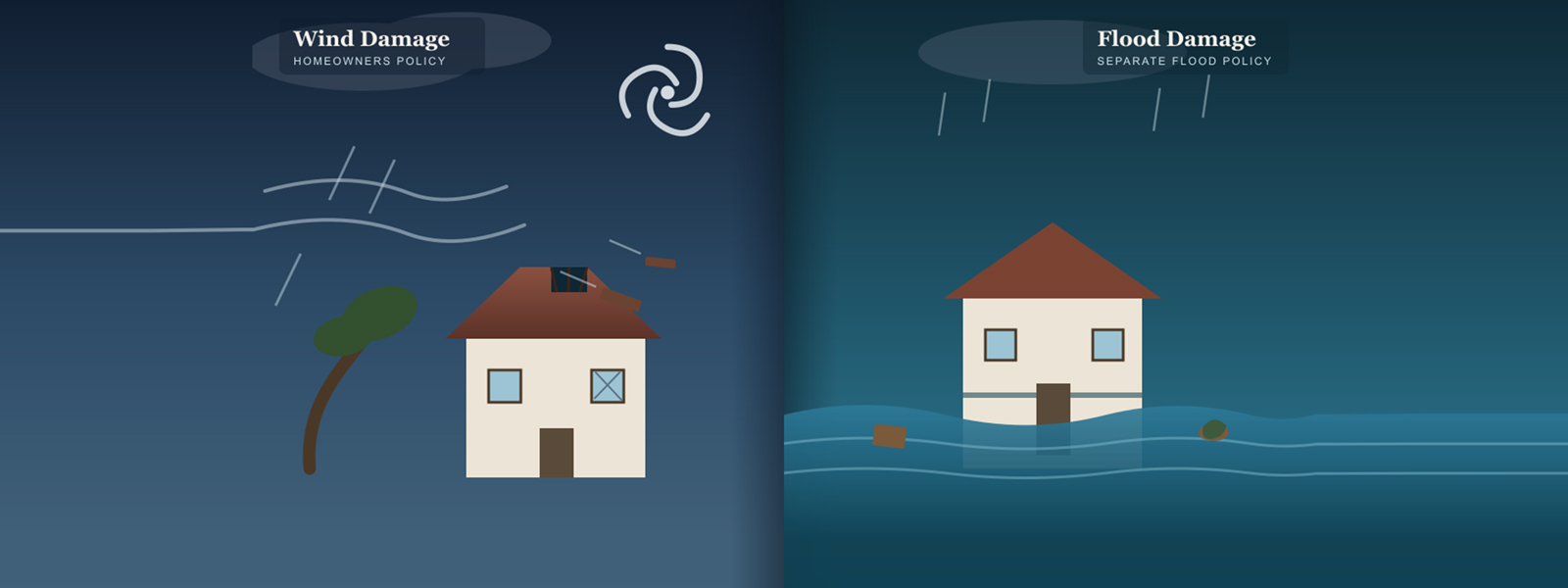
Imagine a hurricane tearing through your neighborhood. High winds rip part of your roof away, rain pours inside, and floodwaters later enter your home. When you file an insurance claim, one question often shapes the outcome: What actually caused the damage?
Many homeowners assume all storm-related damage falls under the same insurance coverage. In reality, insurers often treat hurricane wind damage and flood damage as separate perils, even when they occur during the same storm. That distinction can affect which policy applies and whether parts of a claim are covered, disputed, or denied.
Understanding the difference matters because flood-related losses remain a major issue after hurricanes. Following Hurricane Helene, the National Flood Insurance Program (NFIP) received over 57,000 flood insurance claims, highlighting how frequently homeowners face questions about the source of damage after severe storms.
This guide explains the key differences between hurricane and flood damage, common coverage disputes, important Louisiana and Texas laws, and the legal options available when insurance companies challenge a claim.
What Is Hurricane Damage?
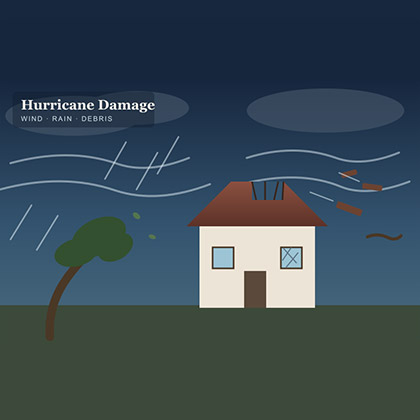
When people think about hurricanes, they often picture flooding. However, hurricane damage includes a wide range of losses caused by the storm itself, particularly its powerful winds and wind-driven weather conditions.
Hurricane damage generally refers to property damage caused by hurricane-related perils, including:
- High winds that tear off roofing materials or damage siding
- Wind-driven rain that enters through storm-created openings
- Flying debris that breaks windows or damages structures
- Fallen trees, utility poles, and other storm-related impacts
- Structural damage caused by prolonged wind pressure
Many homeowners are surprised to learn that hurricane protection does not come from a single insurance policy. Instead, coverage often depends on the specific cause of the damage. A homeowners insurance policy may cover certain wind-related losses, while separate flood coverage may apply to rising water.
This distinction matters because hurricanes frequently cause both types of damage during the same event. A home’s roof may suffer damage from a hurricane’s winds before floodwaters enter the property hours later. Distinguishing between flood and wind damage becomes critical when insurance companies evaluate a claim and determine which policy applies.
What Is Flood Damage?
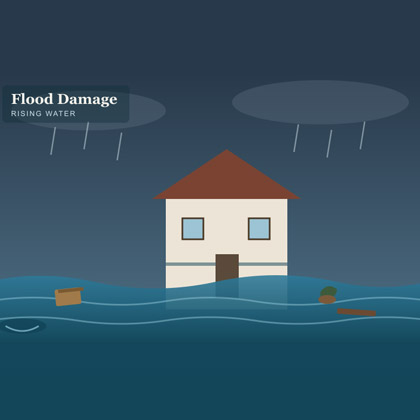
Flood damage occurs when water inundates normally dry land and enters a property from the outside, typically rising from the ground up. Unlike wind-related storm damage, flood damage focuses on the source and movement of the water.
Common causes of flood damage include:
- Storm surge associated with a hurricane or coastal storm
- Overflowing rivers, lakes, canals, or drainage systems
- Heavy rainfall that overwhelms local infrastructure
- Surface runoff that accumulates and enters buildings
- Inland flooding caused by prolonged weather events
Importantly, flood damage can occur with or without a hurricane. A property may experience flooding after days of heavy rain, even when no named storm is involved.
Floodwaters can also create additional challenges beyond the initial property damage. Water often carries mud, sewage, chemicals, and other contaminants that increase cleanup complexity and may affect the safety of the structure.
Because flood damage follows different insurance rules from wind-related losses, understanding how insurers define flooding is an important first step when evaluating potential coverage after a storm.
What Does Homeowners Insurance Cover After a Hurricane?
After a hurricane, many homeowners assume their policy covers all storm-related damage. In reality, coverage depends on what caused the damage. Standard homeowners insurance generally covers wind-related losses but typically excludes flood damage.
Depending on the policy language, covered hurricane-related losses may include:
- Roof damage caused by high winds
- Damage to siding, windows, and exterior components
- Structural damage resulting from wind forces
- Fallen trees that strike the home or other covered structures
- Interior water damage when rain enters through an opening created by the wind
However, homeowners insurance generally does not cover:
- Flooding or storm surge
- Groundwater intrusion
- Sewer backups without applicable endorsements
- Damage resulting from maintenance issues or long-term neglect
Many Gulf Coast homeowners also face hurricane or named-storm deductibles. Unlike standard deductibles, these deductibles often apply as a percentage of the home’s insured value and may be triggered when a storm receives an official hurricane or named-storm designation. Policy terms vary, so homeowners should review their coverage carefully.
Understanding these distinctions helps explain why coverage disputes often arise after major storms. A claim involving both wind and water damage may require multiple policies and separate evaluations of what caused the damage.
What Does Flood Insurance Cover?
Because standard homeowners insurance generally excludes flooding, most flood-related losses require coverage through a separate flood insurance policy. Homeowners may obtain coverage through the National Flood Insurance Program (NFIP) or a private flood insurer.
Flood insurance commonly covers damage to key parts of the property, including:
- Foundations and structural components
- Electrical, plumbing, and HVAC systems
- Walls, flooring, and built-in fixtures
- Water heaters and major appliances
- Certain personal belongings, subject to policy terms
Flood policies also contain important limitations. Depending on the policy, coverage may not extend to landscaping, swimming pools, valuable documents, currency, or Additional Living Expenses (ALE). Homeowners should review their specific policy provisions to understand what is and is not covered.
Flood insurance remains important even outside designated high-risk flood zones. According to the National Flood Insurance Program (NFIP), nearly one-third of NFIP flood insurance claims from 2014 to 2024 came from properties located outside high-risk flood areas. FEMA also notes that flood insurance claims can provide significantly more financial protection than disaster assistance programs alone. This highlights why homeowners in both high-risk and moderate-risk areas should evaluate their flood exposure and coverage needs.
For homeowners in Louisiana, Texas, and other hurricane-prone regions, flood coverage can play a critical role in protecting against losses caused by storm surge, inland flooding, and other water-related events that fall outside standard homeowners insurance coverage.
Wind Damage vs. Flood Damage: Why the Source of Water Matters
When comparing hurricane damage vs. flood damage, the most important factor is often not the water itself but where it came from. Insurance companies typically classify damage based on the source and path of the water, which can significantly affect coverage decisions.
How Insurers Determine Coverage
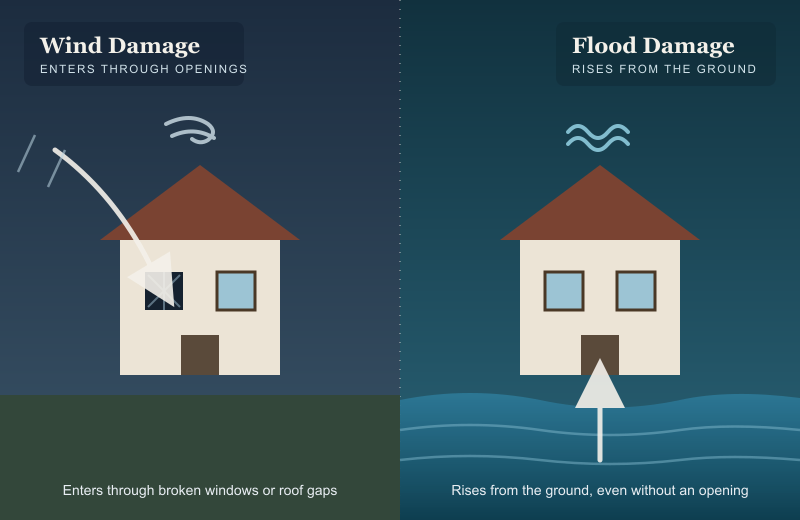
Insurers generally look at how the water entered the property and what caused the damage. For example:
- If high winds break a window or damage a roof and rain enters through that opening, the resulting water damage may fall under homeowners insurance coverage.
- If rising floodwaters enter the home from the ground level, insurers typically classify the loss as flood damage.
- If both events occur during the same storm, insurers may evaluate each portion of the damage separately.
A single hurricane can create both covered and excluded losses. For instance, a homeowner may have coverage for roof damage caused by hurricane-force winds but need separate flood insurance for damage caused by storm surge or inland flooding.
Common Wind vs. Flood Claim Disputes
Coverage disputes often arise when insurers and policyholders disagree about what caused the damage. Some common issues complicating hurricane claims include:
- Separate homeowners and flood insurance policies applying to the same loss
- Different deductibles for wind damage and flood damage
- Questions about whether wind or floodwater caused structural damage
- Mixed-damage claims involving both wind-driven rain and rising water
- Policy provisions that address losses caused by multiple contributing factors
These disputes can become especially complex after a major hurricane when several sources of damage affect the property at the same time.
Evidence That Can Support Your Claim
Strong documentation can help establish what caused the damage and when it occurred. Helpful evidence you can use to support your claim may include:
- Photographs and videos taken before and after the storm
- Weather reports and storm-tracking data
- Inspection reports and repair estimates
- Communications with insurers and adjusters
- Witness statements from neighbors or contractors
The more evidence a homeowner can gather, the easier it may be to demonstrate whether wind, floodwater, or a combination of both caused the loss.
Because coverage often depends on causation, documenting damage early and understanding how insurers distinguish between flood and wind damage can play an important role in resolving claim disputes.
Comparison Chart: Hurricane Damage vs. Flood Damage
While hurricanes and floods often occur together, insurance policies usually treat them as separate causes of loss. Understanding the differences can help homeowners identify which policy may apply and why claim disputes sometimes arise after a major storm.
| Factor | Hurricane Damage | Flood Damage |
| Cause of Damage | High winds, wind-driven rain, flying debris, fallen trees, and other hurricane-related perils | Rising water that inundates normally dry land, including storm surge, surface runoff, and overflowing waterways |
| Coverage Source | Typically covered under homeowners insurance, subject to policy terms and exclusions | Typically covered through a separate flood insurance policy |
| Policy Type | Standard homeowners insurance policy | NFIP flood insurance policy or private flood insurance policy |
| Deductibles | May be subject to hurricane or named-storm deductibles, which are often percentage-based | Subject to the deductible specified in the flood insurance policy |
| Covered Property | Roofs, siding, windows, structures, and certain interior damage caused by covered wind events | Foundations, walls, flooring, major home systems, and covered personal property damaged by flooding |
| Additional Living Expenses (ALE) | Often available when a covered loss makes the home temporarily uninhabitable, subject to policy terms | Generally not covered under standard NFIP flood policies |
| Coverage Trigger | Damage caused by a covered wind-related event | Damage caused by floodwaters entering from outside the property and rising from the ground up |
In practice, most major hurricanes create both wind and flood damage. A storm may damage a roof with high winds before storm surge or inland flooding affects the same property. Because different policies can apply to different portions of the loss, accurately identifying what caused the damage often becomes one of the most important parts of the claims process.
Louisiana and Texas Laws Policyholders Should Know About Hurricane and Flood Claims
Securing a fair settlement after a catastrophic storm requires a clear understanding of the specific statutes governing insurance claims in your state. Both Louisiana and Texas have frameworks designed to hold insurance carriers accountable and protect policyholders. Knowing these rules can protect you from underpayments and unexpected delays.
Louisiana
Louisiana offers strong statutory protections for homeowners facing severe property damage. Under the state’s Valued Policy Law, if a covered peril causes a total loss of your home, the insurer is generally obligated to pay the full face value of the policy.
Key provisions under the Louisiana insurance law that policyholders must understand include:
- Consolidated Bad-Faith Rules: Louisiana’s bad-faith insurance protections are now primarily governed by La. R.S. 22:1892, which generally requires insurers to promptly investigate and adjust claims and pay undisputed amounts within 30 days after receiving satisfactory proof of loss. During a declared catastrophic event, a 30-day extension to certain statutory deadlines may be available where permitted by law or regulatory order.
- Percentage-Based Deductibles: Hurricane damage triggers specific deductibles calculated as a percentage of your total dwelling coverage rather than a fixed dollar amount.
- Separate Deadlines: Homeowners windstorm policies and National Flood Insurance Program (NFIP) policies operate on entirely separate timelines and may have different proof-of-loss requirements.
- Proof of Loss Constraints: While state emergencies can extend wind deadlines up to 180 days, federal flood claims strictly stick to a 60-day window.
When disputes arise or an insurance carrier creates arbitrary delays, consulting an experienced Louisiana insurance claim lawyer can help homeowners better understand their rights.
Texas
Texas policyholders benefit from protections under the Texas Prompt Payment of Claims Act, which generally requires insurers to acknowledge a claim within 15 days, begin an investigation, and accept or reject the claim within 15 business days after receiving all required information, with payment generally due within five business days after notice of acceptance.
During a declared catastrophic event, certain statutory insurance deadlines may be eligible for a 60-day extension where permitted by law or regulatory order. Policyholders should confirm which deadlines apply based on the applicable emergency declaration and governing requirements.
To successfully navigate a disputed claim in Texas, policyholders must account for specific statutory protections and litigation guidelines, including:
- Chapter 542A Pre-Suit Notice: Before filing a lawsuit over storm damage, you must submit a detailed written notice outlining your exact damages and attorney fees at least 60 days in advance.
- Wind vs. Flood Misrepresentations: Under Chapter 541, insurers are strictly prohibited from misrepresenting policy language or falsely blaming high-wind structural damage on excluded floodwaters.
- TWIA Provisions: Coastal homeowners relying on the Texas Windstorm Insurance Association (TWIA) must follow rigid, independent dispute resolution timelines for wind and hail claims.
If your carrier refuses to honor these timelines or wrongfully denies your covered losses, consulting a Texas insurance claim attorney can help protect your rights and keep the pressure on the insurance company.
How a Lawyer Can Help With Hurricane vs. Flood Claim Disputes
One of the most common challenges after a hurricane is resolving disagreements over how a loss should be classified under the applicable insurance policies. Insurance companies may classify losses as flood damage when homeowners believe high winds, wind-driven rain, or another covered peril caused the damage. Because different policies often apply to wind and flood losses, these disagreements can have a significant impact on coverage.
A property damage attorney can help by conducting an independent review of the claim. This often involves analyzing adjuster reports, engineering findings, weather data, photographs, and other evidence to determine how the damage occurred. Attorneys may also work with experts to establish the sequence of events, especially when both wind and floodwater affected the property during the same storm.
When a claim is denied, delayed, or underpaid because of a dispute over causation, an attorney can explain the legal options available under Louisiana or Texas law and help challenge an insurer’s coverage determination when appropriate. Many hurricane damage attorneys offer free case evaluations and work on a contingency-fee basis, allowing homeowners to explore their options without upfront legal fees.
Conclusion
Understanding the difference between hurricane damage and flood damage can make a meaningful difference when navigating an insurance claim. Although both types of damage often occur during the same storm, insurers typically apply different coverage rules depending on what caused the loss and how the water entered the property. As a result, documentation, timing, and evidence showing the sequence of events can play a critical role in resolving claim disputes.
Louisiana and Texas homeowners also benefit from legal protections that govern how insurers handle property damage claims and coverage determinations. When questions arise about whether damage resulted from high winds, storm surge, or flooding, understanding your rights can help you make informed decisions throughout the claims process.
If your claim has been denied, delayed, or disputed because of disagreements over the cause of the damage, speaking with an experienced property damage attorney can help you evaluate your options and better understand the path forward.